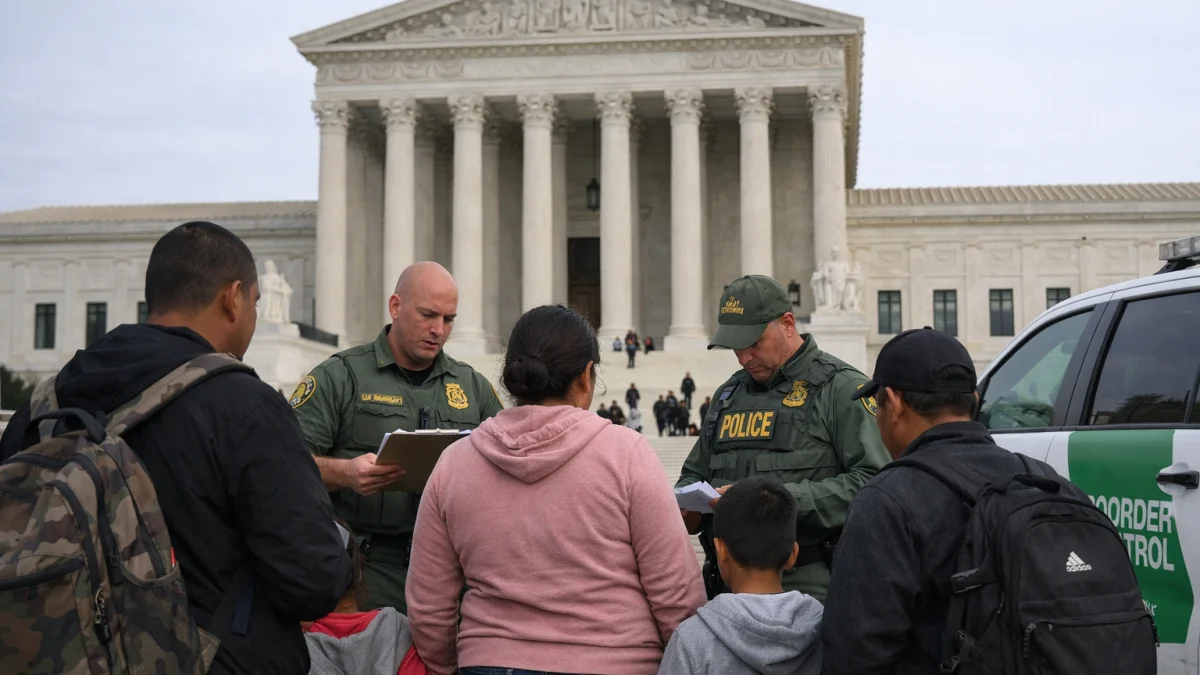
The U.S. Supreme Court’s June 25 ruling in Mullin v. Al Otro Lado significantly expands executive authority over asylum processing at the southern border, clarifying that noncitizens must physically enter U.S. territory before gaining the statutory right to apply for protection.
The 6-3 decision, written by Justice Samuel Alito, holds that federal immigration law does not require officials to process asylum claims from individuals who have been prevented from crossing the border. This effectively greenlights the revival of “metering,” a policy under which Customs and Border Protection agents can turn back asylum seekers at ports of entry before they set foot on U.S. soil.
The ruling matters because it resolves a long-running legal dispute over the meaning of “arrives in the United States” under the Immigration and Nationality Act (INA) and the Refugee Act of 1980. Those statutes generally permit any noncitizen who is physically present in the United States or who arrives in the country to apply for asylum. The majority concluded that individuals stopped in Mexico have not “arrived,” so the government’s obligation to inspect and consider their claims does not attach.
This interpretation shifts the practical boundary of asylum rights. Previously, lower courts, including the Ninth Circuit, had ruled that the policy violated federal law by blocking access to the statutorily mandated process. The Supreme Court’s reversal removes that constraint, giving the executive branch greater flexibility to manage border flows without immediate judicial second-guessing on this specific mechanism.
The decision comes amid renewed focus on border enforcement following the 2024 election. The Trump administration has signaled interest in reinstating metering as one tool among broader efforts to address surges in migration. Administration officials have described the policy as a necessary response to overwhelmed ports of entry and resource constraints.
Critics, including the three dissenting liberal justices, argue the ruling undermines Congress’s intent. Justice Sonia Sotomayor, in a dissent joined by Justices Elena Kagan and Ketanji Brown Jackson, contended that it allows the executive to circumvent the detailed asylum framework enacted by lawmakers, effectively slamming the door on those fleeing persecution before they can even present their claims.
Immigrant-rights organizations and legal advocates have called the outcome a fundamental reshaping of the U.S. asylum system, potentially exposing vulnerable individuals to return to danger without any screening. Humanitarian groups note that metering was used during the first Trump administration and contributed to bottlenecks, family separations, and increased risks for migrants waiting in Mexican border cities.
The ruling does not eliminate asylum entirely or address other aspects of immigration enforcement, such as expedited removal for those who do cross illegally or interior enforcement. It also leaves intact other legal avenues, including claims under the Convention Against Torture, though access to those may be similarly constrained if individuals never reach U.S. territory.
Historically, U.S. asylum policy has balanced humanitarian obligations with border control. The 1980 Refugee Act codified protections rooted in international commitments, while subsequent laws and executive actions have sought to manage volume. Earlier metering practices faced legal challenges, and the Biden administration ended the formal policy in 2021, though capacity limits at ports have persisted.
The decision aligns with a broader pattern of Supreme Court deference to executive authority on immigration at the border, consistent with precedents recognizing plenary power in this domain. It is likely to embolden similar administrative measures while prompting advocacy groups to explore alternative legal challenges, such as those based on non-refoulement principles or specific factual circumstances at particular ports.
For immigration law more broadly, the ruling reinforces the distinction between physical presence and attempted entry. It may influence how lower courts interpret related provisions and could affect negotiations over congressional immigration reform, as lawmakers consider codifying or limiting such executive tools. Data from previous periods of metering showed measurable impacts on daily processing capacity and wait times, though comprehensive nationwide figures on current flows remain subject to ongoing reporting by the Department of Homeland Security.
The current confirmed situation is that the Supreme Court has upheld the government’s legal authority to implement metering without violating the core asylum statute. The Trump administration now has judicial clearance to revive the practice, though operational decisions on scale and timing rest with executive agencies. Uncertainties remain regarding potential new litigation on implementation details, interactions with other border policies, and the practical humanitarian consequences. Officials and advocates continue to monitor border encounter statistics, port capacity, and any subsequent executive actions or legislative responses.