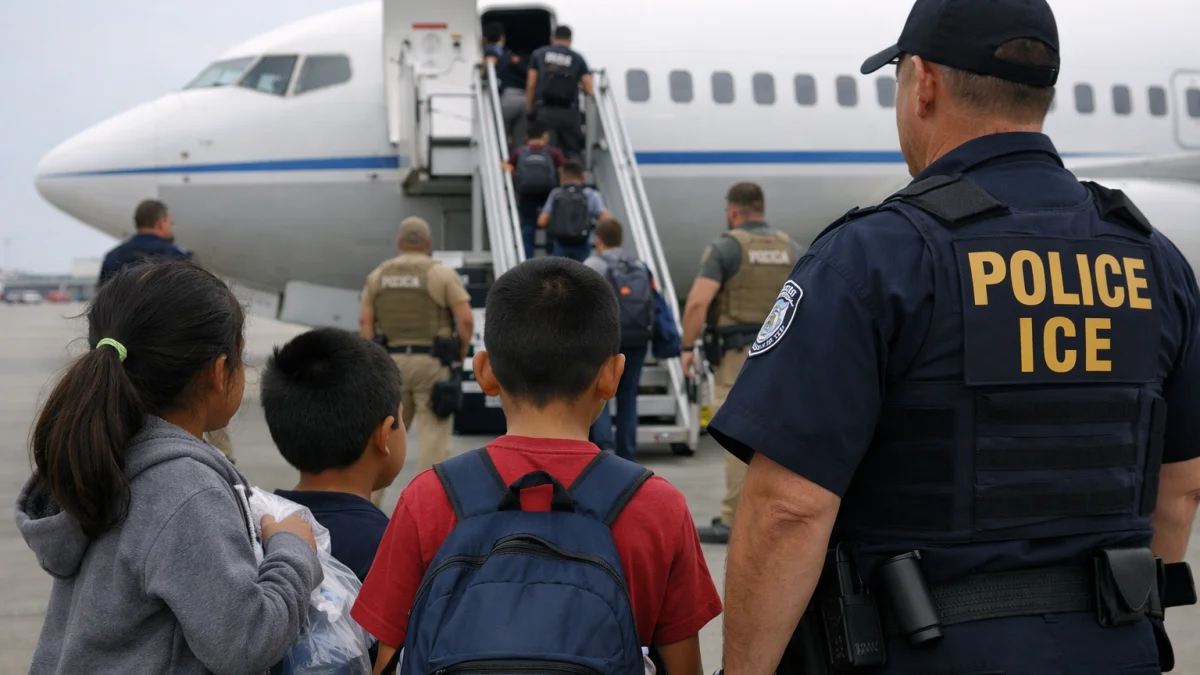
WASHINGTON — The U.S. government is facing scrutiny over a reported plan to remove more than 500 unaccompanied migrant children from the country, after Democratic Senator Ron Wyden said the administration was preparing a fast-track deportation effort involving children in federal care. The Department of Health and Human Services (HHS), which oversees the Office of Refugee Resettlement (ORR), denied that it has plans to target the children for deportation.
Wyden, the senior Democrat on the Senate Finance Committee, said in a letter to HHS Secretary Robert F. Kennedy Jr. that he had received what he described as “credible information” indicating that more than 500 unaccompanied migrant children were being considered for rapid removal. He called for the government to halt any such action and raised concerns that the children could be removed without adequate legal protections.
The senator did not publicly disclose the source of his information. His claims have not been independently confirmed, and HHS rejected the allegation that the department is preparing a deportation operation targeting the children.
An HHS spokesperson said the administration’s focus is on identifying parents or legal guardians and ensuring children are placed with properly vetted sponsors. The department said there were no plans to target the children identified by Wyden and accused him of making unsupported claims.
The children at the center of the dispute are reportedly among those who arrived in the United States without parents or legal guardians and have remained under ORR care, including some who have spent extended periods in foster care or other placements. Wyden said some of the children may come from countries including Guatemala, Honduras, El Salvador and Afghanistan, though details of any potential removal process have not been publicly released.
U.S. law provides protections for unaccompanied migrant children, including requirements that they receive appropriate care and that immigration cases proceed through established legal channels. Children may seek relief from removal, including asylum or other protections, depending on their circumstances.
The controversy follows a previous effort involving the removal of Guatemalan children in federal care that was halted by a federal judge after legal challenges. Officials at the time said the effort was intended to reunite children with families or guardians in Guatemala, while attorneys representing some children argued that required legal procedures had not been followed.
The administration has said speeding up immigration cases and returns is intended to address concerns about child safety, trafficking and the vetting of sponsors. Critics, including immigrant advocates and some lawmakers, have argued that accelerated removals could undermine protections for vulnerable children.
As of July 1, no public confirmation has been issued by HHS that a deportation operation involving the children described by Wyden is underway. The department has maintained that its stated priority remains sponsor vetting and placement of children in appropriate care settings.