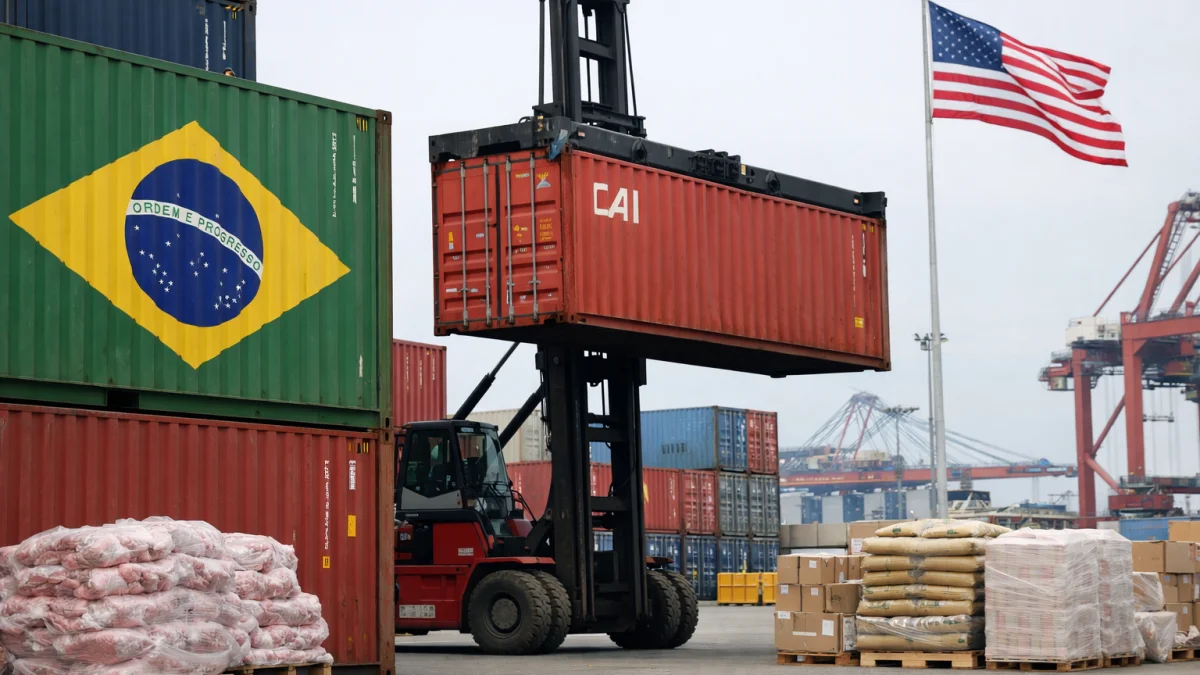
WASHINGTON — The United States has imposed a 25% tariff on selected imports from Brazil under Section 301 of the Trade Act of 1974, concluding a year-long investigation that found a range of Brazilian trade policies and practices to be unfair and burdensome to U.S. commerce, the Office of the U.S. Trade Representative (USTR) said.
The tariffs, announced by U.S. Trade Representative Jamieson Greer at the direction of President Donald Trump, are scheduled to take effect on July 22. The measures apply to thousands of Brazilian products but exempt several categories that U.S. officials said are critical to domestic supply chains or are not produced in significant quantities in the United States, including coffee, beef, oranges, orange juice, certain energy products and aerospace components.
USTR said its investigation determined that Brazilian policies involving digital trade and electronic payment services, preferential tariff arrangements, anti-corruption enforcement, intellectual property protection, ethanol market access and illegal deforestation imposed unreasonable burdens on U.S. businesses. The agency said it held public hearings, reviewed more than 360 public submissions and conducted consultations with Brazilian officials before taking final action.
Greer said the action was intended to ensure that American workers and companies could compete on a level playing field after negotiations with Brazil failed to resolve longstanding concerns. The USTR added that the United States remains open to further discussions with the Brazilian government.
Brazilian President Luiz Inácio Lula da Silva condemned the decision and signaled that his government was preparing a response under Brazil's reciprocity law. Brazilian officials have said they are considering measures other than import tariffs, including actions affecting intellectual property rights and audiovisual services, while continuing to pursue diplomatic negotiations and possible proceedings through the World Trade Organization.
The tariff action marks the first major trade measure implemented under the Trump administration's renewed reliance on Section 301 following legal challenges that limited the use of broader emergency tariff authorities earlier this year.
U.S. officials have maintained that the measures are designed to address unfair trade practices rather than target overall bilateral trade. Despite the dispute, the United States has historically recorded a trade surplus with Brazil, according to officials and trade data cited during the investigation.
Both governments have indicated they remain willing to continue discussions, while the tariffs are set to enter into force as scheduled on July 22 unless official action alters the implementation timeline.