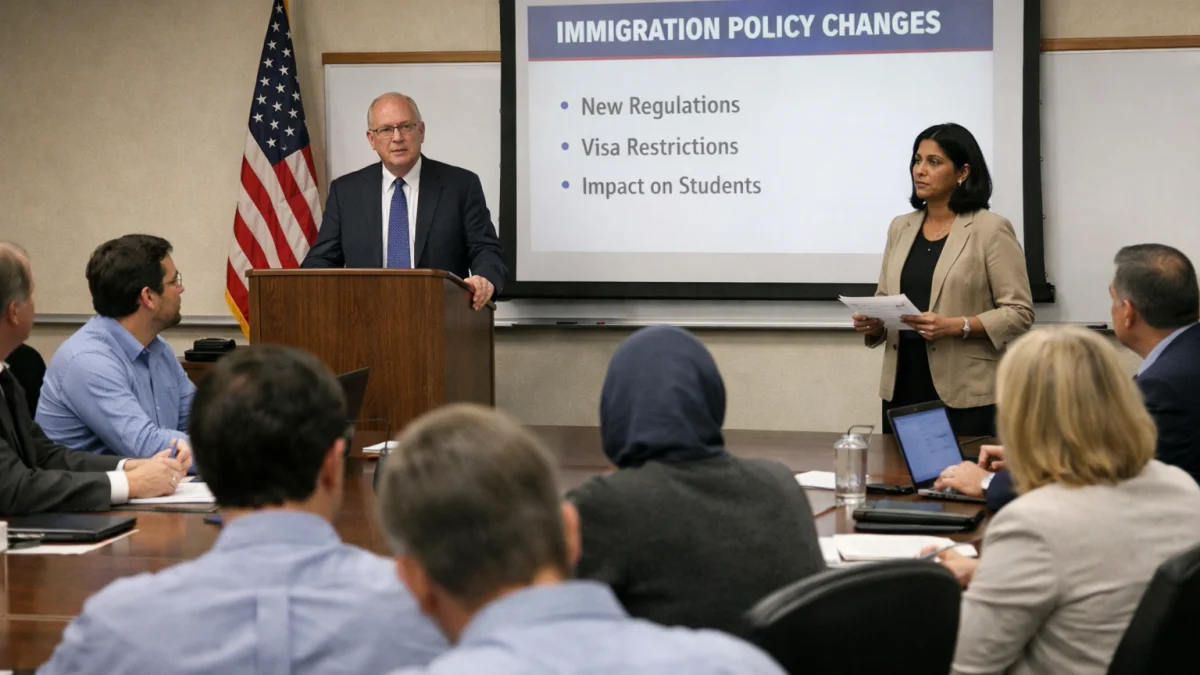
WASHINGTON — Universities across the United States are preparing for potential changes in admissions, student services and compliance procedures as immigration-related court decisions and federal policy actions reshape rules affecting international students and scholars.
Higher education institutions have increased monitoring of immigration developments after a series of legal challenges involving visa processing, entry restrictions and employment pathways created uncertainty for students and universities. Several universities have issued updated guidance to students and staff as they review the impact of government actions and court decisions.
A federal court decision in June blocked a U.S. Citizenship and Immigration Services (USCIS) policy that had paused certain immigration benefit processing, according to legal summaries and higher education reporting. The ruling affected policies that universities said had created delays for some students, researchers and employees seeking immigration benefits.
University officials said they are focused on helping affected students navigate changing requirements while awaiting further government guidance. The University of Washington, for example, updated information for international students and scholars regarding changes in adjustment-of-status procedures and other immigration developments.
The uncertainty comes as colleges continue to respond to broader immigration policy changes affecting international enrollment and academic mobility. The Association of American Universities said in January that universities were facing challenges from federal actions involving international students and scholars, including concerns about enrollment trends and research workforce impacts.
International students represent a significant part of many universities’ academic and financial planning. Institutions have expanded immigration advising, reviewed travel guidance and prepared contingency plans for students whose visas, employment authorizations or immigration applications may be affected by policy changes.
Universities are also watching related legal disputes involving immigration enforcement and employment-based pathways. The University of Pennsylvania, among other institutions, has issued updates on litigation involving a proposed supplemental fee affecting certain H-1B petitions, reflecting concerns about how immigration rules could influence the recruitment and retention of international researchers and faculty.
Outside the United States, universities in other countries have also faced changing immigration requirements. In the United Kingdom, new student visa compliance measures have placed additional responsibilities on institutions that sponsor international students, according to government guidance.
Higher education officials said they will continue to adjust policies as courts and government agencies provide further direction. Universities are awaiting additional developments while maintaining current student support and compliance programs under existing immigration rules.