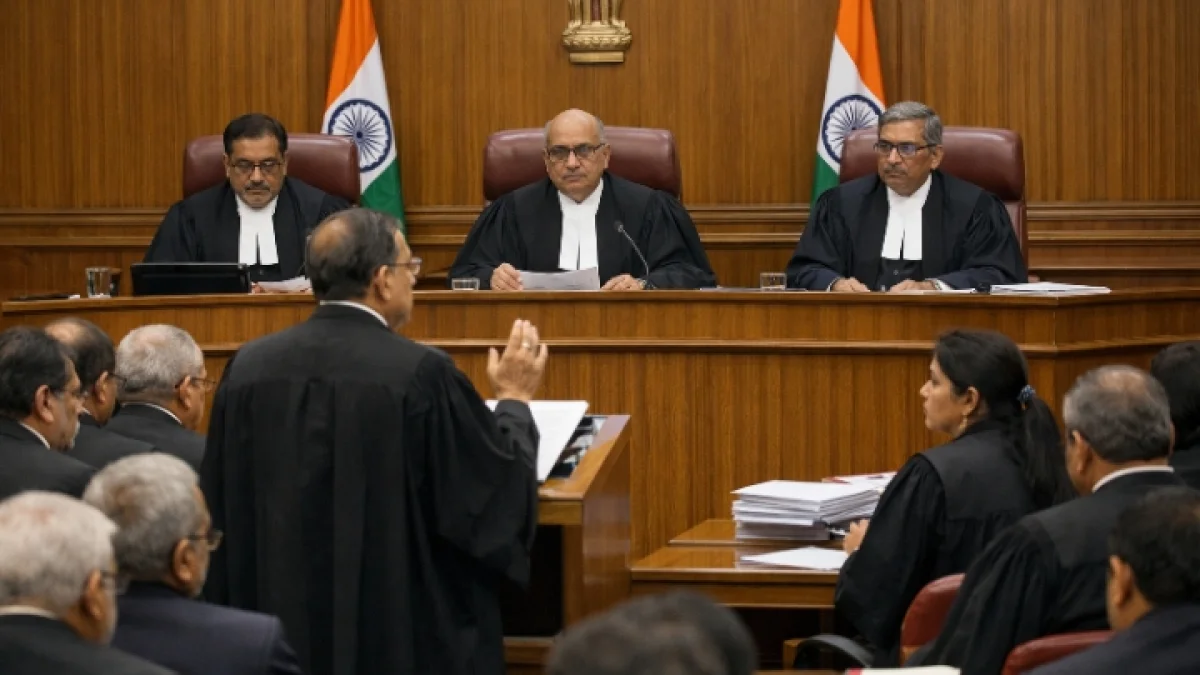
NEW DELHI—India's Supreme Court has directed states and union territories to review the retirement age of judicial officers and consider increasing it from 60 to 61 years, while the court continues hearing a case seeking a uniform retirement age of 62 years for district judiciary judges across the country.
A bench headed by Chief Justice Surya Kant, along with Justices Joymalya Bagchi and V. Mohan, said state governments should take a decision in consultation with their respective high courts. The court said the interim arrangement would apply from April 1, 2026, in jurisdictions where both the state government and the concerned high court agree to the increase, according to court proceedings reported on July 22 and 23.
The bench clarified that the interim measure would not prejudice its final decision on whether the retirement age of judicial officers should be uniformly raised to 62 years nationwide. It directed states, union territories and high courts to communicate their positions within two weeks to assist the court in adjudicating the matter.
The proceedings arise from petitions seeking parity in the retirement age of judicial officers across India. The court noted that different states currently follow different retirement policies, creating inconsistencies within the subordinate judiciary.
According to reports of the hearing, the bench referred to earlier interim relief granted in Madhya Pradesh, where judicial officers were permitted to continue in service until the age of 61 years. It also cited developments in Telangana while observing that an early resolution was necessary because of differing approaches adopted by states and high courts.
During the hearing, some high courts expressed reservations about increasing the retirement age, arguing that judicial officers should not receive different treatment from other state government employees where the retirement age remains 60 years or lower. The court nonetheless said states and high courts should jointly examine the issue before communicating their positions.
The issue has implications for judicial administration and staffing, with supporters of the proposal arguing that retaining experienced judicial officers could help address vacancies and case backlogs. The Supreme Court, however, has not reached a final determination on the broader question of establishing a uniform retirement age of 62 years for the district judiciary.
The matter remains pending before the Supreme Court, with further consideration expected after states, union territories and high courts submit their responses within the timeframe set by the bench.