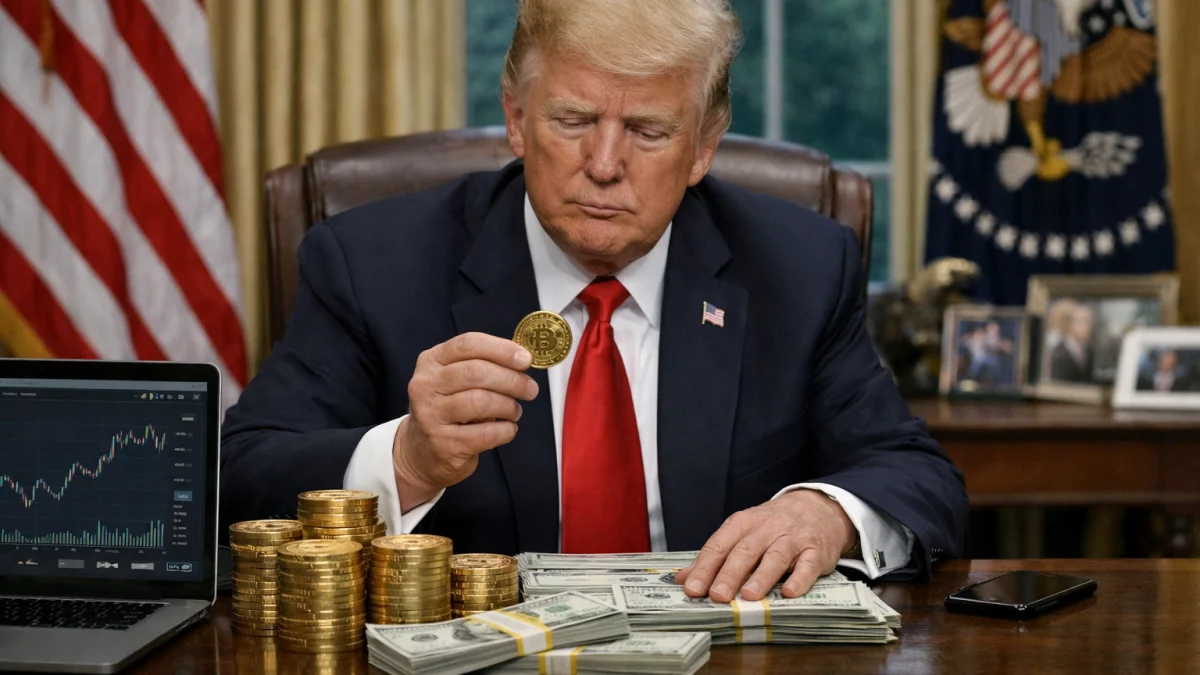
President Donald Trump's latest federal financial disclosure, showing that cryptocurrency ventures generated more than $1 billion in income during the first year of his second term, has intensified a longstanding debate over the intersection of public office, private business interests and financial regulation. The filing, released through the U.S. Office of Government Ethics, marks an unprecedented scale of crypto-related earnings for a sitting U.S. president and places digital assets at the center of broader questions about presidential ethics and governance.
The significance extends beyond the size of the reported earnings. Unlike traditional holdings such as diversified investments or real estate, cryptocurrencies operate in markets that are highly sensitive to government policy, regulatory enforcement and public statements by senior officials. Because the executive branch influences agencies responsible for overseeing digital assets, critics argue that substantial personal exposure to the sector creates an appearance of potential conflicts of interest even when no legal violation has been established. Supporters of the administration counter that Trump's assets are managed independently and that his policy agenda reflects broader economic priorities rather than personal financial gain.
The disclosure illustrates how dramatically Trump's business interests have evolved since his first presidency. Real estate, hotels and licensing agreements historically dominated his financial portfolio. The 2025 filing instead identifies cryptocurrency ventures—including proceeds associated with World Liberty Financial and Trump-branded digital assets—as among his largest income sources. Analysts note that this represents one of the most significant shifts in the financial profile of a modern American president.
The ethical concerns arise because the administration has simultaneously pursued policies intended to expand the U.S. digital asset industry. Since returning to office, Trump has promoted making the United States a global center for cryptocurrency innovation while appointing officials viewed by the industry as supportive of lighter regulation. The administration has argued that previous regulatory approaches discouraged innovation and weakened American competitiveness. Industry participants have generally welcomed those initiatives as providing greater regulatory clarity.
Critics, however, argue that even if policy decisions are made on legitimate economic grounds, the president's financial exposure complicates public confidence in government decision-making. Democratic lawmakers have called for investigations into whether existing ethics rules adequately address digital assets held by senior public officials, while some ethics experts argue that current disclosure requirements were developed before cryptocurrencies became politically significant financial instruments.
The debate also reflects longstanding differences between legal requirements and ethical expectations for U.S. presidents. Unlike many executive branch officials, presidents are generally exempt from federal conflict-of-interest statutes governing financial holdings. Instead, modern presidents have typically relied on voluntary measures—including blind trusts, diversified investments or divestitures—to reduce perceptions of conflicts. Those practices have evolved as political norms rather than constitutional requirements, leaving considerable discretion to individual administrations.
Trump has rejected suggestions that his business interests improperly influence policy. Responding to questions following the disclosure, he said his investments are managed by financial institutions and argued that rising asset values reflect broader economic performance rather than presidential actions. The White House has similarly maintained that administration policies are designed to benefit the American economy and that the president complies with applicable disclosure requirements.
The financial disclosures have also renewed scrutiny of politically branded cryptocurrencies themselves. Market analysts note that several Trump-linked digital tokens experienced substantial volatility after launch, with many retail investors facing steep losses even as licensing arrangements and token sales generated significant revenue for affiliated businesses. Some market observers argue that these outcomes highlight the speculative nature of meme coins generally rather than reflecting unique characteristics of Trump-associated projects. Others contend that the combination of political branding and presidential influence creates risks that existing securities and ethics frameworks were not designed to address.
The controversy arrives as governments worldwide continue developing regulatory frameworks for digital assets. Policymakers in the United States, Europe and Asia are weighing how to encourage innovation while protecting investors and maintaining financial stability. The emergence of cryptocurrency as a major source of wealth for a sitting U.S. president introduces an additional governance dimension that extends beyond traditional financial regulation into questions of institutional accountability and public trust.
For financial markets, the disclosures underscore how closely politics and digital assets have become intertwined. Presidential statements, regulatory appointments and legislative proposals can influence cryptocurrency valuations, making any substantial financial stake by senior policymakers subject to heightened public scrutiny. Whether existing ethics standards remain adequate for this environment is likely to remain a subject of congressional and academic debate regardless of the outcome of any specific inquiry.
The confirmed facts at present are limited but significant: Trump's official financial disclosure reports unprecedented cryptocurrency-related income during his second term, the administration denies any improper conflict between policy and private financial interests, and lawmakers and ethics experts continue examining whether current rules sufficiently address digital assets held by senior elected officials. Future developments are expected to focus on possible legislative proposals, oversight efforts and any additional guidance from ethics authorities rather than on conclusions that have not been officially established.