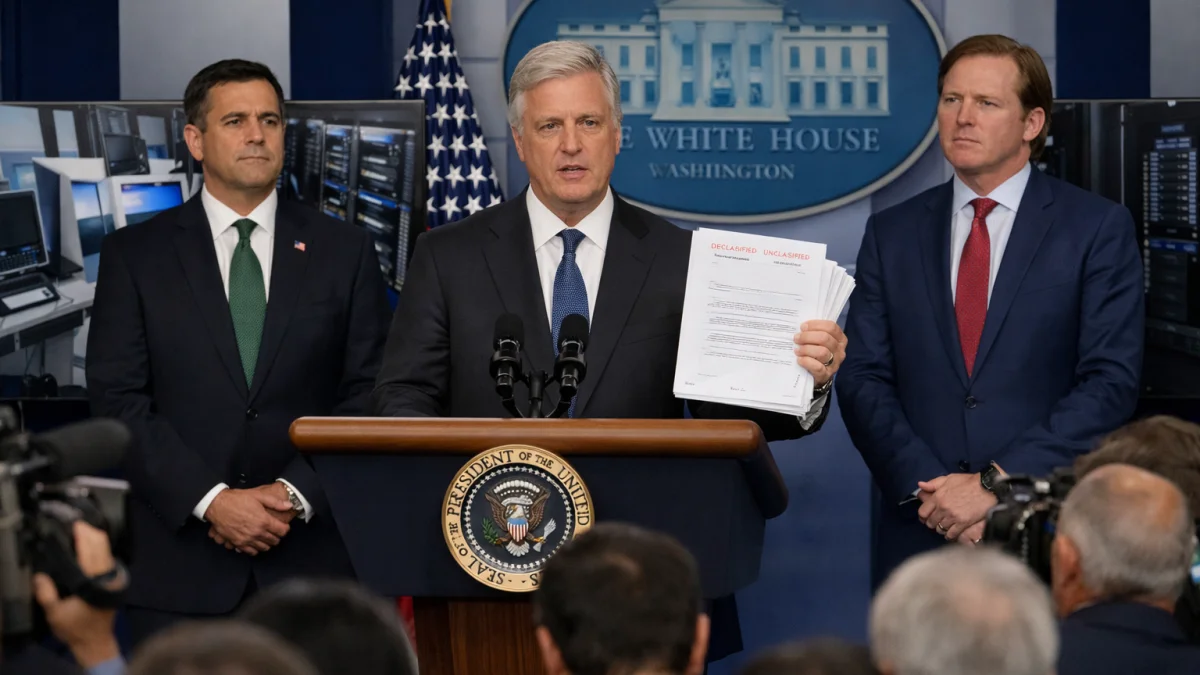
WASHINGTON — The Trump administration has released a new set of declassified intelligence documents that it says reveal foreign efforts to target U.S. election infrastructure and expose vulnerabilities in election systems, prompting renewed political debate over election security and the interpretation of the records.
The White House published hundreds of pages of intelligence assessments, investigative files and other records on Friday following a nationally televised address by President Donald Trump. Administration officials said the material supports calls for stricter election security measures, including stronger voter identification requirements and citizenship verification, while arguing that previous intelligence assessments did not fully reflect the scope of foreign threats.
According to the released documents, U.S. intelligence agencies assessed that foreign governments, including China, Russia and Iran, possessed capabilities to target aspects of election-related infrastructure. Some reports also described cybersecurity vulnerabilities in election software and systems while noting that safeguards such as audits and paper records reduced the likelihood that attacks could alter election outcomes on a broad scale.
President Trump said the documents demonstrated that Americans had not been fully informed about election risks and argued they justified additional federal election reforms. The White House said the declassification was intended to improve transparency regarding intelligence on foreign election threats.
Election security experts and critics of the administration disputed the president's characterization of the records. Reviews by several news organizations found that while the documents discuss known cybersecurity concerns and foreign intelligence activities, they do not conclude that foreign actors successfully changed vote totals in the 2020 election or provide evidence supporting claims of widespread election fraud. Some assessments state that manipulating election systems on a scale sufficient to change national results would be difficult and likely detectable through existing safeguards.
Among the records are documents concerning Chinese collection of U.S. voter registration data, investigations into suspicious voter registration forms in Michigan and assessments of potential vulnerabilities involving election infrastructure. The files also include intelligence discussing Russian interference activities and longstanding concerns about foreign influence operations. Investigations referenced in the documents did not establish evidence that suspicious registration activity resulted in fraudulent votes.
The document release comes months before the 2026 U.S. midterm elections, with election security expected to remain a major political issue. Federal and state election officials have continued to emphasize that they regularly update cybersecurity protections and conduct audits designed to detect irregularities, while the administration has indicated additional election-related policy proposals will be announced in the coming weeks.