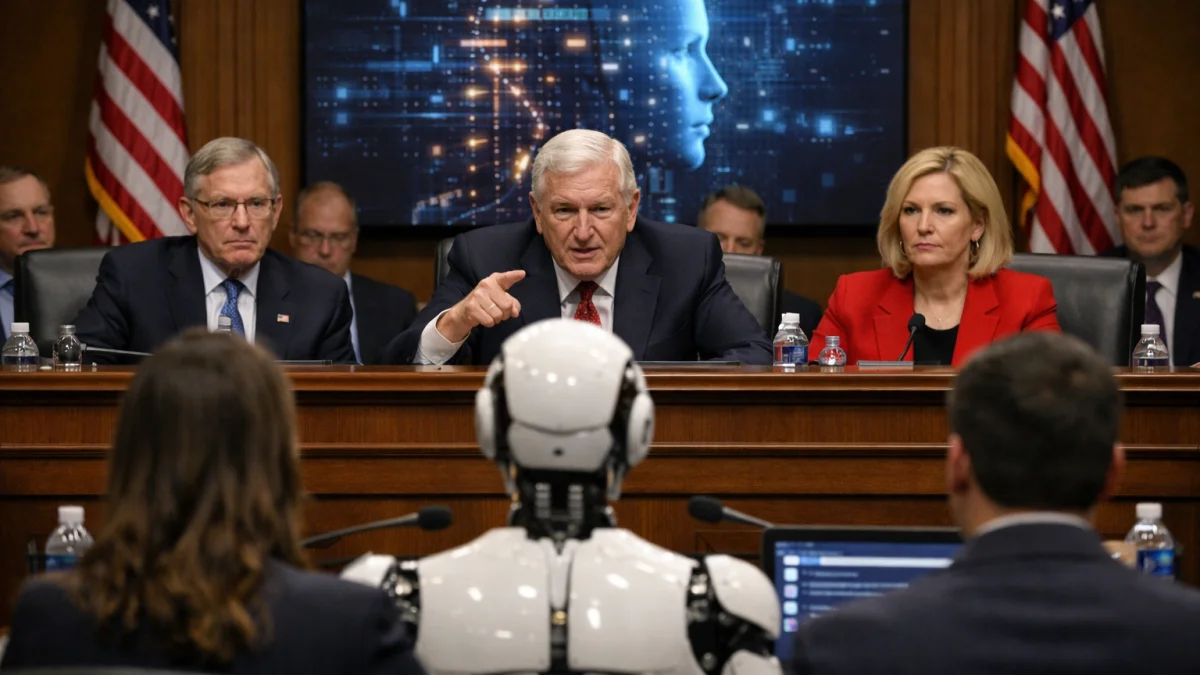
WASHINGTON — Republican lawmakers and conservative advocacy groups intensified scrutiny of artificial intelligence chatbots this week, arguing that leading AI systems display a liberal political bias and calling for greater transparency from technology companies that develop the tools.
The concerns gained renewed attention following the publication of independent analyses and media reports examining how major AI chatbots respond to politically sensitive questions. One widely cited review found that several leading systems frequently provided responses characterized as left-leaning when asked about contentious public policy issues, while offering conservative viewpoints less often.
Republican lawmakers have increasingly raised AI-related concerns as Congress debates how to oversee the rapidly growing technology sector. Senate Commerce Committee Chairman Ted Cruz recently asked Republican members of the committee to submit policy priorities for potential AI legislation, according to people familiar with the discussions and a committee spokesperson.
Conservative organizations contend that AI systems may reflect ideological imbalances stemming from training data, content moderation policies or design choices. David Bozell, president of the conservative Media Research Center, told Fox News Digital in May that “we’re watching the next phase of media bias unfold in real time,” arguing that AI tools should face greater public scrutiny.
Technology companies have generally disputed claims that their products are intentionally designed to favor any political viewpoint. Developers including [OpenAI](https://openai.com?utm_source=chatgpt.com), [Google](https://www.google.com?utm_source=chatgpt.com) and [Anthropic](https://www.anthropic.com?utm_source=chatgpt.com) have said they aim to build systems that are balanced, reliable and responsive to a broad range of users. Google has previously stated that its Gemini chatbot is designed to provide diverse perspectives and that the company continually tests for potential bias.
Researchers and policy experts note that concerns about political bias in AI are not limited to one party. Academic studies and watchdog reports have examined whether chatbots may favor particular viewpoints, while other researchers have warned that measuring ideological bias remains difficult because responses can vary depending on prompts, context and model updates.
The debate comes as lawmakers from both parties pursue legislation addressing AI safety, transparency and consumer protection. Recent bipartisan proposals have focused on issues including child safety, disclosure requirements and standards for chatbot companies.
As of Thursday, no federal agency had formally concluded that major AI chatbots systematically favor one political ideology over another. Congressional discussions on AI regulation remain ongoing, and details of any future legislative proposals aimed specifically at political neutrality in AI systems remain unclear.