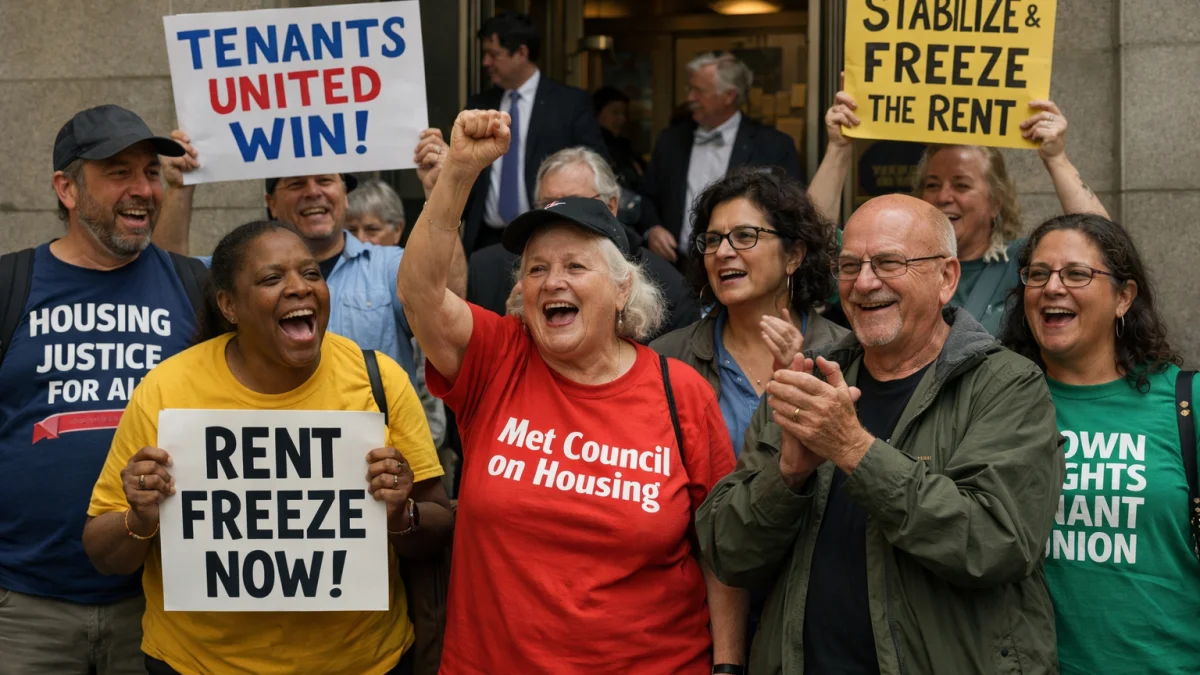
At El Museo del Barrio in East Harlem on the evening of June 25, hundreds of tenants packed the space as the New York City Rent Guidelines Board delivered its decision. Cheers erupted and whistles blew when the 7-1 vote was announced: a rent freeze for both one- and two-year leases on roughly one million rent-stabilized apartments.
The freeze, effective for leases beginning on or after Oct. 1, 2026, and running through Sept. 30, 2027, marks the first time in the board’s history that both lease terms have received a 0% increase. It fulfills a central campaign promise of Mayor Zohran Mamdani, who took office in January 2026.
For many in the room that night, and for tenants across the city’s five boroughs, the moment represented the culmination of years of organizing, lobbying, and personal advocacy amid steadily rising costs in one of the world’s most expensive housing markets.
Maria Gonzalez, a longtime resident of a rent-stabilized building in Washington Heights, has been involved in tenant efforts since the early 2000s. Like thousands of others, she has attended Rent Guidelines Board hearings, joined rallies, and pushed for stronger protections under the rent stabilization system, which covers apartments in buildings with six or more units constructed before 1974, along with certain newer subsidized units.
“Every year it was the same fight,” Gonzalez said in an interview after the vote. “We show up, we tell our stories about choosing between rent and groceries or medicine, and sometimes it felt like nothing changed. This time, it did.”
The decision provides immediate relief for tenants in more than 40% of the city’s rental housing stock. In a city where housing costs have long strained working families, the freeze arrives as operating expenses for landlords—such as utilities, taxes, and maintenance—have continued to rise, according to data presented during board proceedings.
The broader context traces back decades. New York’s rent regulations originated in the post-World War II era and evolved through various reforms. The 2019 Housing Stability and Tenant Protection Act strengthened tenant safeguards by making regulations more permanent, limiting certain increases tied to improvements, and closing loopholes that had allowed units to exit stabilization.
Advocates like those from the Met Council on Housing and other tenant organizations have long argued that without periodic freezes or modest increases, many longtime residents—seniors, families, and essential workers—risk displacement. The 2026 vote echoes earlier freezes, such as those under previous administrations, but extends unprecedented coverage to two-year leases.
Mamdani, who campaigned heavily on housing affordability, hailed the outcome. “This is a historic victory for New York City tenants,” he stated. “After reviewing the data and hearing from New Yorkers across the city, the independent RGB has delivered... the relief that working people across our city deserve.”
Not all perspectives align. Landlords and industry representatives warn that a sustained freeze, amid rising costs, could deter maintenance and investment. One board member representing landlords resigned hours before the final vote, arguing the process had become politicized.
Real estate groups, including the Rent Stabilization Association, have indicated they are exploring legal challenges, citing potential impacts on building upkeep. A Moody’s report earlier noted financial pressures on stabilized properties, though outcomes of past freezes have varied.
Economist Arpit Gupta, the dissenting board member, highlighted concerns that freezing rents while costs rise may lead to deteriorating housing stock over time.
For tenants like Gonzalez, the win is tempered by the recognition that it is temporary and does not solve the city’s underlying shortage of affordable units. “We celebrate today, but we know we have to keep fighting for more housing and protections,” she said.
The vote comes as New York continues grappling with post-pandemic recovery, inflation, and demand for housing. More than two million people live in rent-regulated apartments, making the policy’s reach significant for working-class neighborhoods from the Bronx to Queens.
As leases renew in the fall, many tenants will see their monthly payments hold steady for the next cycle. For those who have spent decades navigating hearings, petitions, and community meetings, the decision underscores the power of persistent collective action in shaping policy.
Outside the museum that night, as the celebration continued into the streets of East Harlem, one organizer summed up the sentiment shared by many: the fight for stable housing is far from over, but this step offers breathing room for the long haul.