WASHINGTON — The U.S. federal student loan system is undergoing its most significant restructuring in years following a series of policy changes that took effect around July 1, 2026, altering repayment options, borrowing limits, and eligibility rules for new and existing borrowers.
The changes stem from legislation enacted in 2025 and finalized through Department of Education regulations published in 2026, according to official federal documents and agency statements. The overhaul replaces several income-driven repayment (IDR) programs with a narrower set of repayment structures and introduces new borrowing caps for graduate, professional, and parent borrowers.
A central feature of the reforms is the elimination of the Biden-era Saving on a Valuable Education (SAVE) plan, which was struck down in litigation earlier in 2026, according to federal court actions cited by the Department of Education. More than 7 million borrowers enrolled in the plan have been instructed to transition to alternative repayment options within a 90-day window or be automatically moved into a new federal repayment structure, according to federal guidance.
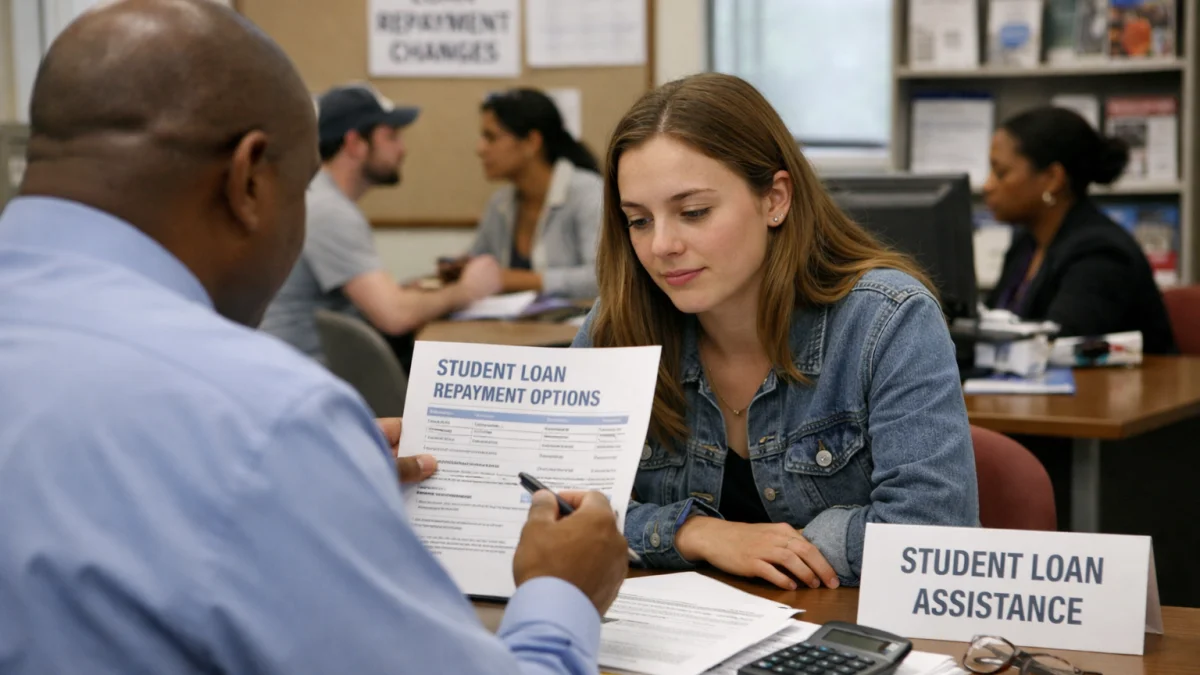
Under the revised framework, the Department of Education has introduced a Repayment Assistance Plan (RAP), which ties monthly payments to a borrower’s income and replaces most prior IDR plans for new loans issued after July 1, 2026. A tiered standard repayment option with fixed terms based on loan size will remain available alongside RAP, according to agency documentation.
The overhaul also introduces new borrowing limits. Graduate students in most programs face annual caps of about $20,500 with lifetime limits near $100,000, while professional degree programs such as law and medicine are subject to higher ceilings. Parent PLUS loans are capped annually and over a lifetime, marking a shift from previous cost-of-attendance-based borrowing rules, according to federal regulatory filings.
Separately, new institutional accountability rules link access to federal student loans to post-graduation earnings outcomes. Under the framework, programs must demonstrate that graduates earn above specified benchmarks, with institutions at risk of losing federal loan eligibility if they fail to meet requirements over multiple years.
The Department of Education has said the changes are intended to simplify repayment structures and reduce long-term debt burdens, while critics cited in court filings and public comments have raised concerns about reduced flexibility for borrowers and potential access constraints for graduate education.
Existing borrowers who do not take out new federal loans may remain on their current repayment plans for a transitional period, though several older programs are scheduled for phased discontinuation through 2028, according to federal implementation timelines.
Further guidance from the Department of Education and ongoing litigation are expected to shape how the reforms are applied in practice as the transition continues through 2026 and beyond.