The helicopters arrived after daylight, their rotors cutting through humid summer air as children and counselors waited at Camp Taum Sauk in southeastern Missouri, surrounded by floodwater that had swallowed roads and cut off every route out. One by one, Missouri National Guard Black Hawk helicopters lifted more than 200 people from the isolated camp, ending hours of uncertainty after torrential overnight rain transformed the Black River into a fast-moving barrier.
For many of the campers, the evacuation became an unforgettable encounter with the force of nature and the scale of an emergency response that state officials described as one of the largest rescue efforts prompted by the historic flooding. For parents, it marked the moment anxious waiting gave way to relief as children stepped off helicopters at a reunification site, tired but safe.
The flooding that struck Missouri on July 10 followed repeated thunderstorms that dropped between 6 and 12 inches (15 to 30 centimeters) of rain across parts of the Ozarks within 24 hours. Governor Mike Kehoe declared a state of emergency, activating Missouri's emergency operations plan as first responders carried out hundreds of water rescues from homes, vehicles, campgrounds and riverside recreation areas. State officials said some locations experienced what meteorologists characterized as a once-in-a-thousand-year rainfall event.
Camp Taum Sauk, located near the Black River outside Lesterville, became one of the most visible symbols of the disaster. According to Missouri State Highway Patrol Sgt. Eddie Young, roughly half of those stranded were children attending the summer camp, while the remainder were counselors and staff members. Floodwaters isolated the property after roads became impassable, leaving helicopters as the safest means of evacuation.
Parents described learning about the emergency through phone calls, text messages and television coverage as rescue operations unfolded. Ann DeField, whose two sons attended the camp, told NPR that she first heard from other parents before learning her children would be evacuated by helicopter. They had spent nearly a week at camp before the flooding changed the final day of their stay into an emergency evacuation.
Images released by the Missouri State Highway Patrol showed helicopters ferrying groups of campers to safety, where families waited for reunions. Video of children disembarking from the aircraft quickly circulated online, capturing a scene that contrasted the anxiety of the morning with the relief of successful rescue efforts.
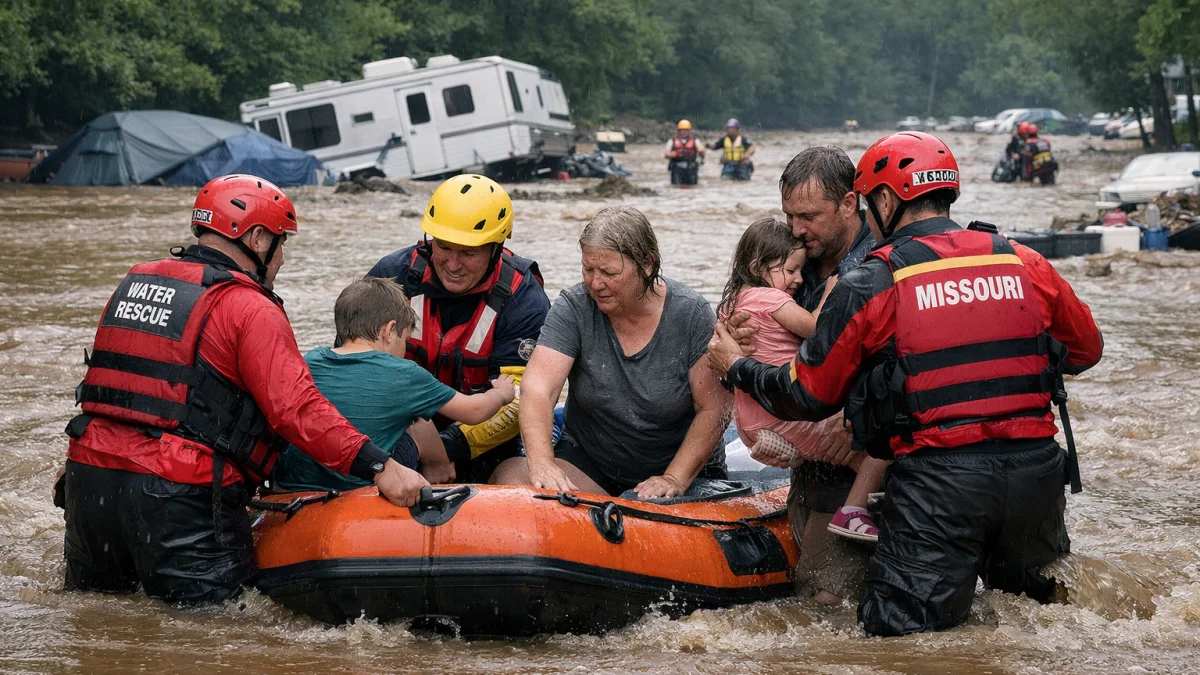
The camp evacuation was only one part of a wider emergency. Nearby, emergency crews rescued about 20 people after a building at the Bearcat Getaway campground collapsed into floodwaters. Authorities later confirmed that five campers initially reported missing there had been found safe. Elsewhere in Reynolds County and surrounding communities, rescue crews pulled people from trees, stranded vehicles and flooded homes while contending with dangerous currents that also capsized two rescue boats, whose crews were themselves safely recovered.
Not every story ended safely. Authorities confirmed one woman died after floodwaters swept away her home in Crawford County, underscoring the destructive power of the storms even as hundreds of rescues prevented a far greater loss of life.
Emergency officials credited weather warnings, rapid coordination and the response of camp staff and first responders for preventing tragedy at Camp Taum Sauk. Governor Kehoe praised local emergency agencies, the Missouri State Highway Patrol, the State Emergency Management Agency and the National Guard for what he called extraordinary efforts to save lives during rapidly changing conditions. Eight Black Hawk helicopters participated in the airlift operation, transporting campers and counselors to a nearby school serving as a family reunification center.
The flooding also highlighted the vulnerability of recreational areas built near rivers that draw thousands of summer visitors each year. Meteorologists from the National Weather Service noted that southeastern Missouri's rivers, campgrounds and floating destinations become especially susceptible during episodes of intense rainfall, when water levels can rise with little warning. Officials continued urging residents and visitors to monitor forecasts, move quickly to higher ground and never attempt to drive through floodwaters.
For the children rescued from Camp Taum Sauk, the experience became an unexpected end to what had begun as an ordinary week of outdoor activities. Parents later described their gratitude not only that their children returned unharmed but also for the calm maintained by camp staff throughout the evacuation. Several campers emerged carrying little more than the belongings they could take aboard the helicopters, while families embraced them at the reunification center after hours of uncertainty.
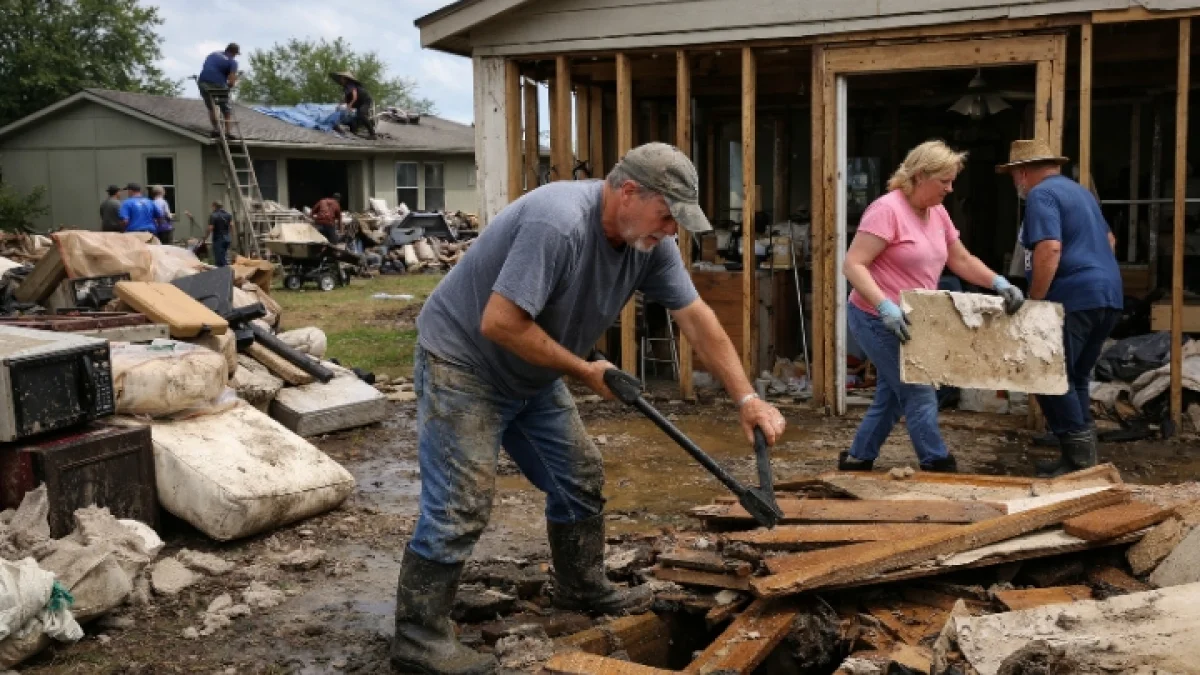
As floodwaters slowly receded across southeastern Missouri, attention shifted from rescue to recovery. Roads remained damaged, communities assessed losses and emergency officials warned that additional rainfall could prolong the danger. Yet the successful evacuation of Camp Taum Sauk stood as one of the defining moments of the disaster—a reminder that even during a historic flood, preparation, coordination and swift action can transform a potentially devastating emergency into a story of survival.