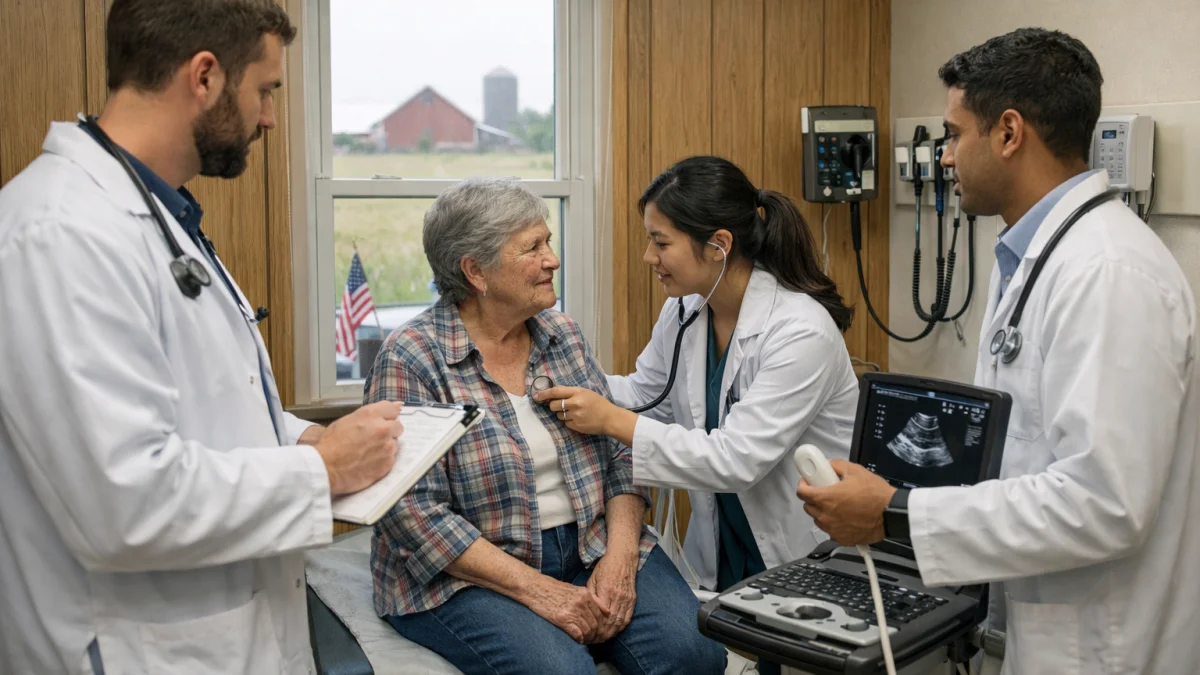
YUMA, Ariz. — Medical schools and health systems are expanding rural-focused training programs in 2026 as educators and health officials seek to increase the number of physicians practicing in communities that have struggled with persistent doctor shortages.
Several institutions are creating new medical education pathways that place students and residents in rural areas, with the goal of improving recruitment and retention of physicians in underserved regions. The initiatives include new regional medical campuses, accelerated medical degree tracks and residency programs designed around rural practice.
The University of Arizona College of Medicine – Phoenix and Onvida Health are launching Arizona’s first rural regional medical school branch in Yuma County. The program, scheduled to begin in July 2026, will offer a three-year Primary Care Accelerated Pathway leading to an M.D. degree, with clinical training based at Onvida Health. The program plans to admit 15 students annually during its initial years, with tuition scholarships funded by the health system, according to Onvida Health.
Health workforce researchers have pointed to location-based training as a key strategy because physicians who train in rural communities are more likely to remain in those areas. Medical schools have increasingly partnered with rural hospitals and clinics to provide students with direct exposure to smaller communities and primary care practice.
In Minnesota, the University of Minnesota Medical School and Lakewood Health System received approval for a new rural family medicine residency program in Staples. The three-year program will train two family medicine physicians each year, with residents completing portions of their education through partner institutions and rural clinical settings. The first cohort is expected to begin in 2027.
Other schools are also developing pathways intended to increase the rural physician pipeline. UNT Health’s Texas College of Osteopathic Medicine and Weatherford College announced a primary care pathway program designed to provide an accelerated route to medical training for students interested in serving rural and medically underserved areas of Texas.
Medical educators say increasing the number of graduates alone may not solve rural shortages unless communities also have enough residency positions, since physicians typically complete postgraduate training before entering independent practice. Arkansas health officials and education leaders have highlighted residency capacity as a continuing challenge as new medical school graduates enter the system.
Universities have also expanded existing rural campuses. The University of Minnesota has cited new regional training sites in St. Cloud and Duluth as part of efforts to prepare more physicians for rural communities.
The programs are part of a broader effort among medical schools and health systems to address uneven physician distribution. The latest initiatives are moving forward through new student admissions, residency development and partnerships between academic institutions and rural healthcare providers.