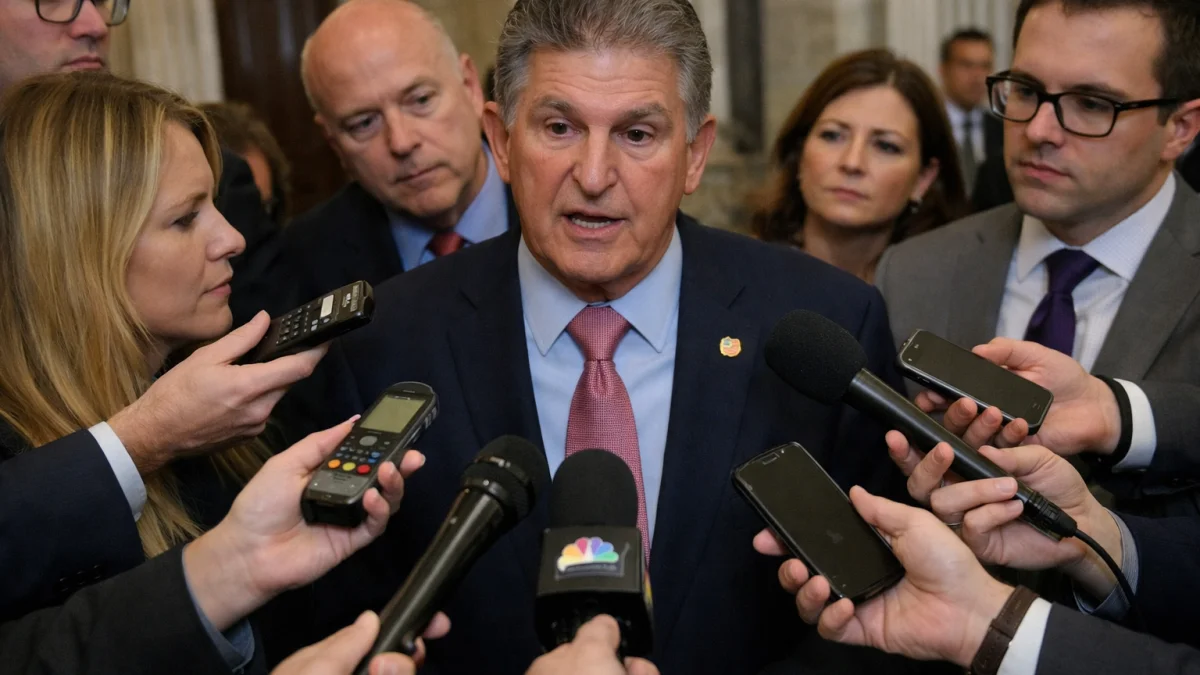
WASHINGTON — Former independent U.S. Sen. Joe Manchin said the Democratic Party's internal divisions reflect what he described as a leadership vacuum, arguing that the absence of clear direction has contributed to growing ideological tensions following recent primary election results.
Speaking on radio host John Catsimatidis' "Cats Roundtable" program, Manchin said recent victories by candidates aligned with the Democratic socialist movement in several Democratic primaries illustrated broader uncertainty within the party's leadership.
"When there's a void of leadership, you see what happens," Manchin said. "They don't know who the leader is." He added that younger, more progressive candidates have become energized and increasingly identify with the socialist movement.
Manchin, who left the Democratic Party in 2024 and registered as an independent, said candidates associated with the Democratic Socialists of America should consider organizing as a separate political party rather than remaining within the Democratic coalition. He argued that both major U.S. political parties have become increasingly influenced by ideological factions on their respective political extremes.
The former West Virginia senator also criticized Democratic leaders in Washington over the party's policy priorities, saying they have focused too heavily on government assistance rather than encouraging employment. His remarks echoed themes he has advanced since leaving the Senate, including calls for a more centrist approach to governing.
Manchin's comments came days after several Democratic primary contests in which progressive candidates defeated incumbent or establishment-backed Democrats, fueling debate within the party over its ideological direction ahead of the November general election.
The remarks also followed Manchin's recent public appeal to Democratic Sen. John Fetterman of Pennsylvania to leave the Democratic Party and become an independent, arguing that doing so would allow him to work more freely across party lines.
Manchin served in the Senate from 2010 until January 2025 and frequently positioned himself as a centrist willing to negotiate with both parties. During his Senate tenure, he played a pivotal role in several closely divided votes while opposing portions of Democratic legislative priorities and supporting bipartisan compromises.
Democratic Party leaders had not publicly responded to Manchin's latest comments as of Sunday. The party continues to prepare for the 2026 midterm elections amid ongoing debates over strategy, policy priorities and the role of progressive candidates within its coalition.