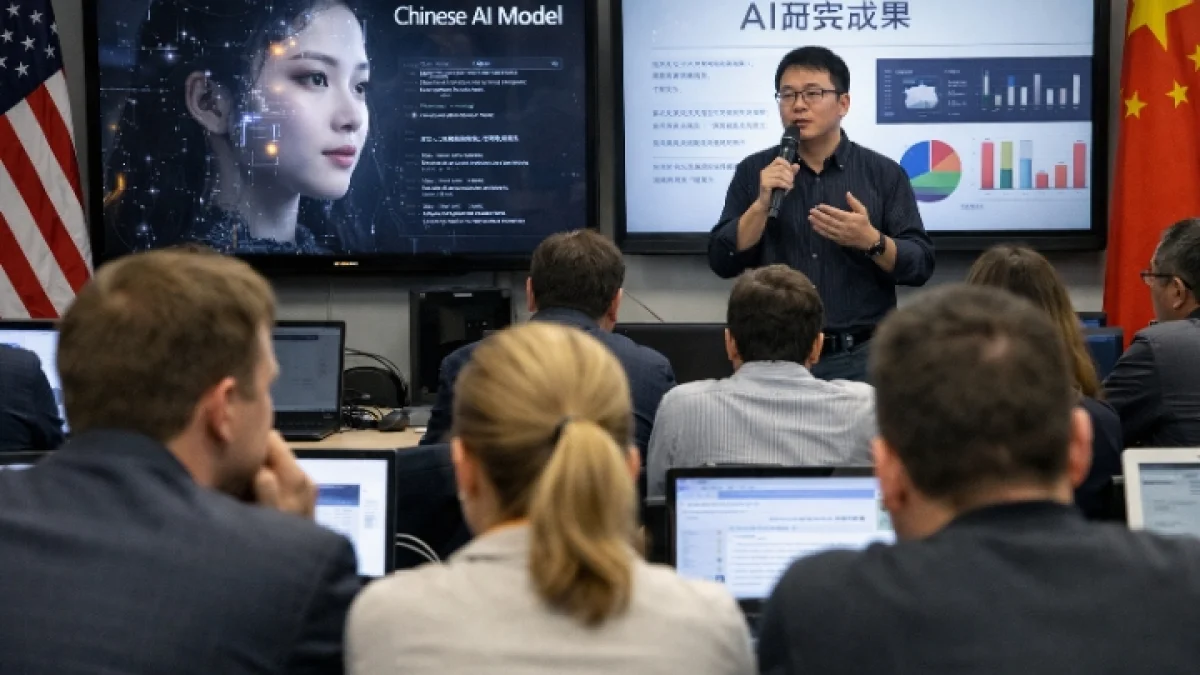
SAN FRANCISCO — U.S. technology companies are reassessing the pace of China’s artificial intelligence progress after the release of new Chinese AI models that have demonstrated capabilities competitive with leading U.S. systems, raising fresh questions about the global balance of power in the AI industry.
The latest attention has focused on Kimi K3, a model developed by Beijing-based startup Moonshot AI, which has drawn notice from researchers and technology analysts for performance in areas including software development and general AI tasks. Independent evaluations cited by technology platforms have placed the model among systems competing with offerings from U.S. companies such as OpenAI and Anthropic.
The development follows earlier breakthroughs from Chinese AI firms, including DeepSeek, which also prompted debate in Silicon Valley over whether Chinese companies were closing the gap with U.S. AI leaders more quickly than expected. Analysts have said the recent progress reflects China’s growing ability to develop advanced models despite restrictions on access to some high-end semiconductor technologies.
Chinese companies have increasingly pursued open-weight AI models, allowing outside developers to examine and adapt parts of the technology. That approach differs from many leading U.S. AI firms, which generally keep their most advanced models closed and provide access through commercial services. Technology analysts have said lower-cost Chinese alternatives could influence how businesses choose AI tools, particularly as companies seek to reduce spending on AI deployment.
The advances have also renewed debate in Washington over technology policy and competition with China. Some U.S. technology executives have raised concerns about intellectual property protection and the possibility that Chinese firms have benefited from unauthorized use of Western AI research or model outputs. Those claims have been disputed, and the methods used by individual companies remain the subject of industry debate.
At the same time, U.S. companies continue to invest heavily in AI research, computing infrastructure and advanced models. Industry leaders including OpenAI, Anthropic, Google and Meta remain among the largest developers of frontier AI systems, while Chinese firms such as Moonshot, Alibaba and other startups continue expanding their capabilities.
The release of new Chinese models has increased pressure on both governments and companies to address questions surrounding AI competition, security, access to computing resources and international technology standards. Industry observers are continuing to evaluate the performance and adoption of the latest systems as global AI development accelerates.