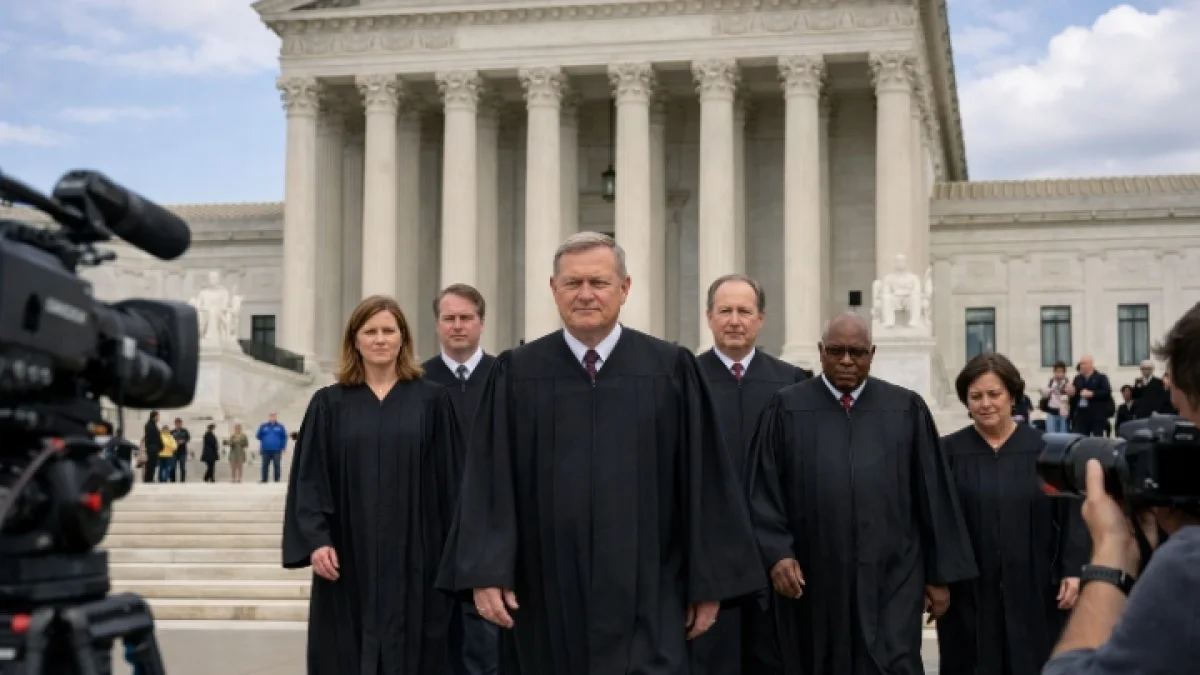
WASHINGTON — The U.S. Supreme Court has upheld a Mississippi law allowing election officials to count mail-in ballots that are postmarked by Election Day but arrive up to five business days afterward, rejecting a Republican-led challenge that argued the state's policy conflicts with federal election law.
In a 5-4 ruling issued this week, the court reversed a lower court decision that had found Mississippi's ballot-receipt deadline inconsistent with federal statutes establishing a uniform Election Day for federal elections. Justice Amy Coney Barrett wrote the majority opinion, joined by Chief Justice John Roberts and Justices Sonia Sotomayor, Elena Kagan and Ketanji Brown Jackson.
The majority concluded that federal law requires voters to cast their ballots by Election Day but does not require election officials to receive or count every valid ballot on that same day. Barrett wrote that the federal election statutes establish the deadline for voting, not for ballot receipt, leaving states free to determine whether timely mailed ballots arriving afterward may be counted.
The case, Watson v. Republican National Committee, was brought by the Republican National Committee, the Mississippi Republican Party and other challengers, who argued that counting ballots after Election Day undermines Congress's designation of a single national Election Day for federal contests.
In dissent, Justice Samuel Alito, joined by Justices Clarence Thomas, Neil Gorsuch and Brett Kavanaugh, argued that the decision departed from the meaning of federal election statutes and warned it could erode public confidence in elections.
The ruling preserves Mississippi's current election procedures ahead of the 2026 U.S. midterm elections and is expected to reinforce similar ballot-receipt grace periods in numerous other states and jurisdictions that accept ballots arriving after Election Day if they were mailed on time.
The decision represents a setback for Republican efforts, supported by President Donald Trump, to restrict the counting of mail-in ballots received after Election Day. Trump has repeatedly criticized mail voting and renewed calls for Congress to adopt stricter nationwide election rules following the ruling, while voting-rights advocates said the decision protects voters from postal delays beyond their control.
The Supreme Court's judgment leaves Mississippi's five-day grace period in effect, with no further action by the court announced.