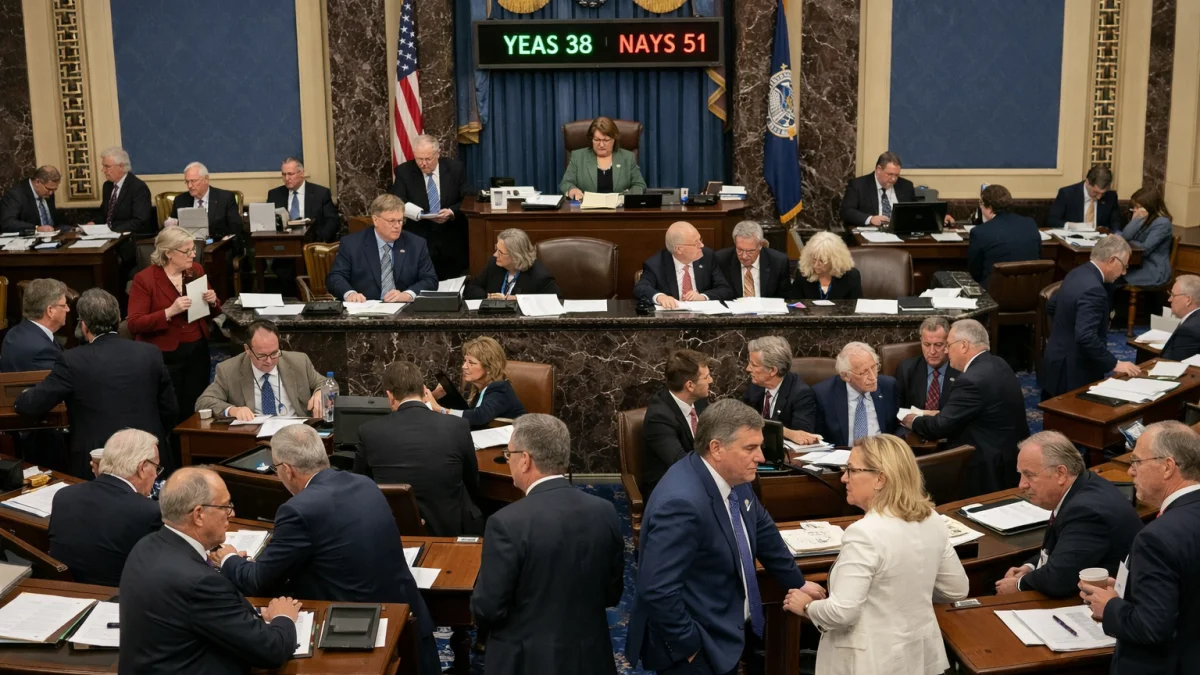
WASHINGTON — The U.S. Senate continued a marathon series of amendment votes on Wednesday on a sweeping Republican spending package, as party leaders worked to secure enough support to advance one of President Donald Trump's top domestic legislative priorities before a self-imposed holiday deadline.
The chamber remained engaged in the procedural process known as a "vote-a-rama," during which senators may offer an unlimited number of amendments to budget reconciliation legislation after debate time expires. The process allows lawmakers from both parties to force votes on policy proposals before a final vote on the underlying bill.
Republican leaders sought to overcome internal disagreements over the measure, which combines tax provisions with increased spending in areas including border security and defense while reducing spending on several domestic programs. Democrats continued offering amendments aimed at modifying or removing key provisions and criticized proposed reductions affecting healthcare and other federal programs.
The legislation is being considered under the budget reconciliation process, enabling Republicans to advance the measure with a simple majority rather than the 60 votes typically required to overcome procedural hurdles in the Senate. The procedure has made the lengthy amendment process a central stage for debate over the bill's policy priorities.
The Congressional Budget Office has estimated that the Senate version of the legislation would add trillions of dollars to the federal debt over the coming decade, a projection that has fueled opposition from Democrats and some fiscally conservative Republicans. Differences within the Republican conference also centered on the bill's fiscal impact and changes to federal healthcare programs.
Several amendments drew bipartisan attention during the overnight session, including proposals affecting artificial intelligence regulation and other major policy issues, although many amendment votes were expected to serve primarily as political messaging rather than substantially reshape the legislation.
Republican leaders continued negotiating with holdout senators as voting stretched through the day, while Democrats maintained unified opposition to the package. Under Senate rules, the chamber must complete consideration of pending amendments before holding a final vote on the bill.
If approved by the Senate, the legislation would return to the House of Representatives, where lawmakers would need to approve the Senate version before it could be sent to President Trump for his signature. As of Wednesday, the Senate had not completed the vote-a-rama, and the timing of a final passage vote remained dependent on the conclusion of amendment consideration and ongoing negotiations.