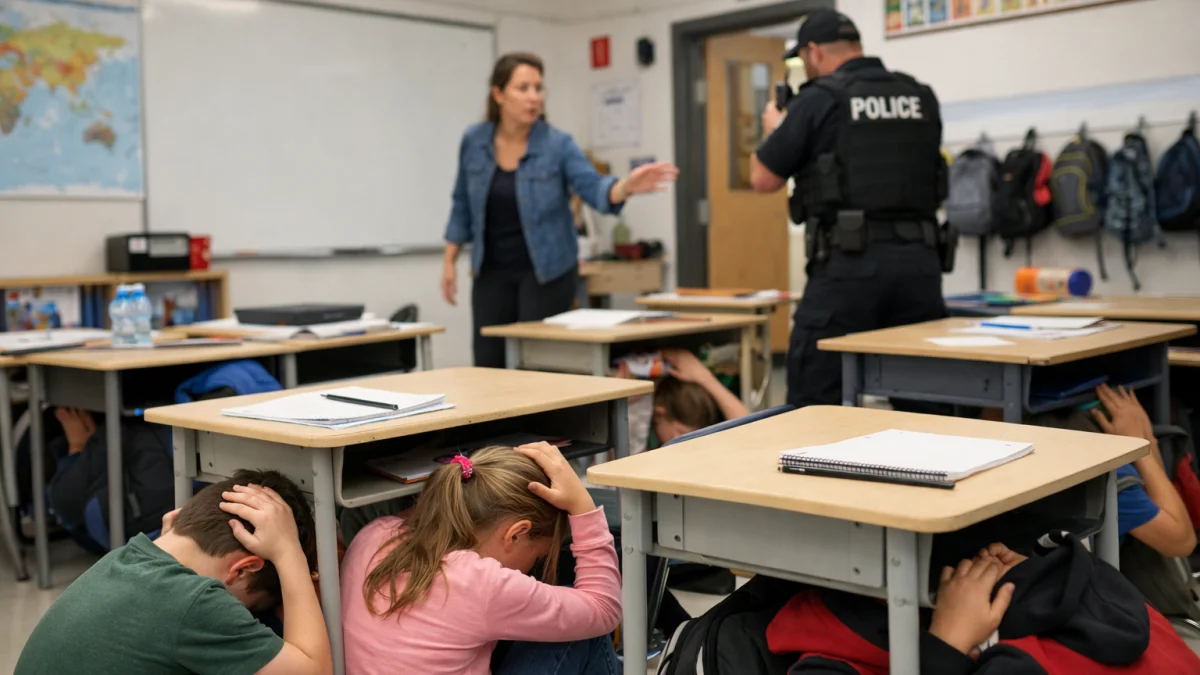
LONDON — Schools in several countries are expanding or updating emergency safety drills and preparedness procedures as education authorities respond to evolving security guidance and broader global risk assessments, while emphasizing that the measures are precautionary and intended to improve readiness rather than signal any specific threat.
Education officials have introduced or strengthened lockdown, shelter-in-place and evacuation exercises in recent months, alongside long-established fire and emergency drills. Authorities have said the initiatives are designed to help students and staff respond calmly during a range of incidents, including severe weather, nearby police operations, infrastructure failures and, where relevant, security threats.
In Scotland, local education authorities have begun preparing schools for "invacuation" procedures under the framework of the United Kingdom's forthcoming Terrorism (Protection of Premises) legislation, commonly known as Martyn's Law. Angus Council said schools are updating risk assessments and introducing age-appropriate exercises that could also be used during non-security incidents such as extreme weather or other local emergencies. Officials stressed that the drills are intended to improve preparedness while minimizing anxiety among pupils.
Elsewhere, education ministries have issued updated safety guidance reflecting local risks. China's Ministry of Education recently instructed schools to strengthen campus safety management during the summer period, emphasizing risk prevention, emergency preparedness and coordination with local authorities.
Indonesia's Ministry of Primary and Secondary Education has introduced broader school safety initiatives this year, including guidance aimed at strengthening disaster preparedness and promoting safe learning environments. Officials said the policies are intended to improve schools' readiness for emergencies while ensuring continuity of education during disruptive events.
Education experts have long argued that regular emergency exercises can improve familiarity with evacuation procedures and reduce confusion during real incidents when conducted in an age-appropriate manner. Research on emergency preparedness has generally found that drills are most effective when accompanied by clear communication, staff training and support for students who may experience anxiety.
Authorities in multiple jurisdictions have reiterated that emergency drills should be adapted to local circumstances and integrated into broader school safety planning. Education ministries have said they will continue reviewing procedures and updating guidance as necessary in coordination with emergency services and other public agencies.