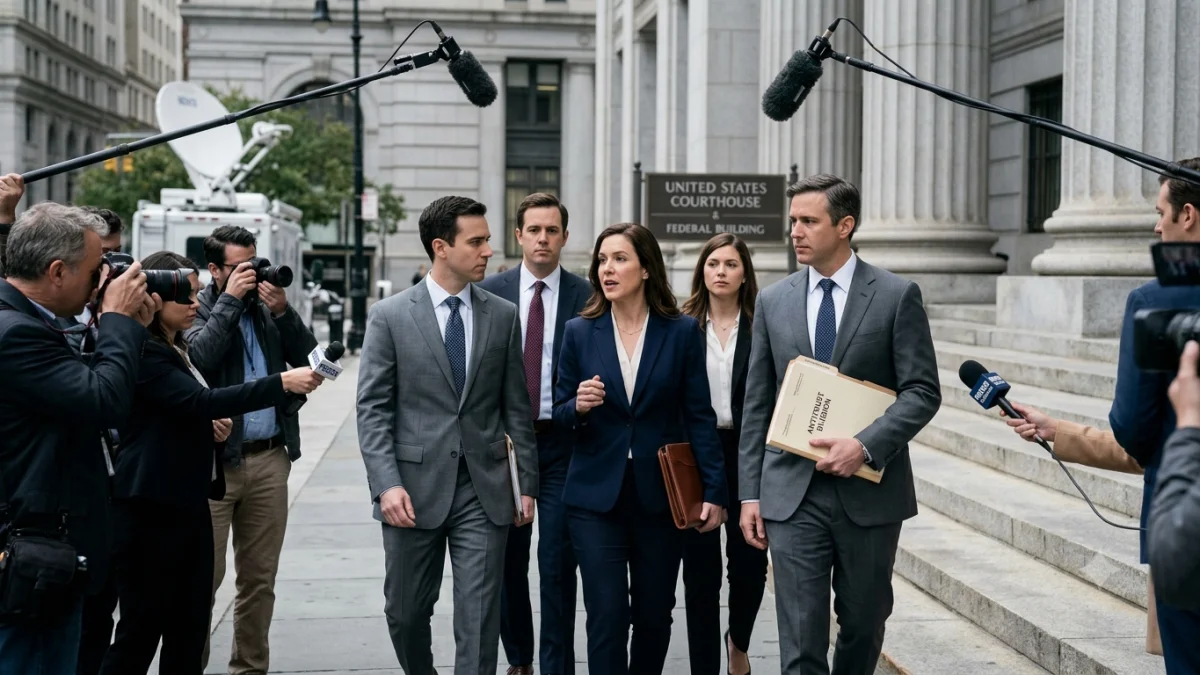
A federal judge has temporarily halted Paramount Skydance's proposed acquisition of Warner Bros. Discovery after granting a request from a coalition of 12 U.S. states seeking to block the transaction on antitrust grounds, creating the most significant legal obstacle yet to one of the largest media mergers in recent history. The temporary restraining order pauses the deal for at least two weeks while the court considers whether a longer preliminary injunction should be issued at a hearing scheduled for early August.
The ruling marks a pivotal moment because it shifts the contest from regulatory review to judicial scrutiny. Although the U.S. Department of Justice concluded in June that the transaction was unlikely to substantially lessen competition, the multistate lawsuit demonstrates that state attorneys general retain independent authority to challenge mergers under federal antitrust law. The case therefore illustrates how state enforcement has become an increasingly influential element of U.S. competition policy, particularly in industries experiencing rapid consolidation.
The proposed combination would unite two of Hollywood's remaining major legacy studios and bring together a broad portfolio of assets, including Paramount Pictures, Warner Bros., CBS, CNN, HBO Max, Paramount+, and extensive film and television libraries. Supporters argue that scale has become essential as traditional media companies compete with global streaming platforms led by Netflix, Amazon and Disney, whose financial resources and subscriber bases have reshaped the economics of entertainment production and distribution.
The states advancing the lawsuit present a different assessment. Led by California, they contend that the merger would significantly increase concentration in theatrical film distribution and basic cable programming, reducing competitive pressure that currently influences pricing, content investment and negotiations with distributors. According to the complaint, fewer major competitors could ultimately result in higher prices, reduced output and less variety for consumers while weakening the bargaining position of creative workers and business partners throughout the entertainment industry.
The dispute reflects a broader debate over how competition should be measured in today's media landscape. Paramount argues that the relevant market extends well beyond traditional Hollywood studios because consumers increasingly choose among streaming services, social media platforms, gaming and other digital entertainment options. From that perspective, combining Paramount and Warner Bros. Discovery would create a stronger competitor capable of investing more heavily in premium content and theatrical releases rather than reducing competition. The company has also argued that multiple international regulators have already concluded that the transaction is unlikely to harm consumers.
The legal challenge highlights the growing complexity of merger enforcement in sectors undergoing structural transformation. For decades, antitrust reviews of media transactions focused primarily on traditional broadcasting, cable television and film distribution. Today's market, however, includes vertically integrated technology companies with global streaming platforms, cloud infrastructure and advertising businesses. Determining whether competition should be evaluated within narrowly defined media markets or across the broader digital entertainment ecosystem lies at the center of the case.
The court's temporary order does not determine the ultimate legality of the merger, but it carries meaningful commercial consequences. Paramount has warned that delays could impose substantial financial costs under the merger agreement if the transaction cannot close before contractual deadlines. Analysts note that prolonged litigation could increase uncertainty for investors, employees and production partners while delaying strategic decisions affecting programming, streaming investments and corporate restructuring.
The case also reflects a broader trend of more assertive state-level antitrust enforcement. Even where federal regulators approve high-profile transactions, states have increasingly demonstrated their willingness to pursue separate legal challenges when they conclude that regional economies, workers or consumers could be harmed. That development adds another layer of regulatory risk for companies pursuing transformational mergers in concentrated industries.
Industry groups have likewise taken differing positions. Some labor organizations and merger critics argue that additional consolidation could reduce employment opportunities, diminish bargaining leverage and narrow editorial diversity across entertainment and news operations. Paramount rejects those arguments, maintaining that the combined company would expand investment in films and creative talent while improving its ability to compete with larger technology-driven rivals.
For now, the merger remains in legal limbo rather than regulatory resolution. The temporary restraining order preserves the status quo while the federal court evaluates whether the states have demonstrated sufficient grounds for a preliminary injunction. The next hearing will determine whether the transaction remains paused during what could become a lengthy antitrust trial. Until then, the central questions being monitored by the court, regulators, investors and the media industry remain whether the combined company would strengthen competition against dominant digital platforms or whether it would substantially reduce competition within key segments of the U.S. entertainment market.