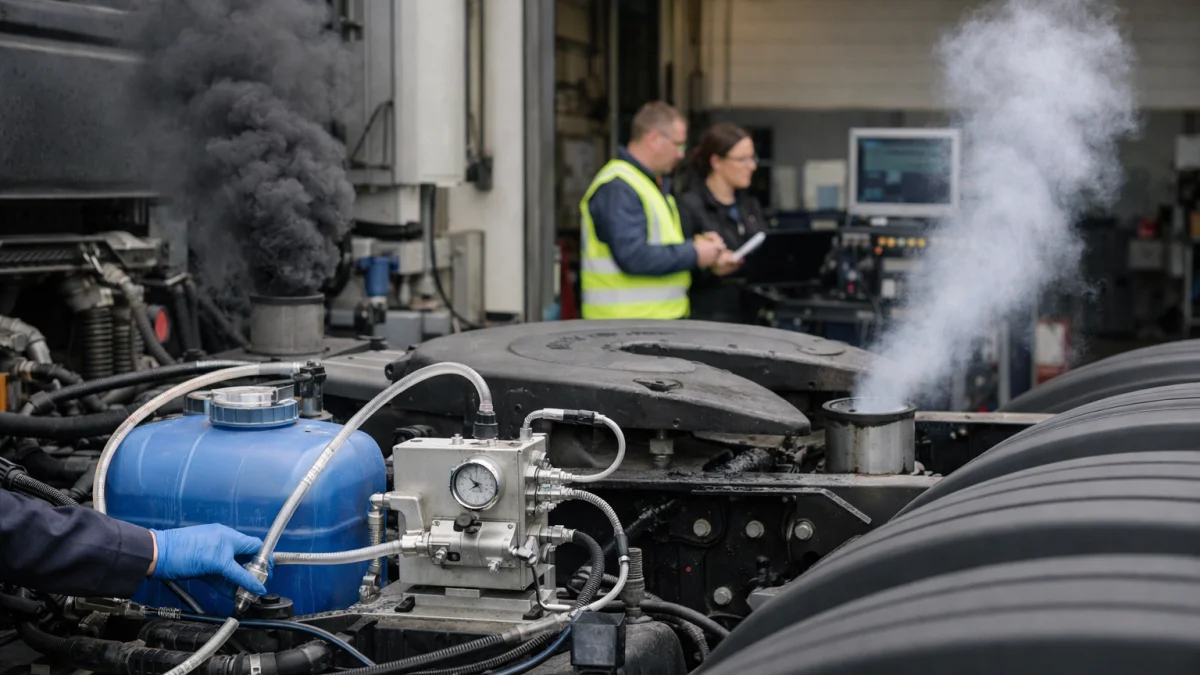
LONDON — A technique that blends small amounts of water into diesel fuel could reduce harmful emissions from diesel engines by more than 60% without requiring engine redesigns, according to a review of international research published on July 1, offering what researchers say could be a practical option for lowering pollution from existing diesel-powered vehicles and equipment.
The findings are based on a review led by researchers at the Federal University of Technology Owerri in Nigeria and published in the journal Carbon Research. The study examined previous research on Water-in-Diesel Emulsion (WiDE) technology, in which microscopic water droplets are dispersed throughout diesel fuel using surfactants to create a stable mixture.
According to the review, the technology reduced nitrogen oxide (NOx) emissions by as much as 67% and particulate matter emissions by up to 68% in the studies examined, while maintaining—and in some cases improving—engine efficiency. The researchers attributed the reductions to improved fuel atomization and lower combustion temperatures produced when the water rapidly vaporizes during combustion, creating so-called "micro-explosions" that enhance fuel-air mixing.
"Water-in-diesel emulsions are a practical and cost-effective way to make diesel engines cleaner," lead author Dr. Chukwuemeka Fortunatus Nnadozie said in a statement accompanying the publication. He said the approach could offer an immediate route to lower emissions because it does not require major modifications to existing engines.
Diesel engines remain widely used in freight transportation, agriculture, construction, power generation and other industrial applications because of their durability and fuel efficiency. However, diesel exhaust is a significant source of nitrogen oxides and fine particulate pollution, both of which are linked to respiratory illness and degraded air quality.
The review said properly formulated emulsions can remain stable for up to about 60 days, although selecting suitable surfactants is critical to maintaining fuel stability and combustion performance. The researchers found that combinations of surfactants generally produced better results than single additives.
The authors cautioned that additional research is needed before widespread commercial deployment. They identified further work on optimizing surfactant formulations, evaluating long-term effects on engine durability, and validating performance under real-world operating conditions as priorities for future studies.
The review adds to a growing body of research exploring cleaner combustion technologies as governments tighten emissions standards while diesel engines continue to play a major role in sectors where alternatives remain difficult to deploy. Researchers said the water-emulsion approach could complement, rather than replace, existing emissions-control systems already used on modern diesel engines.