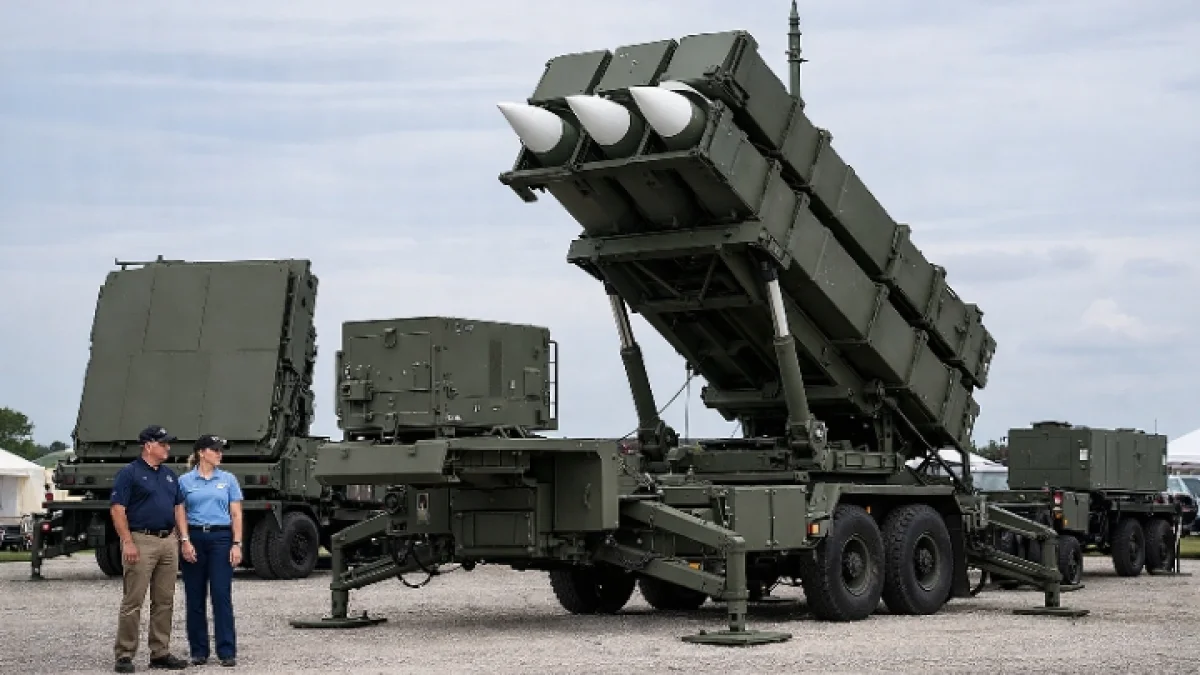
FARNBOROUGH, England — Lockheed Martin has introduced a lower-cost Patriot missile interceptor designed to expand air defense capacity as the United States and its allies seek more affordable ways to counter growing missile threats.
The defense company unveiled the PAC-3 Adapted Capability Effector (PAC-3 ACE) on Monday at the Farnborough International Airshow, saying the new interceptor would cost less than half the price of the existing PAC-3 Missile Segment Enhancement (MSE) interceptor.
Lockheed said the PAC-3 ACE is designed to work with the existing Patriot weapon system and the Integrated Battle Command System, allowing allied forces to use existing command and control infrastructure while adding a lower-cost missile option. The company said the interceptor is intended to engage a range of threats, including cruise missiles, aircraft and short-range ballistic missiles.
The announcement comes as demand for air defense systems has increased among the United States and partner nations following sustained missile and drone attacks in several conflicts. Military planners have raised concerns that the high cost of advanced interceptors could limit the ability to respond to large-scale attacks involving cheaper weapons.
The PAC-3 MSE, the current advanced Patriot interceptor produced by Lockheed, costs roughly $4 million per missile, according to U.S. Army budget documents cited in reporting on the new system. Lockheed did not disclose a final unit price for the PAC-3 ACE but said it would be significantly less expensive than the MSE variant.
Tim Cahill, president of Lockheed Martin Missiles and Fire Control, said the company was developing the system to provide U.S. and allied forces with a more affordable interceptor option. “American and allied warfighters need a solution that is battle-tested and budget-smart,” Cahill said in a company statement.
Lockheed said it plans to work with U.S. and European industry partners on development and manufacturing of the missile. The company has said initial production could begin within about 36 months, with flight testing expected before production begins.
The company’s announcement follows broader efforts by defense manufacturers and governments to increase missile production and develop lower-cost systems capable of addressing large numbers of incoming threats. The U.S. Army has also pursued initiatives focused on more affordable air defense interceptors as part of efforts to expand missile inventories.
Lockheed said the PAC-3 ACE remains under development, with further testing and production decisions expected as the program progresses.