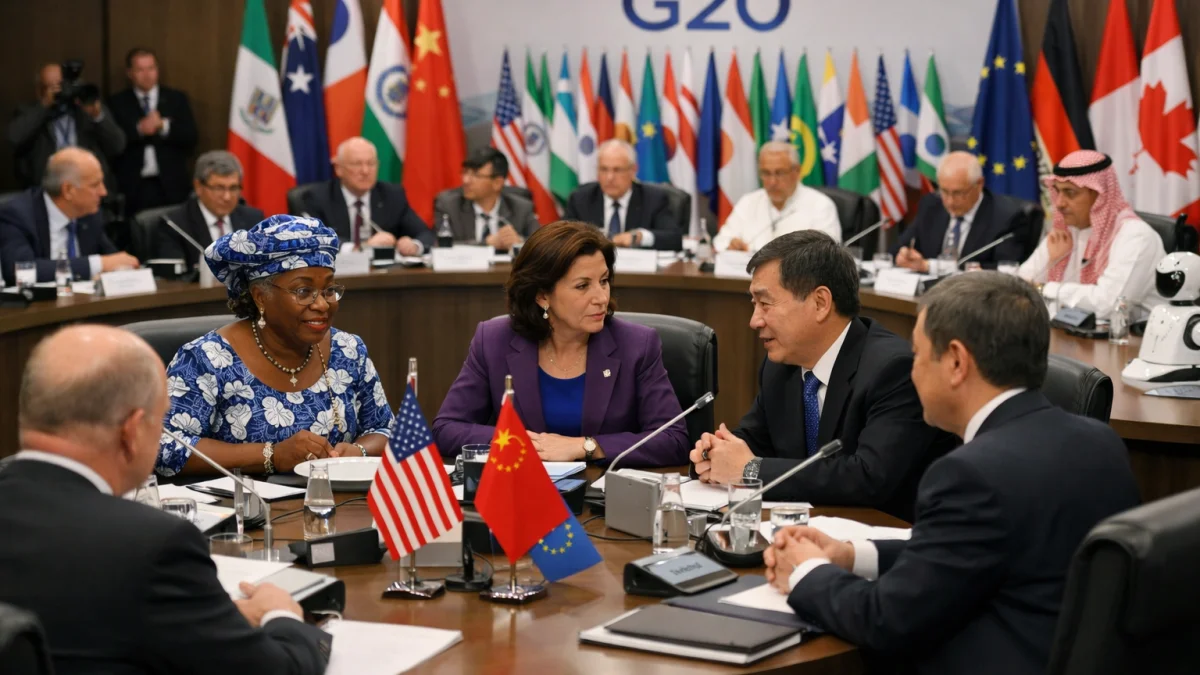
WASHINGTON — G20 members have highlighted innovation partnerships as a central element of the group's 2026 economic agenda, emphasizing cross-border cooperation on artificial intelligence, digital infrastructure, critical minerals and emerging technologies as governments seek to strengthen long-term growth and economic resilience.
The focus emerged during meetings held under the United States' 2026 G20 presidency, whose priorities include promoting economic growth through deregulation, energy security and innovation. Officials said the Innovation Working Group has been examining practical measures to encourage technology collaboration while supporting sustainable economic development and improving productivity.
According to official statements released by participating governments, discussions have covered governance frameworks for artificial intelligence, digital public infrastructure, cross-border payments and partnerships involving critical minerals needed for advanced manufacturing and energy technologies. Delegates also examined ways to expand cooperation between governments, businesses and research institutions.
Indonesia said it urged G20 partners to promote responsible artificial intelligence governance centered on protecting citizens and small businesses while accelerating digital transformation. Jakarta also supported further implementation of the G20 roadmap for cross-border payments through greater interoperability of QR payment systems, saying the approach could reduce transaction costs for migrant workers and small enterprises.
Officials said member economies also discussed voluntary cooperation on critical minerals, including improving geological data transparency, encouraging recycling and strengthening local value creation around mining operations. Participants examined approaches to water management in high-consumption industries and the use of artificial intelligence to help accelerate infrastructure permitting while maintaining environmental oversight, according to official summaries.
The U.S. presidency has described its approach as a return to the G20's core economic mandate, narrowing work to a smaller number of policy tracks focused on trade, innovation, energy and economic growth. Organizers have said the streamlined agenda is intended to produce practical, measurable outcomes for member economies.
Central bank and finance officials have also linked innovation to broader efforts to support global growth amid persistent economic uncertainty. Bank Indonesia said G20 finance ministers and central bank governors agreed earlier this year to strengthen international cooperation while advancing innovation in artificial intelligence and other emerging technologies alongside regulatory and energy initiatives.
The discussions are expected to continue through additional ministerial and working-group meetings before G20 leaders gather for the annual summit in the United States in December, where innovation partnerships are expected to remain among the principal economic topics on the agenda.