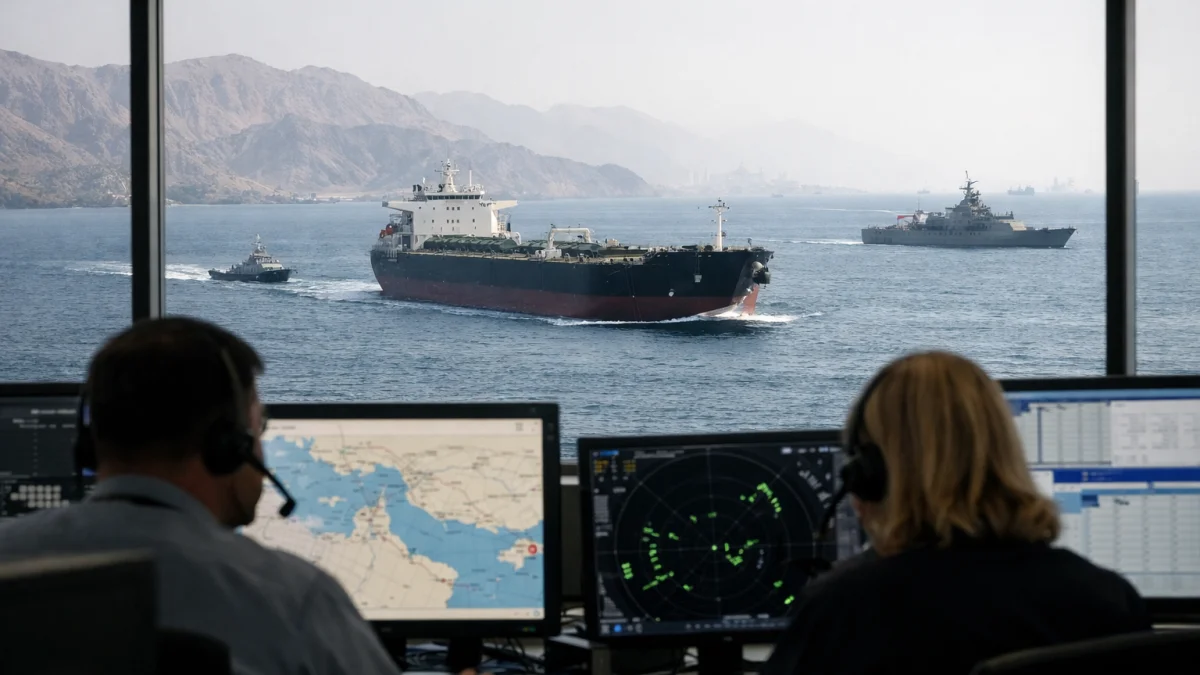
SINGAPORE — Energy companies are monitoring developments around the Strait of Hormuz as reduced tanker traffic and heightened security risks raise concerns over potential disruptions to crude oil and liquefied natural gas supplies, industry officials and shipping data indicated on Monday.
The strategic waterway, a key route for Gulf energy exports, has seen a decline in commercial vessel movements as operators assess security conditions following renewed tensions between the United States and Iran. Data cited by Reuters showed oil and gas tanker activity through the strait had fallen to its lowest level in about two months, with some vessels altering routes or limiting tracking signals amid safety concerns.
Energy producers and trading firms have been reviewing shipping schedules, inventory positions and alternative logistics options as they assess whether the slowdown could affect global supply chains. The Strait of Hormuz is one of the world’s most important energy transit routes, connecting major Gulf exporters with international markets.
Shipping operators have also faced warnings from maritime authorities over risks to commercial vessels. International Maritime Organization Secretary-General Arsenio Dominguez said recent attacks on ships in the region had placed seafarers in danger and urged governments, shipowners and operators to avoid exposing crews to unnecessary risks while conditions remained volatile.
Oil markets have reacted to the uncertainty, with crude prices rising as traders weighed the possibility of prolonged disruptions. Market participants have been watching whether reduced traffic represents a temporary security response or a more sustained constraint on exports.
Several Gulf producers have infrastructure that can partially reduce reliance on the strait, including pipelines that bypass parts of the waterway, although the scale and availability of alternatives vary by country. Analysts have said such infrastructure can provide some flexibility but does not fully replace the capacity of maritime routes.
Companies involved in oil production, refining and shipping have not reported a confirmed broad loss of supply from the latest developments, but many have increased monitoring of vessel movements and regional security updates.
Governments and international organizations continue to call for safe navigation and reduced tensions. The latest industry assessments are focused on whether commercial traffic can resume more normal patterns and whether energy flows through the Strait of Hormuz can be maintained without further disruption.