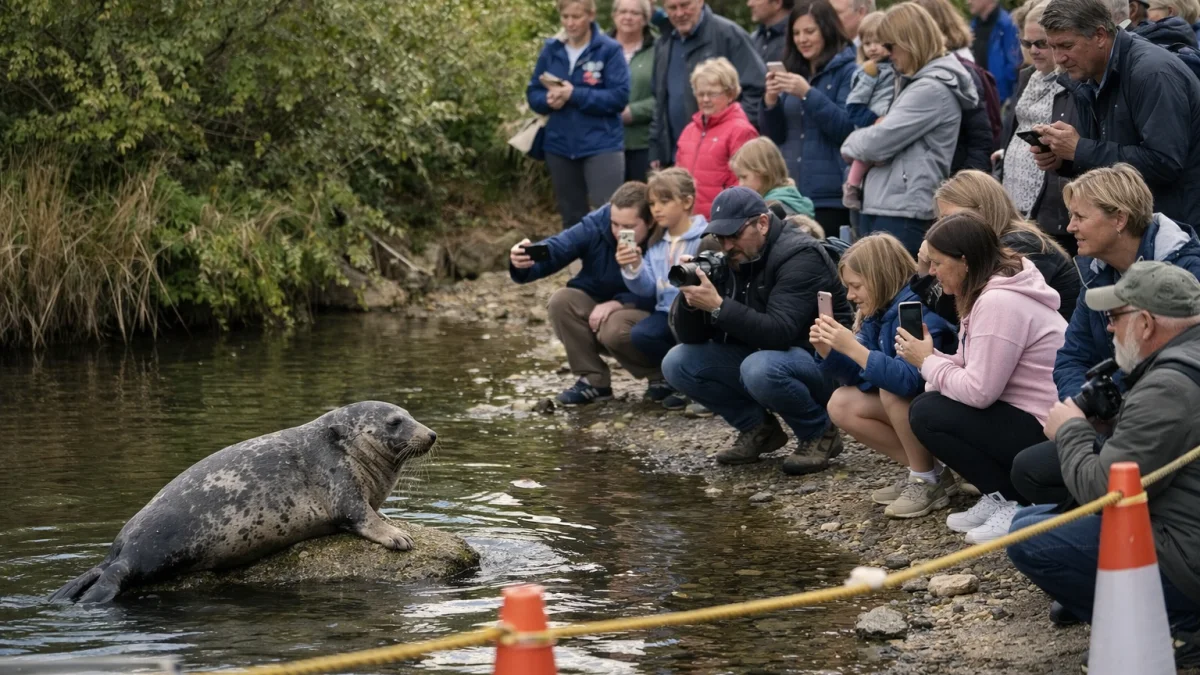
HOBART, Australia — Wildlife authorities in Tasmania have renewed warnings for the public to keep a safe distance from a popular southern elephant seal after growing crowds gathered to watch the animal's latest stay ashore, raising concerns for both public safety and the seal's welfare.
The five-year-old seal, known locally as Neil the Seal, has become a social media attraction for his habit of hauling out in coastal suburbs south of Hobart, where videos of him resting on roads, pushing over traffic cones and damaging fences have drawn widespread attention. Officials say the growing popularity has also encouraged risky behaviour from some visitors who approach too closely for photographs or bring dogs into the area.
Tasmania's Department of Natural Resources and Environment (NRE Tas) has repeatedly advised people to remain at least 20 metres from the animal, keep dogs on leads at least 50 metres away, avoid feeding or touching the seal, and ensure they do not block its path back to the water. Wildlife officers have maintained round-the-clock monitoring while Neil has been ashore, with traffic controls and temporary barriers used where necessary.
Wildlife biologist Sam Thamman of NRE Tas previously said hundreds of people had gathered on some days to observe the seal, creating situations that could endanger both the public and the animal. Officials have reported incidents of people attempting to take selfies within a few metres of Neil despite repeated warnings.
Conservation advocates have urged stronger long-term protections as Neil continues to attract international attention online. Wildlife carer Cory Young and other supporters have backed calls for restricted access zones around known haul-out sites, arguing that preventative measures are needed before the seal grows even larger. Adult male southern elephant seals can weigh several tonnes.
Clarence City Council and NRE Tas are developing a formal management plan that would establish designated viewing areas, improve public education and coordinate crowd management during future visits. Local officials have said the aim is to protect both residents and wildlife while allowing people to observe the animal responsibly.
Authorities have stressed that Neil remains a wild animal despite his popularity and have urged the public not to treat him as a tourist attraction. Experts say disturbing the seal during its resting and moulting periods can increase stress and raise the risk of dangerous interactions.
By Thursday, wildlife experts said Neil appeared to have returned to sea after several weeks ashore, although they noted he could reappear elsewhere along Tasmania's coastline. NRE Tas has asked anyone who encounters the seal to report the sighting through the state's marine mammal hotline rather than approach the animal.