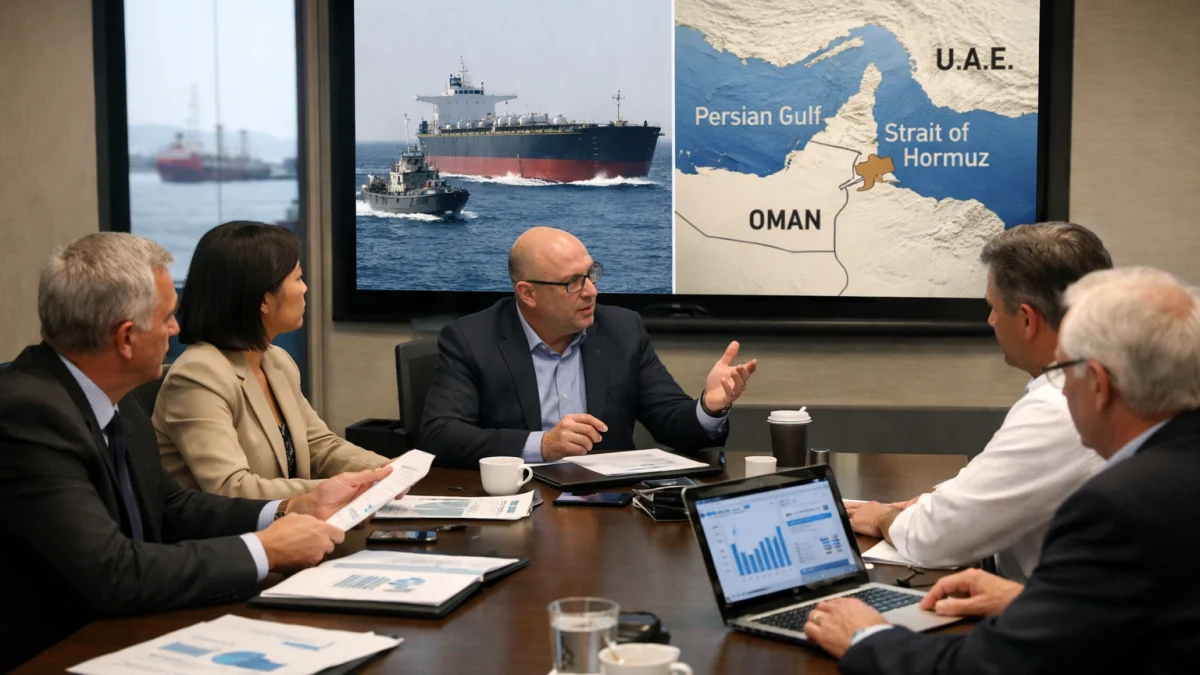
LONDON — Corporate boards across energy, manufacturing, shipping and consumer sectors intensified contingency planning on Tuesday as renewed volatility in and around the Strait of Hormuz heightened concerns over fuel costs, supply chains and maritime security following a fresh escalation in the Middle East.
The latest disruption to one of the world's most important energy shipping routes has prompted companies to reassess operational and financial risks after attacks on commercial vessels, reduced tanker traffic and rising insurance costs unsettled global markets. Oil prices climbed sharply while freight markets showed renewed signs of stress as shipowners reviewed voyage plans and some cargoes were redirected, according to market participants and shipping data.
Industry executives and risk advisers said many multinational companies were activating crisis-management procedures that had been developed during earlier regional disruptions. Those measures include reviewing inventory levels, identifying alternative suppliers, securing additional shipping capacity where available and evaluating hedging strategies against further swings in energy prices.
The International Maritime Organization reiterated that seafarer safety should remain the overriding priority. Secretary-General Arsenio Dominguez said commercial vessels should not be exposed to conditions where credible security guarantees cannot be assured and urged all parties to avoid actions that endanger civilian shipping.
The International Chamber of Shipping also called for an end to attacks on commercial vessels, saying freedom of navigation must be preserved and warning against restrictions or tolls on transit through the strait. Secretary General Thomas A. Kazakos said the industry's focus should be on restoring safe, unimpeded passage for merchant shipping.
Analysts said prolonged instability could increase transportation expenses, extend delivery times and place additional pressure on manufacturers dependent on imported energy or components moving through Gulf shipping routes. Energy-intensive industries, airlines and chemical producers were among sectors closely monitoring developments.
Financial markets reflected those concerns as investors weighed the potential for higher inflation stemming from increased oil prices. Bond yields rose while equity markets weakened in several regions as traders assessed the implications of a sustained disruption to crude and liquefied natural gas exports from the Gulf.
Despite heightened uncertainty, companies and logistics providers said business continuity plans developed during previous disruptions had enabled many firms to respond more quickly by diversifying suppliers, increasing inventories and improving supply-chain visibility.
Shipping and energy companies continued to monitor official security guidance on Tuesday as governments, industry groups and maritime authorities assessed conditions in the Strait of Hormuz, with no confirmed timetable for a return to normal operating conditions.