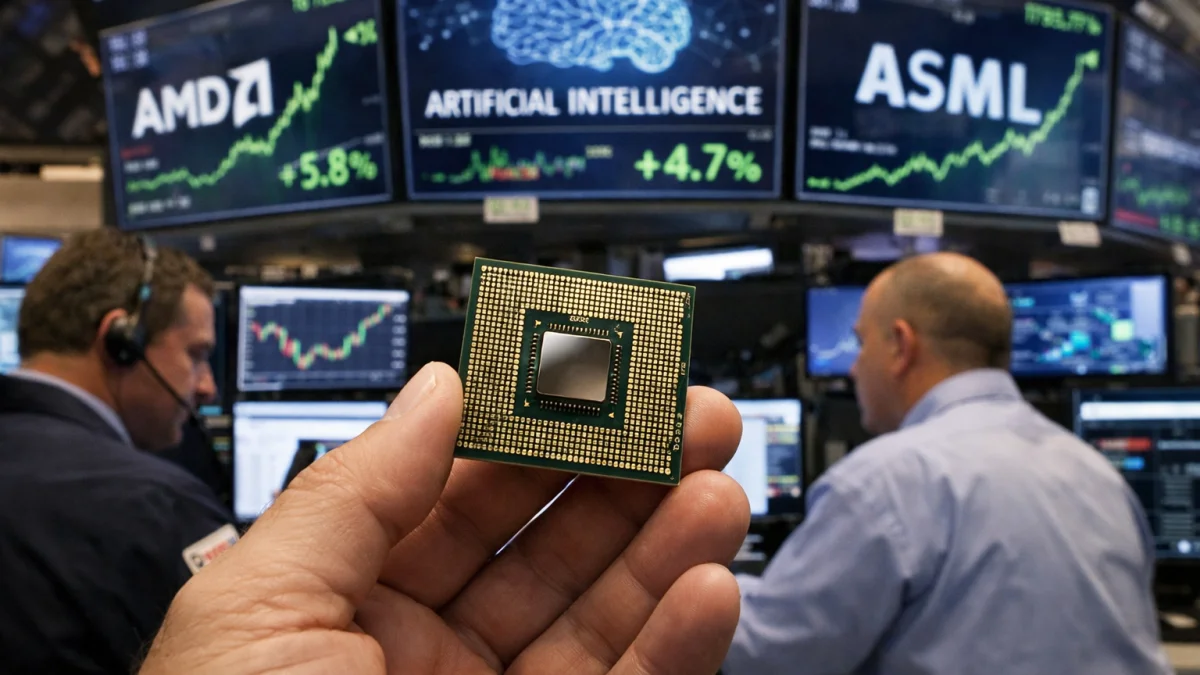
LONDON — Global semiconductor stocks extended their advance on Friday as investors continued to pour money into companies tied to artificial intelligence, helping lift major equity benchmarks despite lingering concerns that valuations across the sector have become increasingly stretched.
Technology shares led gains in several markets, with chipmakers benefiting from expectations that spending on AI infrastructure will remain robust as the second-quarter earnings season approaches. The rally followed a strong debut for South Korean memory chipmaker SK Hynix on the Nasdaq, reinforcing investor appetite for companies viewed as central to the AI supply chain.
The broader U.S. market ended the week higher, with the S&P 500 and Nasdaq posting weekly gains as investors looked beyond geopolitical tensions and shifted attention toward upcoming corporate earnings. Semiconductor companies were among the strongest performers, extending a rebound that began earlier in the week after a brief selloff.
Market participants said optimism continues to center on sustained demand for advanced processors, memory chips and networking hardware needed to support expanding AI workloads across cloud computing and enterprise applications.
The renewed buying follows several months of exceptional gains in semiconductor shares, although recent trading has been marked by heightened volatility as investors reassess whether rapid increases in capital spending on AI infrastructure will translate into long-term earnings growth.
Some analysts cautioned that the sector's sharp rise has left little room for disappointment. Morgan Stanley strategist Lisa Shalett warned that signs of weakening pricing power among some chipmakers could indicate that the current phase of the rally is becoming more vulnerable to setbacks, even as the long-term outlook for AI investment remains constructive.
Others noted that investors will soon receive fresh evidence on demand trends as major semiconductor companies begin reporting quarterly results. Those earnings are expected to provide insight into spending by hyperscale cloud providers and whether AI-related revenue growth is keeping pace with elevated market expectations.
Despite the enthusiasm surrounding AI, some market observers continue to point to the semiconductor industry's history of boom-and-bust cycles. They argue that strong profits alone may not be sufficient to sustain current valuations if capacity expands faster than demand or if AI-related investment slows.
For now, however, investors appear focused on continued AI adoption, leaving semiconductor shares at the forefront of global equity markets as attention turns to the next round of corporate earnings and guidance.