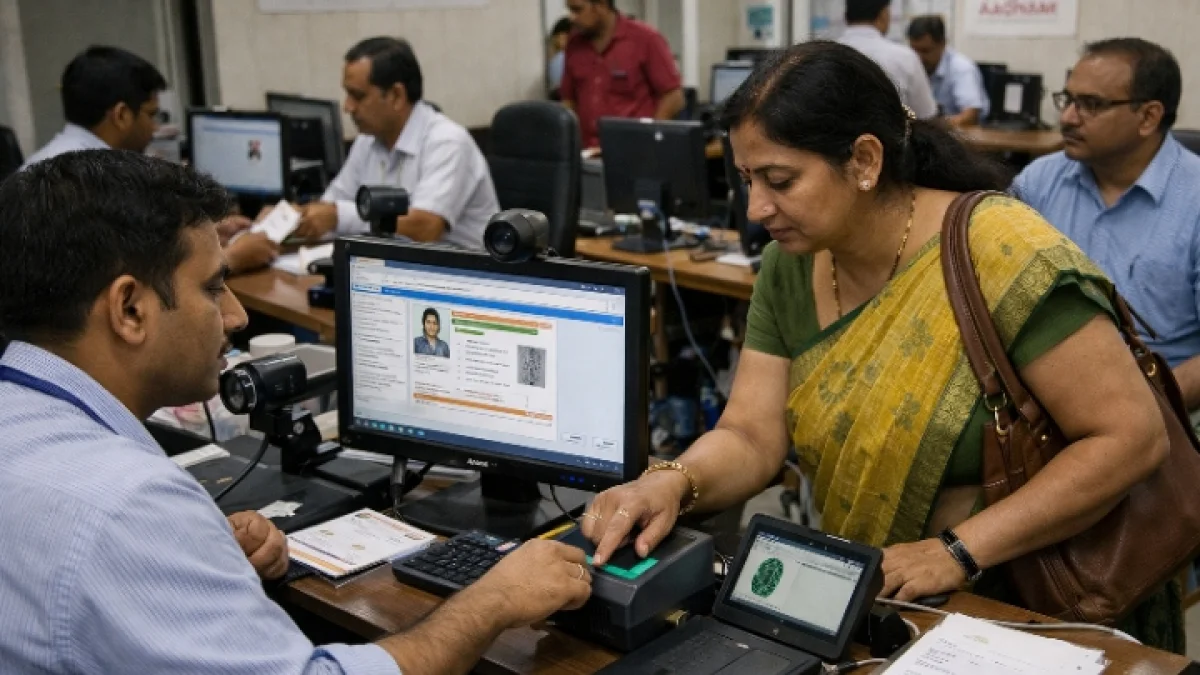
MUMBAI — India’s Central KYC Records Registry (CKYCRR) is expanding the use of a unified digital identity verification system across financial institutions, allowing banks, insurers, securities firms and other regulated entities to access standardized customer KYC records instead of repeatedly collecting the same documents.
The Central KYC system, managed by the Central Registry of Securitisation Asset Reconstruction and Security Interest of India (CERSAI), stores customer identification information in a centralized repository and provides a unique KYC identifier that can be used across participating financial institutions. The system was introduced to improve consistency in customer verification processes and reduce duplication in financial onboarding.
Under the framework, authorized financial institutions can search, upload, download and update KYC records through the registry, with access governed by regulatory requirements. The Department of Financial Services has said the Central KYC Registry is designed to support uniform KYC norms and interoperability of records across the financial sector.
The initiative covers institutions regulated by major financial regulators, including the Reserve Bank of India (RBI), Securities and Exchange Board of India (SEBI), Insurance Regulatory and Development Authority of India (IRDAI), and Pension Fund Regulatory and Development Authority (PFRDA).
The government has been working to modernize the KYC framework as part of a broader push toward digital financial infrastructure. In its 2025-26 budget announcements, the Finance Ministry said the revamped Central KYC Registry would provide features including secure electronic storage of documents, data de-duplication, KYC updates and notifications to institutions when customer information changes.
The system is intended to simplify processes for customers opening new financial relationships, such as bank accounts, investment accounts or insurance policies, by reducing the need to submit identical identity documents to multiple institutions. Financial institutions continue to remain responsible for meeting their own regulatory obligations, including customer due diligence and compliance checks.
Regulators have also continued to adjust KYC rules to balance easier customer access with anti-money-laundering requirements. The RBI has issued amendments to its KYC directions, including measures related to periodic KYC updates and customer verification procedures.
As of July 2026, the Central KYC framework remains part of India’s ongoing effort to create a more integrated digital verification system for financial services, with regulated institutions continuing to use the registry for customer identification and record management.