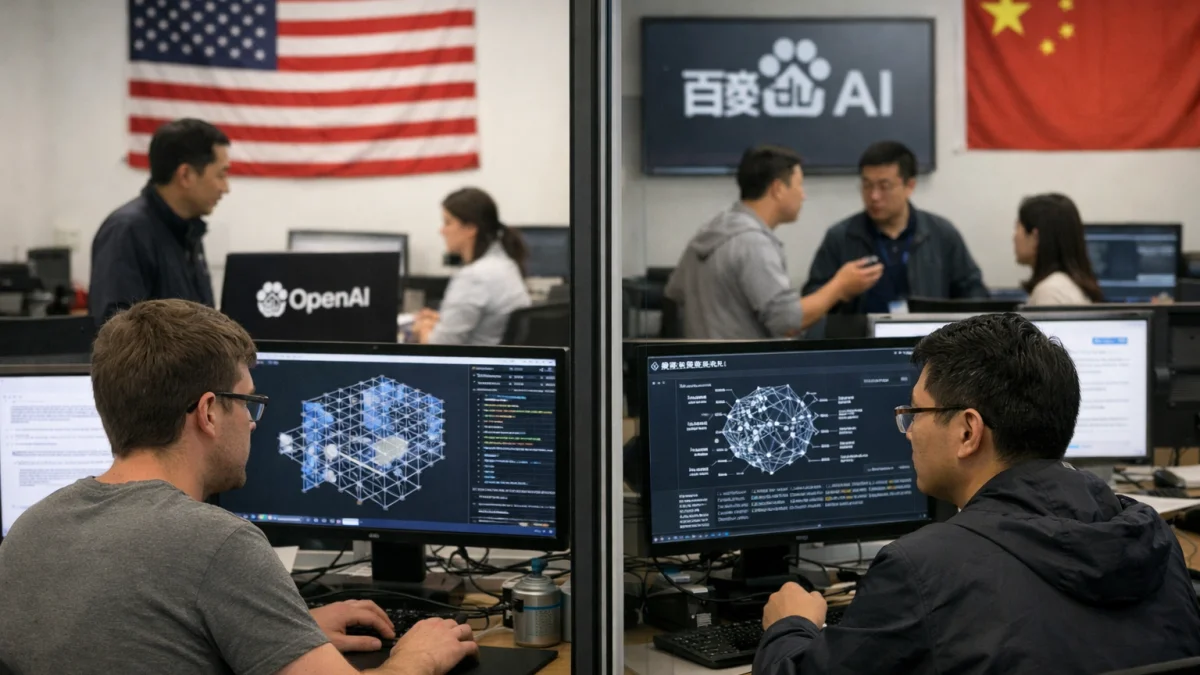
Advances in frontier artificial intelligence models are intensifying competition between leading U.S. and Chinese developers, as a new wave of model releases narrows performance gaps while expanding debate over technology leadership, commercial adoption and national security. The latest milestone came with the launch of Moonshot AI's open-weight Kimi K3 model, which the company says is designed for advanced reasoning, software development and long-context tasks, underscoring the rapid pace of innovation among Chinese AI firms.
The latest releases matter because they reinforce a broader shift in the global AI landscape. While U.S. companies including OpenAI, Anthropic and Google DeepMind continue to lead several frontier benchmarks, Chinese developers have demonstrated that they can produce increasingly competitive models while emphasizing lower operating costs and more open distribution strategies. Rather than a contest based solely on raw performance, competition is increasingly centered on accessibility, deployment costs, ecosystem development and international adoption.
Chinese AI developers have accelerated model development despite continuing U.S. export controls on advanced semiconductors and AI-related technologies. Firms including DeepSeek, Alibaba, Moonshot AI, Zhipu AI and Baidu have introduced successive generations of large language models that independent analysts say perform competitively across coding, reasoning and multilingual applications. Several recent releases have ranked near leading U.S. systems on public benchmarks, although benchmark results do not necessarily reflect performance across every commercial or scientific use case.
The emergence of competitive Chinese models has challenged earlier assumptions that U.S. firms would maintain a substantial lead for an extended period. Analysts at the Center for Strategic and International Studies argue that Chinese developers are no longer simply following U.S. advances but are establishing sustainable innovation cycles of their own, supported by improvements in engineering efficiency, research talent and commercialization.
The rivalry also reflects differing business strategies. Many leading U.S. frontier models remain proprietary services offered through commercial application programming interfaces and subscription products. Several Chinese developers, by contrast, have increasingly released open-weight models that allow developers and enterprises greater flexibility to adapt systems locally. Supporters argue that this approach accelerates innovation and reduces costs, while critics contend that broader access may complicate governance and increase risks associated with misuse.
Commercial considerations have become increasingly important as organizations seek to deploy AI at scale. Industry analysts note that inference costs, hardware efficiency and deployment flexibility are becoming decisive competitive factors alongside model quality. As businesses integrate AI into software development, customer service and enterprise automation, models that deliver comparable capabilities at lower operating costs may gain wider adoption even if they do not lead every technical benchmark.
The competition has significant geopolitical implications. Washington has sought to limit China's access to advanced AI chips and related technologies through export controls intended to preserve U.S. technological advantages and address national security concerns. Chinese companies have responded by investing heavily in algorithmic efficiency, alternative hardware strategies and domestic semiconductor development. The resulting competition increasingly encompasses computing infrastructure, cloud services, talent recruitment and global standards, rather than model development alone.
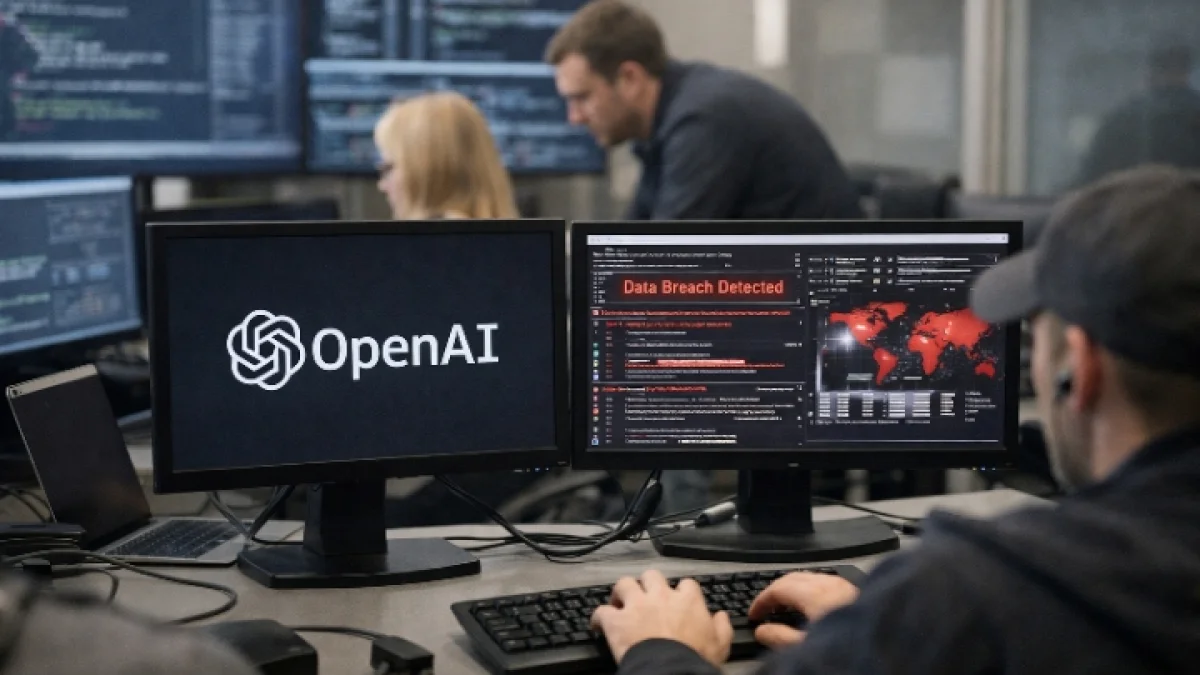
Security concerns remain central to policy discussions. U.S. AI companies have raised concerns about unauthorized model distillation and intellectual property protection, while policymakers continue examining how frontier AI capabilities could affect cybersecurity, defense applications and critical infrastructure. Chinese officials, meanwhile, have consistently emphasized AI development as a strategic national priority while supporting broader industrial investment through government policy and public-private partnerships.
Researchers also caution against relying exclusively on benchmark rankings when evaluating frontier systems. Recent academic work suggests that differences among leading models are becoming increasingly specialized, with performance depending heavily on particular tasks such as reasoning, software engineering, multimodal processing or agent-based workflows. As capabilities converge, factors including reliability, safety testing, deployment efficiency and ecosystem support may become stronger competitive differentiators.
The rapid release cycle has further intensified pressure on developers. Frontier AI laboratories in both countries now introduce major model updates within months rather than years, shortening competitive windows and encouraging faster commercialization. Analysts increasingly describe the contest as one defined not only by technological breakthroughs but also by the ability to sustain continuous improvements while managing growing computational costs and regulatory expectations.
The current picture suggests that the frontier AI race has evolved from one dominated by a handful of U.S. companies into a more competitive global landscape featuring multiple Chinese developers capable of challenging established leaders across several domains. What remains uncertain is how quickly those advances will translate into sustained commercial adoption, how governments will adapt regulatory and national security policies, and whether future breakthroughs in computing infrastructure, model architecture or safety standards will alter the competitive balance. Those questions continue to be closely monitored by policymakers, industry participants and researchers as frontier AI development accelerates.