BELFAST — Neo-Nazi-linked “Active Club” networks are being scrutinized by researchers and counter-extremism analysts for their possible role in encouraging and shaping anti-immigrant violence that erupted in Belfast earlier this month, although no public evidence has confirmed that identified members directly participated in the street attacks.
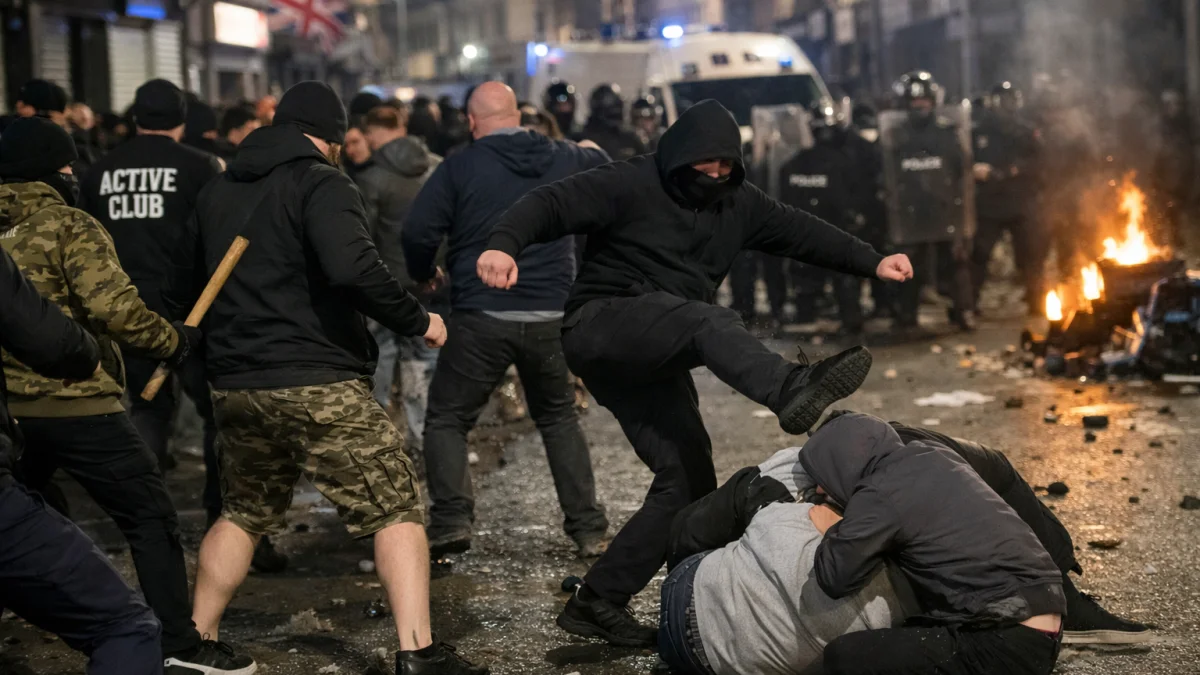
The unrest followed the June 8 stabbing of a local man, Stephen Ogilvie, allegedly by a Sudanese asylum seeker. Police said the suspect was charged with attempted murder. Video of the attack spread rapidly on social media before anti-immigration protests escalated into violent disorder in parts of Belfast, where masked groups attacked homes and businesses associated with ethnic minority communities, burned vehicles and clashed with police.
Researchers who monitor extremist movements said online activity linked to the Active Club network, a decentralized white supremacist movement that originated in the United States and has expanded internationally, appeared to encourage operational tactics ahead of the violence.
According to researchers cited by National Public Radio, a Telegram channel associated with a group calling itself the Ulster Youth Club posted guidance before the riots advising participants to avoid carrying smartphones or smartwatches, conceal identifying features and cover tattoos. After the violence, accounts associated with the broader Active Club movement praised what they described as participants' operational security, including efforts to prevent images from identifying those involved.
Experts cautioned that the available evidence does not establish that members of Active Club groups organized or carried out the attacks. No publicly known identifications of participants as Active Club members had been announced by authorities as of Sunday, and analysts said the speed of mobilization also reflected longstanding sectarian tensions, anti-immigrant sentiment and the amplifying effect of social media.
Counter-extremism organizations have said extremist groups have since portrayed the Belfast unrest as a model for future mobilization, while warning that online propaganda increasingly encourages decentralized acts of violence.
Northern Ireland political leaders and police condemned the attacks, describing the targeting of minority communities as unacceptable, while officers launched investigations into suspected hate crimes and public disorder. Community organizations, trade unions and anti-racism groups organized demonstrations in Belfast condemning the violence and expressing support for affected residents. Thousands attended peaceful rallies calling for solidarity with immigrant communities.
Authorities have continued investigating the riots and related criminal offenses, while researchers say they are monitoring whether extremist networks seek to exploit similar incidents elsewhere.