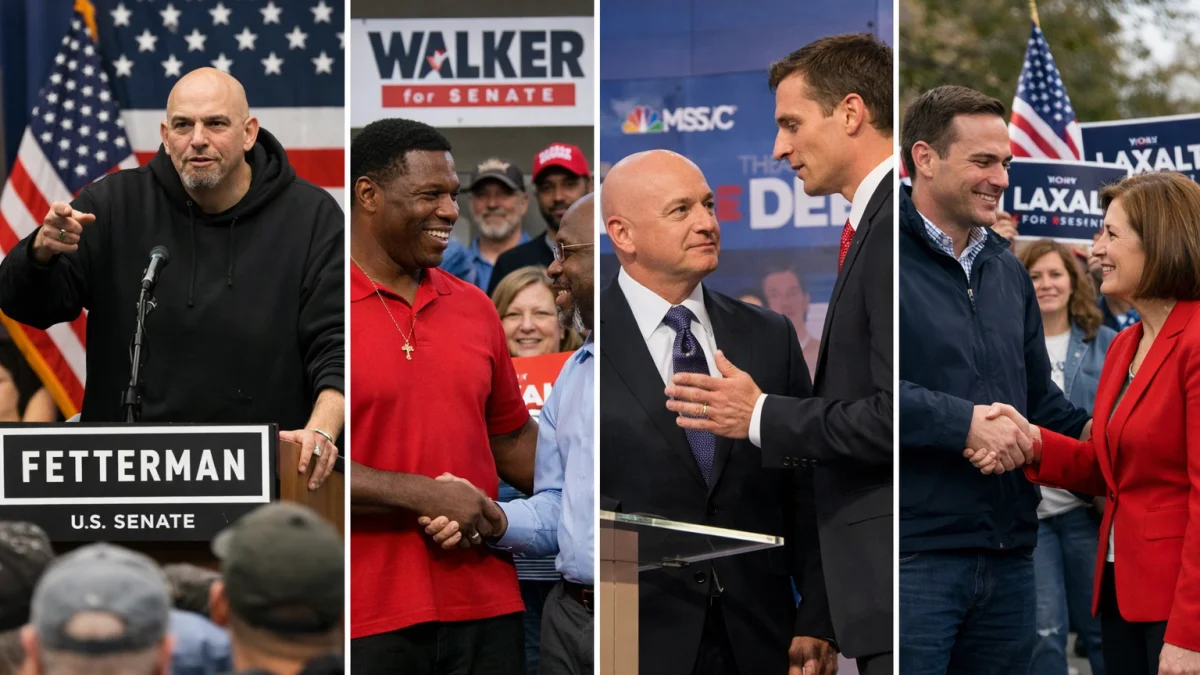
WASHINGTON — Control of the U.S. Senate remains highly competitive heading into the November midterm elections, with both Republicans and Democrats concentrating resources on a handful of battleground states that are expected to determine which party holds the chamber in the next Congress.
Republicans currently hold a narrow Senate majority, while Democrats are seeking the net gains needed to regain control. Early polling and campaign activity indicate that several closely contested races are likely to decide the outcome, including contests in North Carolina, Maine, Ohio, Texas, Iowa and Alaska, according to public polling and nonpartisan election analysts.
A New York Times/Siena College survey released on Wednesday showed Democrats leading decisively in North Carolina, where former Democratic Governor Roy Cooper holds an advantage over Republican Michael Whatley in the race to succeed retiring Republican Senator Thom Tillis. The poll found other key Republican-held seats remained considerably more competitive, with Democratic candidates either narrowly trailing or holding only slim leads within the margin of error.
The competitive landscape comes as both national parties intensify fundraising and voter outreach ahead of what is expected to be one of the most expensive Senate election cycles in recent years. Party committees and outside political groups have reserved advertising across several battleground states while recruiting volunteers and expanding field operations.
Tuesday's primary elections also clarified parts of the Senate map. In Colorado, Democratic Senator John Hickenlooper defeated a progressive primary challenger to secure his party's nomination and advance to the general election against Republican state Senator Mark Baisley, preserving a seat Democrats are expected to defend successfully.
Analysts say Republicans continue to benefit from defending a favorable electoral map overall, but the political environment remains fluid as voters weigh the performance of President Donald Trump's administration alongside economic conditions and other national issues. Competitive Senate contests are also expected to overlap with closely fought gubernatorial and House races in several states, potentially influencing turnout.
With several months remaining before Election Day, campaign strategists from both parties have emphasized that polling represents only a snapshot of voter sentiment and that large numbers of undecided and infrequent voters could prove decisive.
Candidates across the battleground states are expected to accelerate campaigning following the conclusion of primary contests, with debates, advertising campaigns and voter mobilization efforts set to intensify through the summer and into the fall.