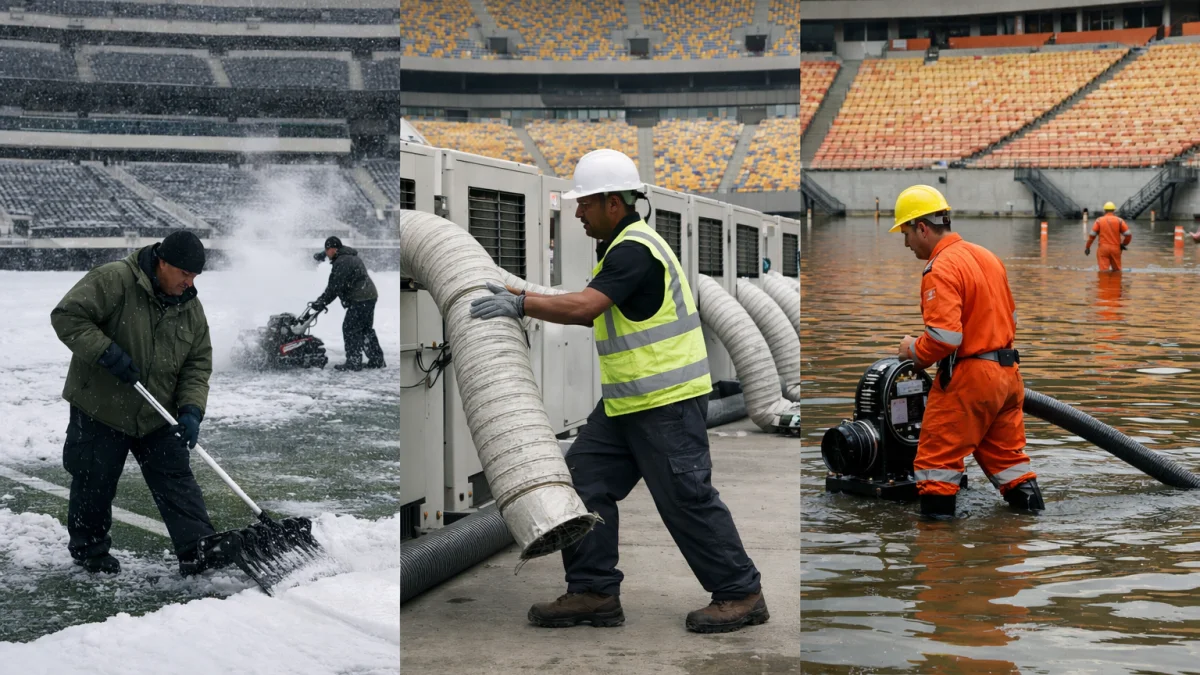
MIAMI — FIFA World Cup host cities across the United States, Canada and Mexico are continuing to adapt tournament operations to a wide range of climate conditions, with organizers balancing player welfare, spectator safety and match scheduling as the competition enters its decisive stages.
The 2026 tournament, the first to feature 48 teams playing across 16 host cities in three countries, has exposed teams and organizers to sharply differing environmental conditions, from summer heat and humidity in parts of the United States and Mexico to milder temperatures at northern venues. FIFA has implemented weather-monitoring protocols, hydration breaks and contingency plans for lightning and other severe weather throughout the competition.
Heat has remained a focal point of discussion despite FIFA reporting that, as of Friday, no match had reached the governing body's threshold requiring its highest-level extreme heat interventions. Reuters analysis found that while several matches were played in challenging conditions, none had crossed the Wet Bulb Globe Temperature level that would trigger mandatory consideration of postponements or cancellations under FIFA protocols.
Medical researchers and climate specialists have nonetheless continued to warn that environmental factors extend beyond air temperature. Peer-reviewed studies published ahead of the tournament identified heat, altitude, air pollution, allergens and extensive travel between venues as significant variables that could affect player health and performance during the month-long competition.
Some venues present unique challenges. Matches in Mexico City and Guadalajara are played at high altitude, while cities such as Miami, Dallas and Kansas City have historically experienced high summer temperatures. Several U.S. stadiums equipped with retractable roofs or climate-controlled environments have helped reduce exposure during matches held indoors.
The United Nations has also highlighted climate as one of the defining themes surrounding the expanded tournament, noting before kickoff that June and July conditions across North America could increase the likelihood of matches being played in elevated heat-risk environments compared with previous World Cups.
FIFA's sustainability strategy requires each host city to implement environmental plans alongside broader human rights and operational commitments, with measures tailored to local conditions. The governing body has said the plans are intended to manage environmental risks while supporting tournament operations across the geographically dispersed event.
Tournament organizers said they will continue monitoring weather conditions throughout the remaining fixtures, with existing protocols governing hydration breaks, severe weather responses and any operational adjustments deemed necessary for player and spectator safety.