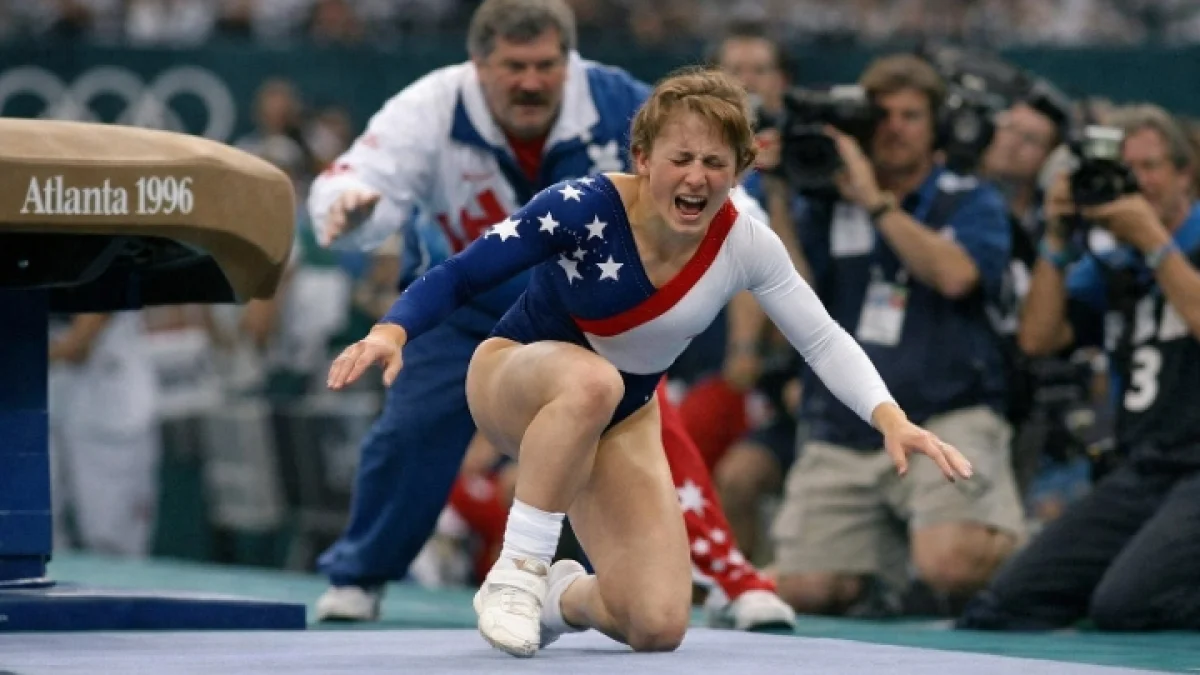
ATLANTA — Thirty years after Kerri Strug's vault at the 1996 Atlanta Olympic Games became one of the defining moments in U.S. sports history, athletes, Olympic organizations and fans marked the anniversary on Thursday by reflecting on the performance that helped secure the United States' first women's Olympic gymnastics team gold medal.
On July 23, 1996, Strug entered the final rotation of the team competition after teammate Dominique Moceanu had fallen on both of her vault attempts. Strug landed awkwardly on her first vault, injuring her left ankle, but returned to perform a second vault, sticking the landing before collapsing in pain. She received a score of 9.712, and the United States finished ahead of Russia and Romania to capture its first Olympic women's team title.
The victory by the team later known as the "Magnificent Seven" remains one of the most recognizable moments in Olympic history. Television images of coach Bela Karolyi carrying Strug from the competition floor became symbolic of the Atlanta Games and were replayed widely during anniversary coverage.
USA Gymnastics has previously described Strug's performance as one of the lasting memories of the 1996 Olympics, noting that her final vault helped clinch the historic team gold. The governing body has also recognized the achievement through its Hall of Fame, where Strug was inducted in 2002.
In the decades since Atlanta, Strug has received numerous honors, including the Olympic Spirit Award from the U.S. Olympic Committee and induction into multiple sports halls of fame. The 1996 team was inducted into the U.S. Olympic Hall of Fame, reflecting its role in transforming the profile of women's gymnastics in the United States.
The anniversary has also prompted renewed discussion about athlete welfare. In recent years, former gymnasts, sports officials and commentators have revisited the circumstances surrounding Strug's decision to perform despite her injury, viewing the moment through the lens of evolving standards for athlete safety and coaching practices. While the vault continues to be celebrated for its competitive significance, it has also become part of broader conversations about protecting athletes from competing while injured.
Despite those debates, Strug's second vault remains one of the most enduring images from the Atlanta Olympics. Thirty years later, it continues to be remembered as the performance that sealed the United States' breakthrough Olympic women's gymnastics team title and secured its place in American sporting history.