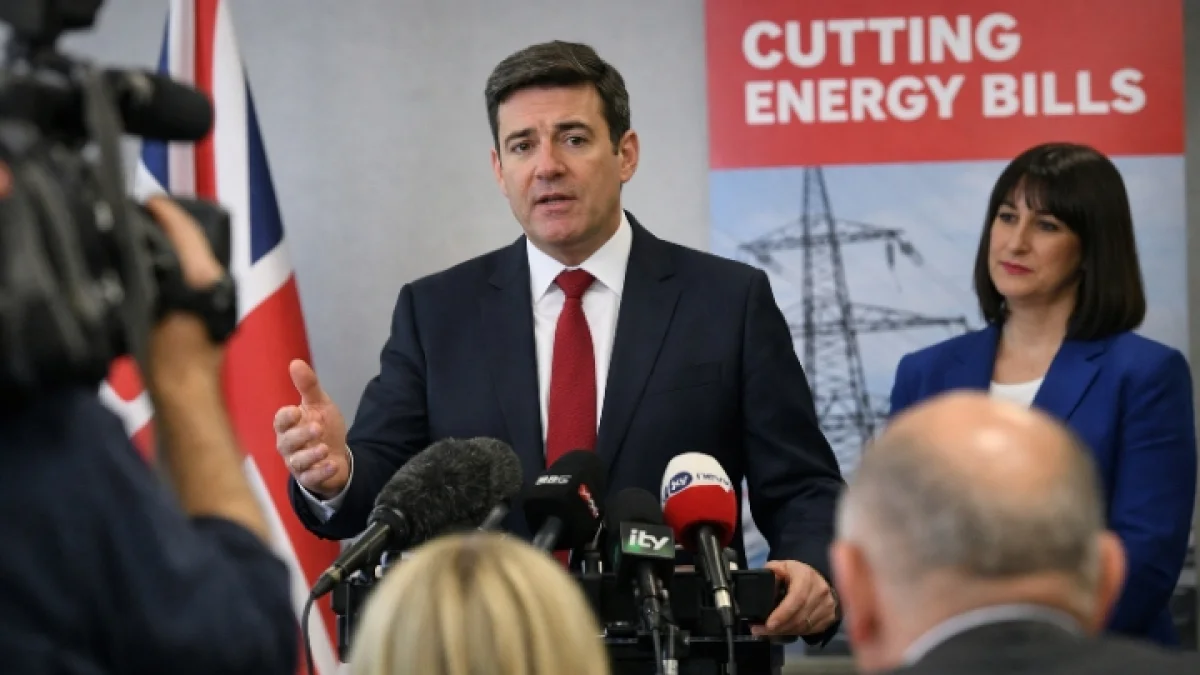
Prime Minister Andy Burnham has made a cut in household electricity taxes the centrepiece of his first cost-of-living intervention, removing the 5% VAT charge on domestic electricity from Oct. 1 in a move the government says will save the average household about £45 a year. The measure, estimated to cost about £850 million in 2026-27, is intended to provide immediate relief as households face elevated energy costs, but its limited size and temporary design underline the broader challenge confronting Burnham: reducing living costs while maintaining fiscal discipline and addressing the structural pressures behind Britain's high energy bills.
The policy is significant because it establishes the economic priorities of a new government that has put household finances at the centre of its early agenda. Burnham, who became prime minister this week, presented the electricity measure as a way to give households "breathing space" while promising a wider programme of measures and a longer-term plan for the economy. The government says the VAT reduction will be financed by cancelling the planned digital ID programme and redirecting savings from existing budgets, while decisions on longer-term cost-of-living measures will be taken at the Budget and must comply with the government's fiscal rules.
The immediate economic backdrop helps explain the urgency. Ofgem, Britain's energy regulator, raised the price cap for typical households paying by direct debit by 13% for the July-to-September quarter, taking the annualised cap to £1,862. The regulator attributed the increase largely to higher wholesale gas costs linked to conflict in the Middle East. The cap applies to default tariffs and limits the rates suppliers can charge, rather than setting a fixed annual bill, so actual costs vary according to consumption, location and payment method.
That context also limits what the VAT measure can achieve. The tax cut reduces the government's contribution to the final bill but does not address wholesale energy prices, network charges or other components of household energy costs. Ofgem's latest figures show that the price cap is made up of several elements, including wholesale costs, network costs and VAT. The regulator is due to announce the cap for October to December on Aug. 26, meaning the size of the underlying energy bill facing households when Burnham's policy begins is not yet confirmed.
For businesses and public finances, the decision presents a more complicated trade-off. The government says cancelling digital ID frees resources that can be redirected to the electricity measure, with the programme previously expected to cost £1.8 billion over three years. But critics have questioned whether those savings represent money that was already fully allocated and therefore available as a straightforward funding source. The government has described the move instead as a reprioritisation of spending, while promising that future measures will be funded within its fiscal framework. That distinction matters because the new administration is seeking to offer visible relief without reopening concerns about the sustainability of public finances.
The distributional impact is another issue. A reduction in VAT applies broadly to electricity consumption, meaning households with larger bills receive a larger cash saving. That makes the measure relatively simple to administer, but it is not specifically targeted at households most exposed to energy poverty. The government's decision to apply the reduction to customers on fixed tariffs as well as standard tariffs is intended to ensure broad pass-through of the benefit, although the precise effect on individual households will still depend on consumption and tariff arrangements.
Northern Ireland also presents a separate implementation issue. Because EU VAT rules continue to apply there to goods including electricity, the UK government says it requires agreement with the European Union to implement the same tax change directly. Instead, the Northern Ireland Executive is to receive comparable funding to provide equivalent cost-of-living support. The arrangement illustrates how the post-Brexit constitutional framework can complicate the delivery of UK-wide fiscal measures.
Burnham's opening economic move therefore offers a clear political signal but only a limited direct intervention in the underlying cost pressures. The confirmed policy is a temporary VAT removal beginning in October, with the government expecting suppliers to pass the reduction through to customers. The unresolved questions are the level of the October energy price cap, the eventual cost and funding of any wider cost-of-living package, and how the government will balance further household support against its fiscal rules. Those issues, alongside the next Ofgem price-cap decision and the government's forthcoming Budget, will determine whether the electricity tax cut becomes a meaningful component of Burnham's economic programme or remains a short-term measure within a broader strategy still being developed.