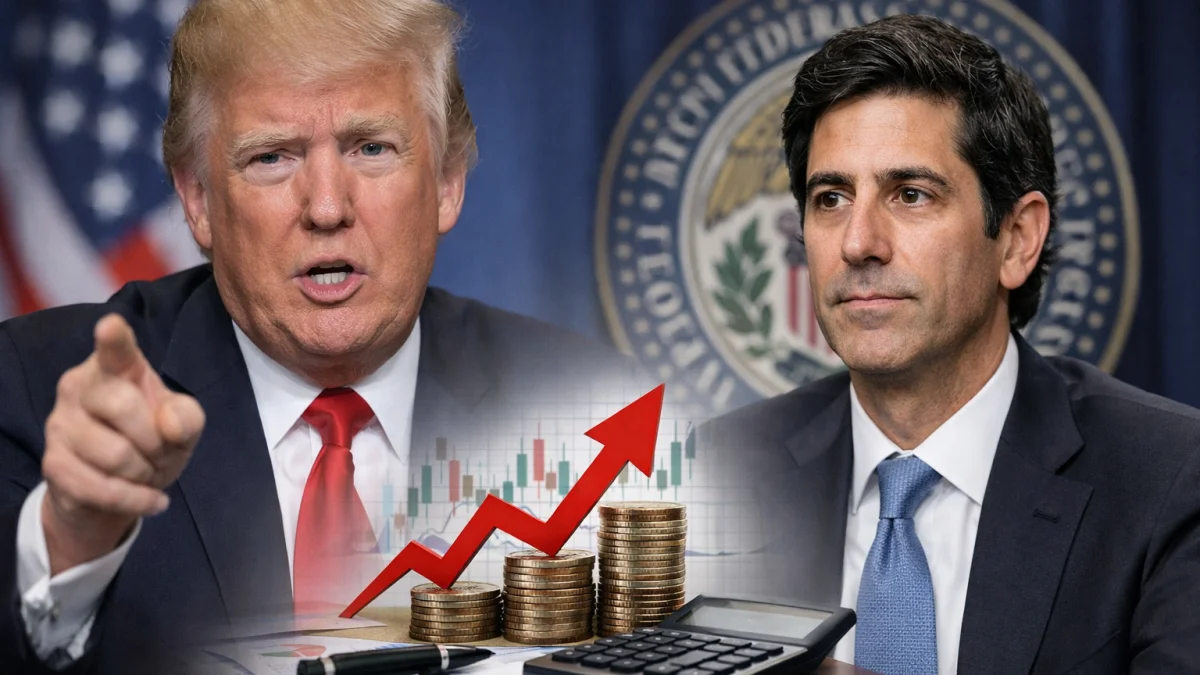
WASHINGTON — President Donald Trump on Sunday pushed back against the possibility of interest rate hikes by the Federal Reserve under its new chair, Kevin Warsh, as markets price in higher odds of tightening amid persistent inflation.
Trump, speaking in an interview, reiterated his preference for lower borrowing costs while expressing confidence in Warsh, who took office in late May. The comments come ahead of the Federal Open Market Committee's next meeting scheduled for June 16-17.
"I want him to do whatever he wants. I don't want to have a big influence on him," Trump said of Warsh. He described the new Fed chair as "fantastic" but emphasized the need for lower rates to support economic growth.
Warsh, a former Fed governor nominated by Trump in March and confirmed by the Senate in May, was sworn in on May 22. Trump selected him with the expectation of more accommodative monetary policy following criticism of outgoing Chair Jerome Powell.
Recent economic data has complicated that outlook. The U.S. added 172,000 jobs in May, exceeding forecasts, with unemployment holding at 4.3 percent, according to the Labor Department. Inflation remains above the Fed's 2 percent target, with some measures around 3.8 percent, and rising oil prices linked to international tensions have added pressure.
Market expectations have shifted, with futures pricing in elevated odds of a rate hike later this year rather than the cuts Trump has long advocated. Fed officials have signaled caution, with some indicating that further hikes could be necessary if inflation does not moderate.
In earlier remarks, Trump had appeared more accommodating toward potential policy differences, stating he would let Warsh operate independently. However, his latest comments underscore ongoing White House interest in lower rates despite the challenging backdrop.
Warsh has not publicly committed to specific rate moves and has stressed the importance of Fed independence and data-driven decisions. During his confirmation process, he acknowledged inflationary risks while expressing optimism about economic growth.
The Fed's policy rate currently stands in a range that has been held steady in recent meetings. Officials are closely monitoring incoming data on prices, employment and consumer spending.
Economists and market participants remain divided on the near-term path. Some anticipate the Fed could hold rates or even consider tightening if inflationary pressures build, while others see room for cuts if growth moderates.
Trump has repeatedly highlighted strong economic indicators as reasons for easing policy, arguing that robust job gains and other positives should support lower rates rather than prompt increases. Details on any direct communications between the White House and the Fed on upcoming decisions remain unclear.
The situation continues to develop as Warsh leads his first full cycle of policy meetings.