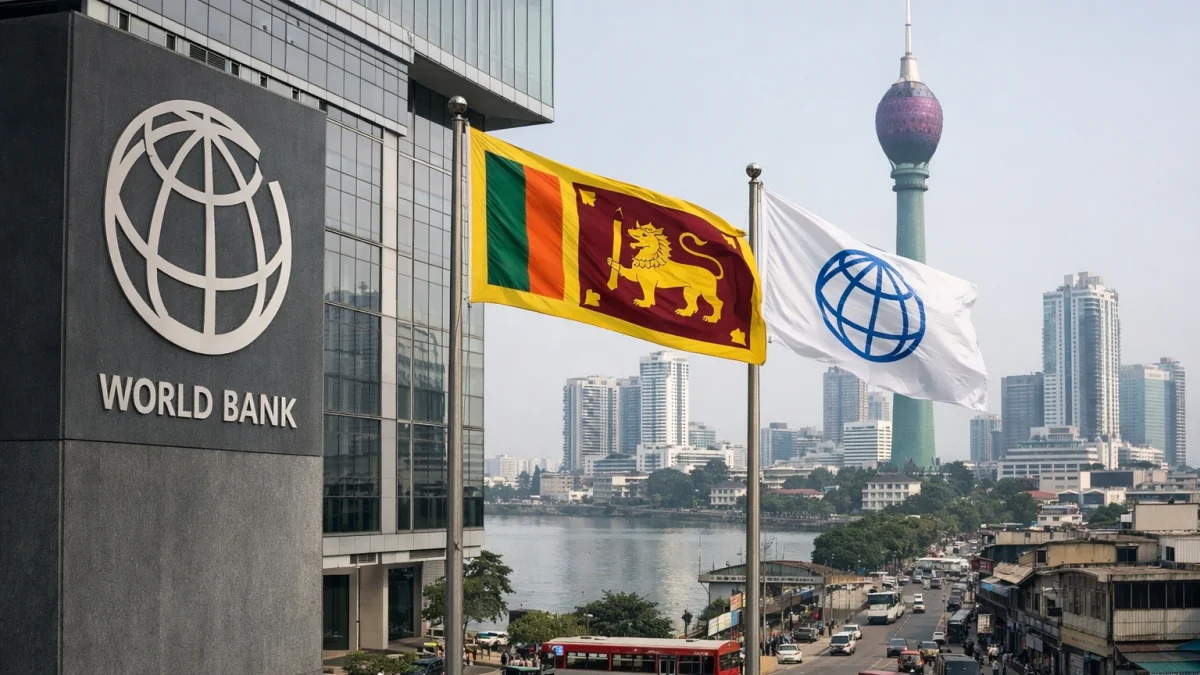
COLOMBO — The World Bank has reclassified Sri Lanka as an upper-middle-income economy, returning the island nation to a category it last held before its 2022 financial crisis, following a rebound in economic activity during 2025.
The World Bank's annual country income classification, released on July 1, moved Sri Lanka from the lower-middle-income group after its gross national income (GNI) per capita, calculated using the Atlas method, rose above the threshold for upper-middle-income economies. The updated classifications are based on 2025 GNI per capita estimates and will serve as the institution's reference through the end of June 2027.
According to the World Bank, Sri Lanka's economy expanded by 5% in 2025, supported by a broad-based recovery across industry, manufacturing, tourism and financial services following the country's severe economic crisis in 2022. The institution said the reclassification reflected the recovery in national income but noted that income categories are intended primarily for analytical and operational purposes rather than as comprehensive measures of development.
"Sri Lanka is a story of recovery," the World Bank said in its classification update, adding that the country had "only narrowly crossed the threshold" into the upper-middle-income category after three years of economic stabilization.
Sri Lanka first entered the upper-middle-income group in 2019 before slipping back into the lower-middle-income category as the economy was hit by the Easter Sunday attacks, the COVID-19 pandemic and a balance-of-payments crisis that culminated in a sovereign default in 2022.
The World Bank's income classifications divide economies into four groups—low, lower-middle, upper-middle and high income—based on GNI per capita calculated using the Atlas methodology, with thresholds updated annually to reflect global inflation. Other international organizations also use the classifications in determining eligibility for some development assistance and policy frameworks, although the World Bank says lending decisions are based on a broader range of factors.
The announcement comes as Sri Lanka approaches the final stages of its $2.9 billion International Monetary Fund support program. The IMF and economists have urged authorities to maintain fiscal, tax and state-sector reforms to preserve macroeconomic stability and strengthen the recovery, while the World Bank has emphasized the importance of attracting private investment and building foreign exchange reserves.