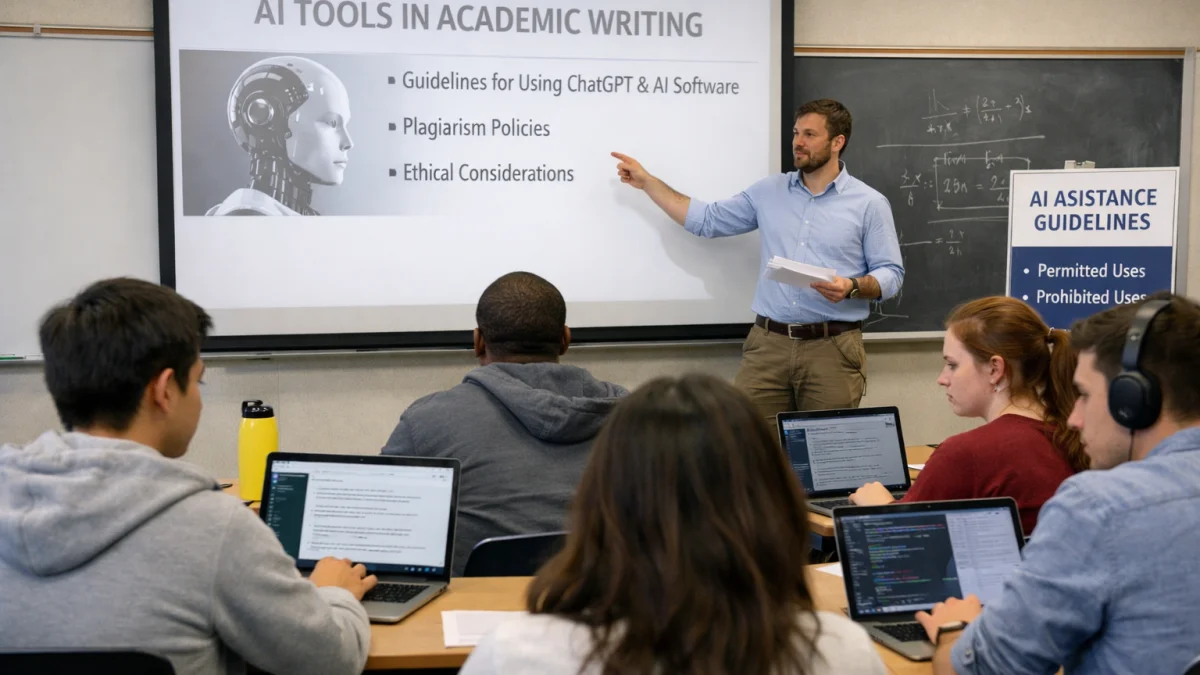
CHICAGO — U.S. universities are expanding the use of artificial intelligence in teaching and research while tightening rules governing how students and faculty may use the technology, reflecting a broader shift from emergency responses to structured institutional policies ahead of the 2026-27 academic year.
Higher education institutions across the country have increasingly adopted campus-wide AI governance frameworks that distinguish between acceptable educational use, prohibited conduct and data protection requirements, while redesigning assessments to reduce reliance on unsupervised AI-generated work, according to university policy announcements and education officials.
The University of Chicago Law School this week introduced one of the nation's strictest first-year classroom policies, banning phones and laptops in required courses as part of a pilot program intended to ensure students develop foundational legal reasoning before incorporating AI tools into their studies. Dean Adam Chilton said the school would gradually introduce AI through legal research and writing instruction while maintaining faculty discretion in upper-level courses.
The move illustrates how universities are increasingly balancing AI literacy with concerns over academic integrity, independent thinking and professional skill development rather than imposing blanket prohibitions on the technology.
Other institutions have taken different approaches. The University of Southern California implemented an enterprise generative AI policy that directs faculty and staff to use institutionally approved AI systems for university business while restricting the handling of confidential and protected student information. The policy also outlines separate rules based on the sensitivity of institutional data.
The U.S. Department of Education has encouraged responsible AI adoption in education through guidance describing how federal education grants may support AI-enabled learning, provided institutions comply with applicable legal and regulatory requirements. The department has emphasized responsible implementation, transparency and improved educational outcomes rather than mandating uniform classroom policies.
Universities are also responding to evolving state requirements addressing AI misuse. In Illinois, a law that took effect this month expanded the definition of cyberbullying to include AI-generated content, prompting school districts to revise their policies while awaiting additional statewide guidance.
Education researchers say universities are increasingly moving beyond treating AI solely as an academic integrity issue toward integrating it into curricula, faculty training and institutional governance. Studies published this year describe a transition from isolated classroom experimentation to broader strategies that combine AI literacy with ethics, assessment redesign and data governance.
Many institutions have indicated they will continue reviewing and updating their AI policies as the technology evolves and as new academic standards and regulatory guidance emerge.