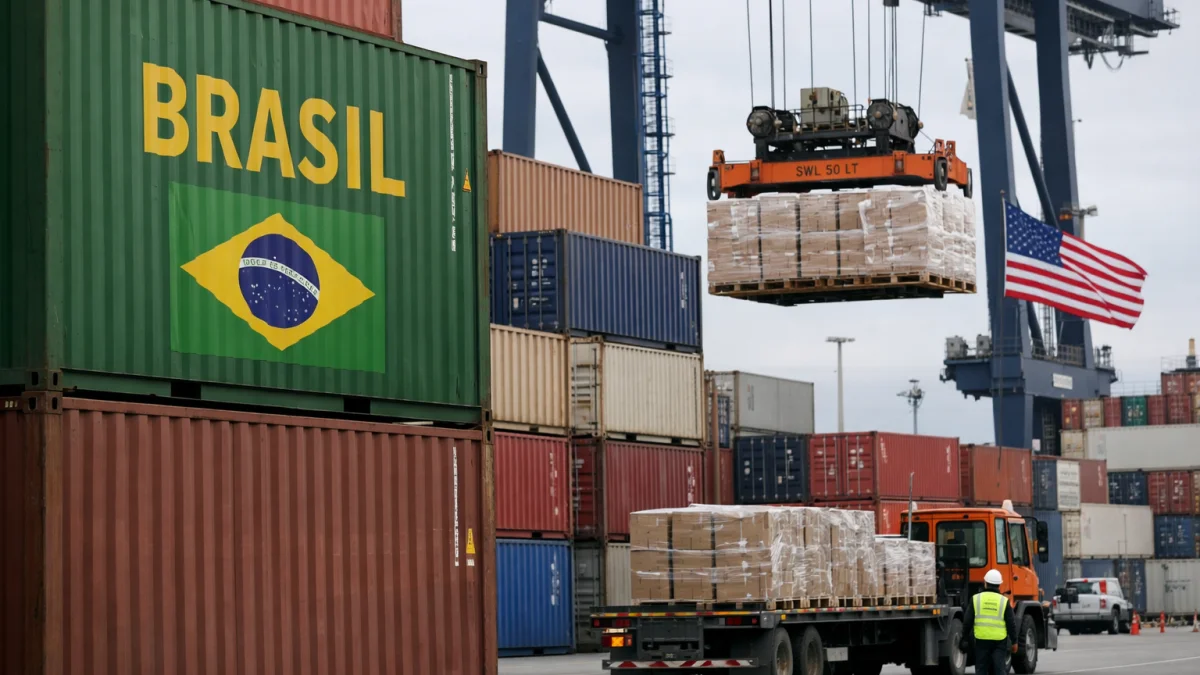
WASHINGTON — The United States has raised tariffs on a broad range of Brazilian goods to 50%, escalating trade tensions between the Western Hemisphere's two largest economies after President Donald Trump's administration finalized higher duties following a Section 301 trade investigation.
The higher tariffs took effect on Friday after the Office of the U.S. Trade Representative (USTR) completed its review of Brazil's trade practices, concluding that several Brazilian policies related to digital trade, electronic payment services, market access, intellectual property protection, ethanol, anti-corruption enforcement and illegal deforestation unfairly burden U.S. commerce.
The USTR had proposed 25% duties during a public consultation process that included written submissions and a hearing in Washington. Trade groups from both countries, including Brazilian industry representatives and U.S. importers, urged the administration to narrow the scope of the measures or exempt key products before the final decision.
The tariff increase marks the latest escalation in a dispute that has increasingly mixed trade policy with broader diplomatic tensions. Brazilian President Luiz Inácio Lula da Silva has rejected Washington's allegations that Brazil maintains unfair trade practices, while Brazilian officials have defended the country's PIX electronic payment system and environmental policies, arguing they comply with domestic law and international obligations.
Brazilian exporters have warned that the higher duties could reduce the competitiveness of their products in the U.S. market, while U.S. business groups have cautioned that additional import costs may raise prices for manufacturers and consumers.
Among the industries expressing concern is the U.S. coffee sector, which relies heavily on Brazilian supplies. The National Coffee Association had asked the administration to preserve exemptions for Brazilian green coffee and extend relief to instant coffee, arguing that tariffs have contributed to higher costs across the industry. Brazil supplies roughly one-third of U.S. coffee demand, according to the association.
The Trump administration has said the measures are intended to encourage changes in Brazilian trade policies rather than permanently restrict commerce. Under U.S. trade law, the administration retains authority to modify or remove the tariffs if it determines that the underlying concerns have been resolved.
Brazil's government has not announced immediate retaliatory trade measures but has continued to criticize the U.S. action and indicated it will pursue diplomatic and legal avenues to contest the tariffs while maintaining engagement with Washington on bilateral trade issues.