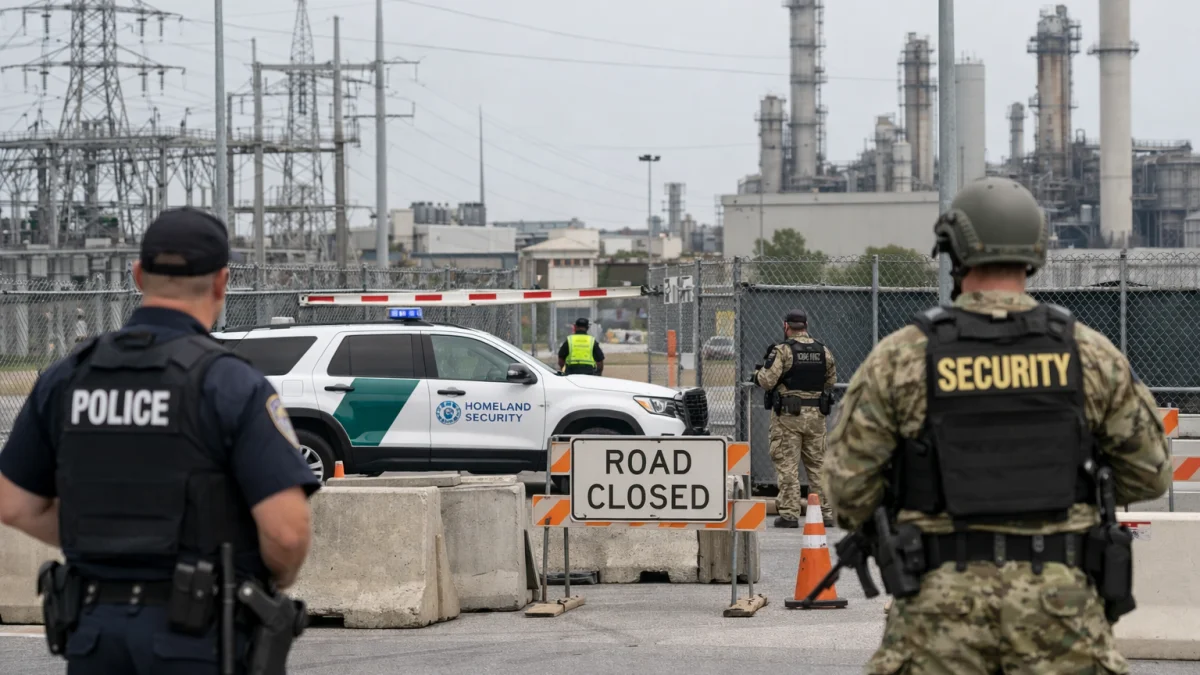
WASHINGTON — Public safety agencies across the United States have increased security measures around key infrastructure sites following updated federal guidance encouraging heightened vigilance, while officials said there is no information indicating a specific or credible threat to the public.
Federal and state authorities said additional patrols, visible law enforcement deployments and coordination with infrastructure operators have been implemented at facilities including power substations, transportation hubs, water treatment plants and major communications sites. Officials described the measures as precautionary and intended to strengthen readiness amid an evolving security environment.
The U.S. Department of Homeland Security has repeatedly advised operators of critical infrastructure to maintain close coordination with federal, state and local authorities and to review security protocols as part of routine preparedness efforts. Agencies responsible for protecting essential services said they continue to monitor intelligence reporting and share information with public- and private-sector partners.
Several local governments and police departments have also expanded patrols and surveillance around high-traffic public areas and strategic facilities during periods of increased public activity. Authorities said the measures are designed to deter potential criminal activity while minimizing disruption to residents and businesses.
Security specialists say critical infrastructure has increasingly become a focus of resilience planning because disruptions to energy, transportation, communications and water systems can have broad economic and public safety consequences. They noted that physical security measures are increasingly being integrated with cybersecurity monitoring and emergency response planning to address a wider range of potential risks.
Officials urged members of the public to remain aware of their surroundings and to report suspicious activity through established law enforcement channels, while emphasizing that precautionary security measures should not be interpreted as evidence of an imminent threat.
Infrastructure operators said contingency planning, employee training and coordination with emergency responders remain central components of their preparedness programs. Industry groups added that regular security reviews and information sharing with government agencies have become standard practice for operators of essential services.
Authorities said enhanced security measures will remain under regular review and may be adjusted as threat assessments evolve. Officials reiterated that there are no confirmed reports of coordinated attacks against critical infrastructure linked to the current precautionary actions.