As dawn breaks over Kansas City, the espresso machines at Café Corazón begin their familiar rhythm long before the first football supporters arrive. Behind the counter, co-owner Dulcinea Herrera and her team are preparing for something far larger than the morning coffee rush: the arrival of thousands of international visitors expected to pass through the Midwest during the 2026 FIFA World Cup.
For Herrera, whose family has built three Argentine-inspired cafés across the metropolitan area, the tournament represents both a business opportunity and a cultural milestone. Argentina's national team selected Kansas City as one of its base camps, placing the café at the intersection of hometown hospitality and global sport.
"We're so excited. When we found out, my mom cried," Herrera told Startland News earlier this year. "We were like, 'Wow, this is a great time.'"
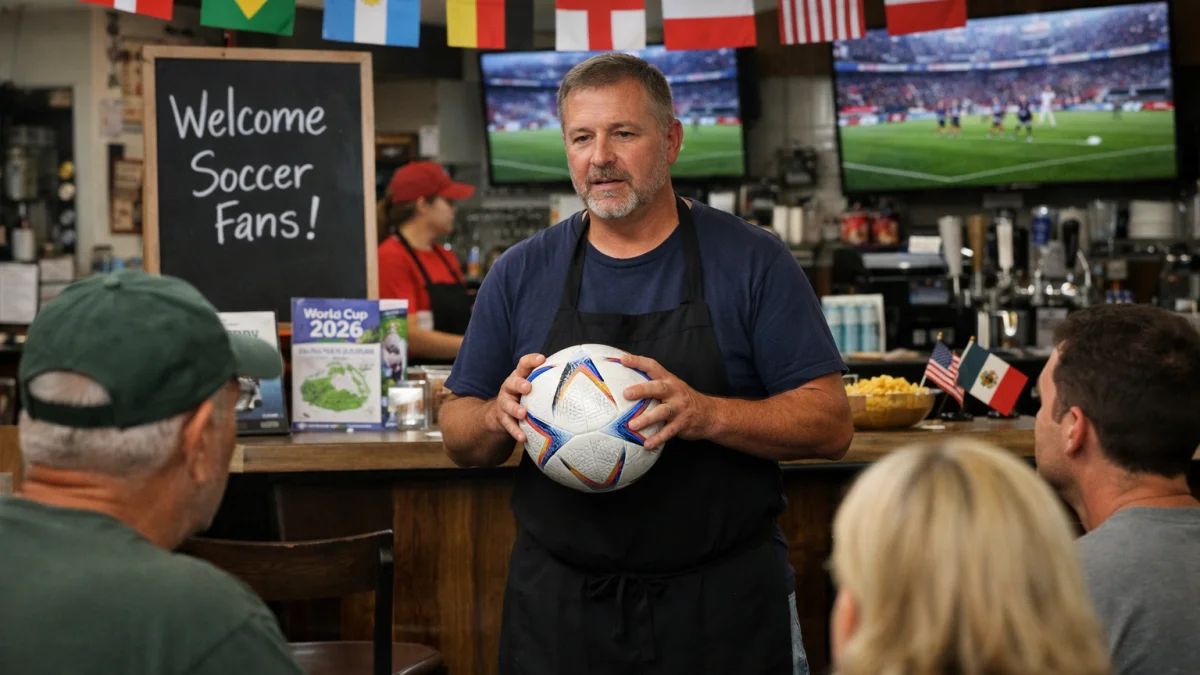
The preparations unfolding inside Café Corazón reflect a broader effort by small businesses across America's Midwest as communities seek to welcome visitors arriving from around the world. While the tournament's matches take place inside stadiums, restaurant owners, coffee shop operators and neighborhood businesses have spent months preparing to become informal ambassadors for their cities.
The World Cup, jointly hosted by the United States, Canada and Mexico, has expanded to 48 teams, making it the largest tournament in the competition's history and bringing unprecedented numbers of supporters to host regions.
For businesses, that scale brings promise alongside uncertainty.
At Café Corazón, Herrera has expanded staffing plans and emphasized multilingual service. Employees collectively speak English, Spanish, Portuguese and American Sign Language, an approach she believes helps international guests feel immediately welcome.
"If someone comes in and someone speaks their language, they feel seen," she said.
The café also planned watch parties and traditional Argentine gatherings known as banderazos, where football supporters gather around food and celebration before matches. Herrera said success would mean more than increased sales.
"I want people to come here and have fun no matter where they're from," she said.
That emphasis on hospitality has echoed across Kansas City's business community.
Joe and Maggie Zahner, owners of barbecue restaurant OurHouse KC, have described the tournament as an opportunity to introduce visitors to what they call "Midwest nice." Their restaurant prepared special menu offerings while encouraging guests to explore other local businesses throughout the metropolitan area rather than limiting themselves to World Cup attractions.
"This is a team environment for us as much as it is for the World Cup teams coming here," Maggie Zahner told KCTV.
Coffee shop owner Brandon Jordan, whose Leawood café received a city grant to improve operations before the tournament, said the event offered a chance to showcase the region rather than individual businesses.
"It gives us the opportunity to showcase how great our city is," Jordan said.
Industry observers say such preparations have become common well beyond host cities.
Restaurant operators have adjusted staffing schedules, simplified match-day menus, added multilingual payment options and prepared for unfamiliar service expectations from overseas visitors. Industry data compiled by restaurant technology company SpotOn found operators in at least 25 states making World Cup-related changes, with beverage promotions and merchandise among the most common additions.
The optimism has been reinforced by broader economic signals. Constellation Brands, whose portfolio includes Corona and Modelo beers, said World Cup gatherings have contributed to stronger U.S. beer demand as fans organize watch parties and social events throughout the tournament. Company executives pointed to the combination of football, summer holidays and large public gatherings as drivers of increased consumption.
Yet the experience has not been uniform.
As matches began, some Kansas City business owners reported that visitor traffic remained concentrated around official fan zones and stadium corridors, leaving businesses outside those areas with fewer customers than anticipated despite months of preparation. Several café and restaurant owners told local media that sales fluctuated sharply from one day to the next, illustrating how difficult it can be to predict spending patterns during a global sporting event.
Those mixed results have underscored the challenge facing many independent businesses: balancing additional staffing, inventory purchases and operating costs against uncertain customer flows.
Elsewhere in the United States, however, football has already demonstrated its ability to transform neighborhood gathering places.
In Northern California, Reuters reported that Euro Grill, the South Bay's only Bosnian-owned restaurant, became a meeting place for supporters ahead of Bosnia's historic World Cup knockout match against the United States. Owner Ramiz Avdic, a veteran of the Bosnian war who later immigrated to California, described his restaurant as "my living room," welcoming supporters arriving from across the United States and Europe.
The scenes illustrate how cafés and restaurants often become cultural spaces during international tournaments, serving not only food and drink but also familiarity for travelling supporters and immigrant communities.
For Herrera, that role has guided Café Corazón since its founding. The café introduced Kansas City customers to Argentine traditions, from empanadas to traditionally prepared yerba mate, long before the World Cup schedule was announced. The arrival of Argentina's national team has simply magnified a mission that already existed.
As visitors continue arriving in the Midwest, the outcome for individual businesses may vary. Some will experience packed dining rooms while others wait for foot traffic that never fully materializes. But for owners who have spent months preparing menus, training multilingual staff and decorating storefronts with national colours, the tournament offers something that extends beyond immediate revenue.
It is a rare opportunity for neighborhood cafés to greet the world one customer at a time, turning everyday hospitality into one of the tournament's most enduring local traditions.