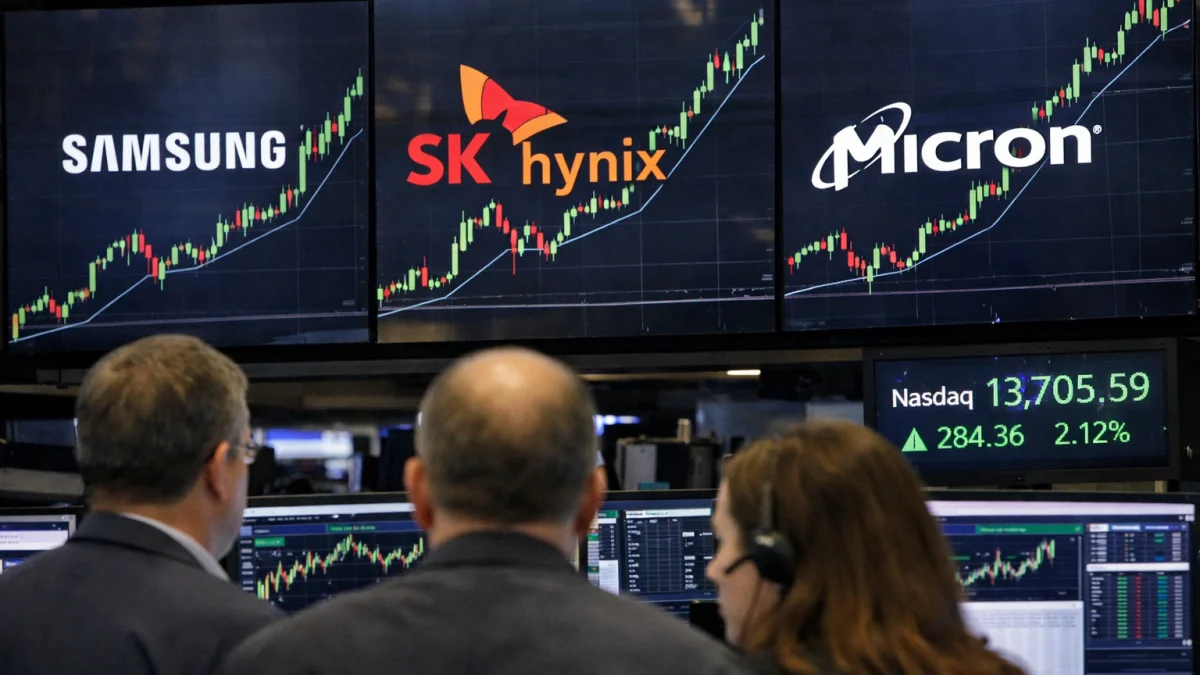
SEOUL — Shares of major memory chipmakers surged on Wednesday as investors piled back into artificial intelligence-linked semiconductor stocks, lifting technology indexes across Asia after softer-than-expected U.S. inflation data strengthened expectations for lower interest rates and renewed confidence in AI-driven demand.
South Korea's SK Hynix climbed nearly 13%, while Samsung Electronics gained almost 8%, helping propel the benchmark KOSPI sharply higher. The rally followed strong gains in U.S.-listed semiconductor shares and reflected renewed optimism that demand for high-bandwidth memory (HBM) and other advanced memory products used in AI servers will remain robust despite recent market volatility.
The rebound came after a period of sharp swings in semiconductor stocks, with investors reassessing valuations following months of strong gains tied to artificial intelligence infrastructure spending. Market participants said easing inflation in the United States improved expectations that borrowing costs could decline, supporting higher-growth technology companies.
Analysts also pointed to continued supply constraints in advanced memory chips. Kim Sunwoo, an analyst at Meritz Securities, said demand continued to exceed available supply and forecast that the imbalance could intensify into 2027, supporting memory prices and earnings. HSBC likewise said long-term supply agreements and resilient profitability in AI-focused memory products provided greater earnings visibility for manufacturers.
Investor sentiment received an additional boost after Barclays initiated coverage of SK Hynix's U.S.-listed shares with an overweight rating and a price target above prevailing market levels. The firm's analysts cited the company's leadership in AI memory products and favorable industry fundamentals. SK Hynix's American depositary receipts had posted substantial gains in the previous U.S. trading session before the Seoul market rally.
The advance extended beyond the largest memory manufacturers. Hanmi Semiconductor, a supplier of semiconductor packaging equipment, rose about 25% as investors sought broader exposure to the AI semiconductor supply chain.
The latest gains followed heightened volatility earlier in July, when concerns over elevated valuations and the durability of AI-related capital spending triggered steep declines across semiconductor shares. Despite those fluctuations, analysts continued to characterize demand for advanced memory used in AI data centers as structurally strong, with supply expected to remain constrained over the medium term.
Investors are now watching upcoming corporate earnings and industry forecasts for further evidence that spending on AI infrastructure and memory technologies remains strong enough to sustain the sector's rapid growth.