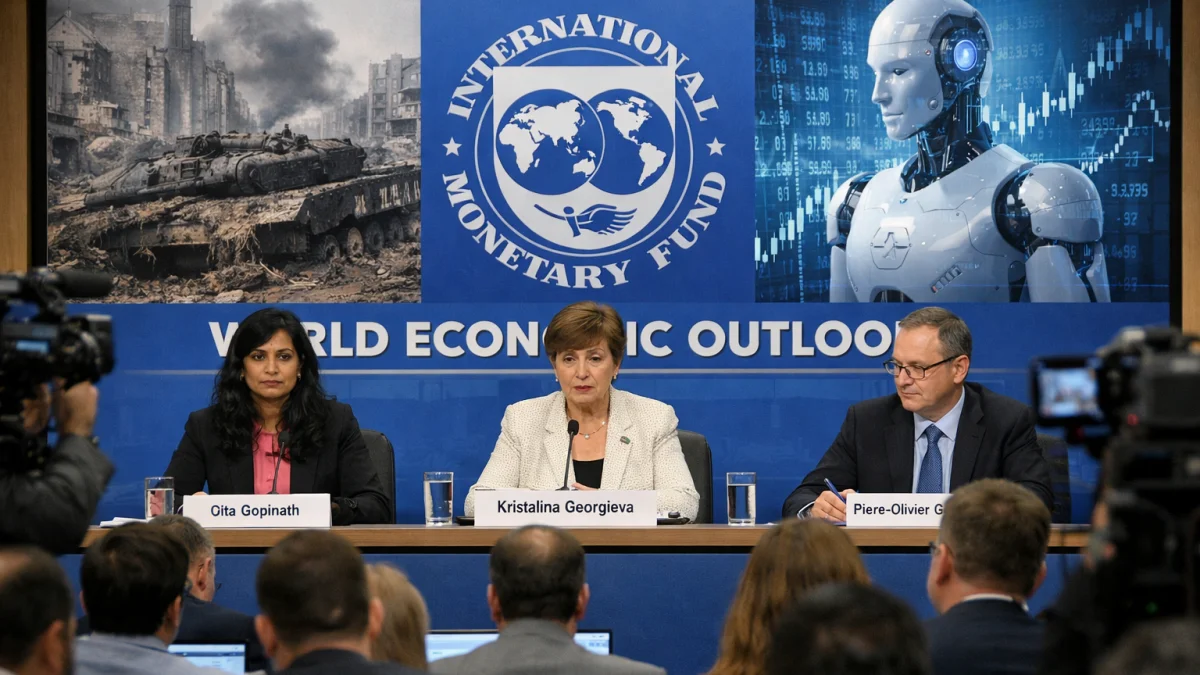
The International Monetary Fund’s latest World Economic Outlook Update presents a picture of a global economy that has proved more resilient than many policymakers expected following the Middle East conflict, while becoming increasingly divided between countries benefiting from artificial intelligence-led investment and those facing higher energy costs with fewer growth engines. Rather than signaling a synchronized expansion or downturn, the IMF describes an economy shaped by two powerful and opposing forces: geopolitical disruption and rapid technological investment.
That assessment is significant because it suggests the principal challenge facing policymakers has shifted from managing a single global cycle to navigating increasingly uneven national outcomes. The IMF projects global growth of about 3.0% in 2026 and 3.4% in 2027, broadly unchanged from its cumulative April outlook despite the war shock. However, the aggregate figures mask widening differences between economies exposed to energy-price pressures and those integrated into the expanding AI technology supply chain.
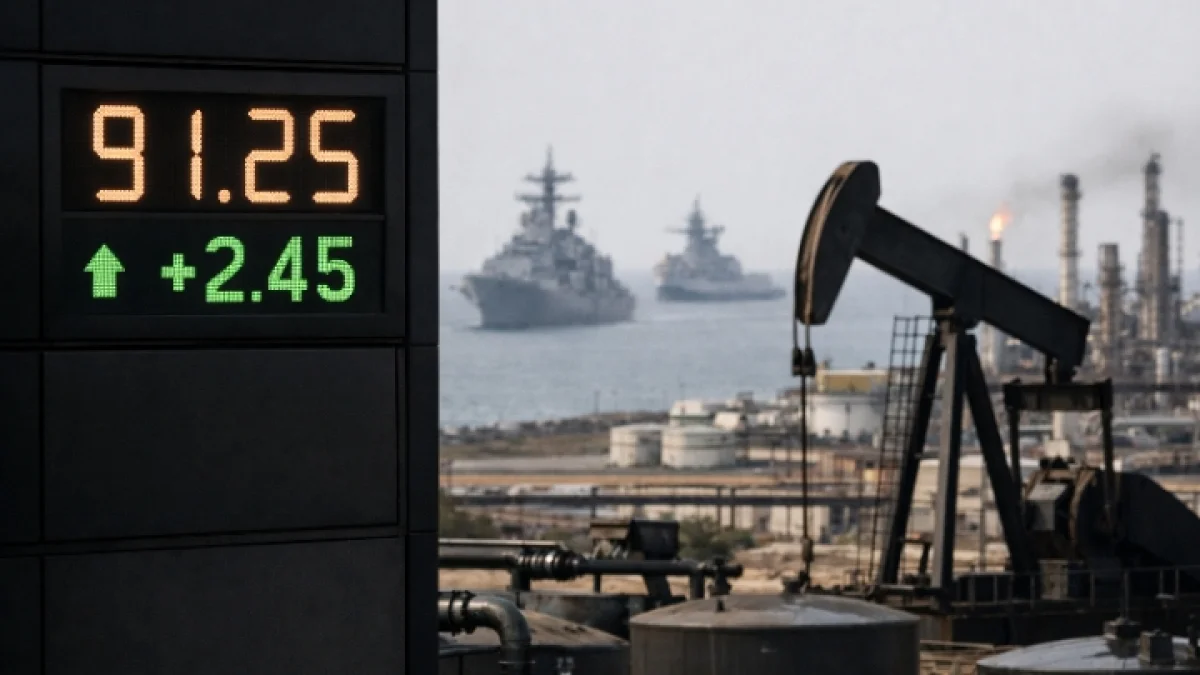
The IMF argues that the conflict in the Middle East interrupted what had been a strengthening global recovery by creating a negative supply shock centered on energy markets. Although fears of a severe worldwide recession have not materialized, the institution attributes the relatively limited economic damage to several temporary factors, including the release of oil inventories, increased production outside the Gulf region, moderating energy demand, and improving energy efficiency in many economies. Those factors have helped prevent a broader inflationary spiral while allowing financial conditions to stabilize after an initial period of volatility.
Yet the Fund also warns that these protective buffers are becoming less substantial over time. As strategic reserves decline and spare production capacity narrows, the global economy may become more vulnerable to additional disruptions if geopolitical tensions persist or intensify. IMF officials have emphasized that maintaining credible monetary policy, preserving fiscal discipline, and rebuilding policy space remain essential while uncertainty remains elevated.
Running alongside these geopolitical pressures is a second development that has altered the economic outlook: exceptionally strong investment associated with artificial intelligence. According to the IMF, demand for semiconductors, servers, data centers and other AI-related infrastructure has generated stronger-than-expected activity in economies closely connected to global technology manufacturing. Countries with established positions in semiconductor production and AI hardware supply chains have generally outperformed earlier forecasts, providing an important offset to weaker conditions elsewhere.
The divergence illustrates how technological change is reshaping global growth patterns. While the benefits of AI investment are concentrated in a relatively small group of economies, the costs of higher energy prices are distributed much more broadly. As IMF officials noted during the presentation of the outlook, the technology boom has not yet become a universal source of productivity gains. Instead, it has primarily stimulated investment and manufacturing demand among countries already integrated into advanced technology value chains, leaving many lower-income and energy-importing economies with fewer compensating sources of growth.
Inflation presents another area where the IMF sees an increasingly complex picture. The institution says the global disinflation process that began after the inflation surge of the early 2020s has stalled. Higher energy costs have offset some of the earlier progress, while strong investment associated with AI has supported demand in parts of the global economy. As a result, central banks face differing policy environments rather than a common global inflation trend, requiring country-specific responses instead of synchronized monetary policy adjustments.
The outlook also has broader implications for fiscal policy. Many governments introduced temporary measures to cushion households and businesses from higher energy costs. The IMF argues that such support should be withdrawn as conditions normalize while governments rebuild fiscal capacity after years of pandemic-related spending and more recent geopolitical shocks. Officials have repeatedly stressed that preserving confidence in public finances will become increasingly important as governments confront aging populations, climate-related investment needs, and technological transitions.
Financial markets face a similarly mixed outlook. Continued investment in AI infrastructure has supported equity markets in several technology-intensive economies, but the IMF identifies concentrated valuations in AI-related assets as a potential source of future market volatility. At the same time, renewed conflict affecting global energy supplies could tighten financial conditions and weaken growth prospects more broadly. Conversely, faster productivity gains from AI adoption or a quicker normalization of regional trade routes could improve the outlook beyond current projections. These possibilities are presented by the IMF as identifiable risks rather than forecast outcomes.
Historical comparisons reinforce the unusual character of the current environment. Previous energy shocks, including those associated with major geopolitical conflicts, often produced synchronized slowdowns across advanced and developing economies. The IMF argues that the present cycle differs because technological investment has provided an important counterweight, limiting the global impact while increasing differences between countries according to their industrial structure, trade relationships and technological capabilities.
The IMF’s latest assessment therefore depicts a global economy that remains resilient but increasingly fragmented. Growth continues despite the effects of war, yet the gains are distributed unevenly across regions and sectors. Officials continue to monitor developments in the Middle East, inflation dynamics, financial market conditions and the pace of AI adoption, all of which remain central to determining whether the current balance between geopolitical risks and technological momentum can be sustained.