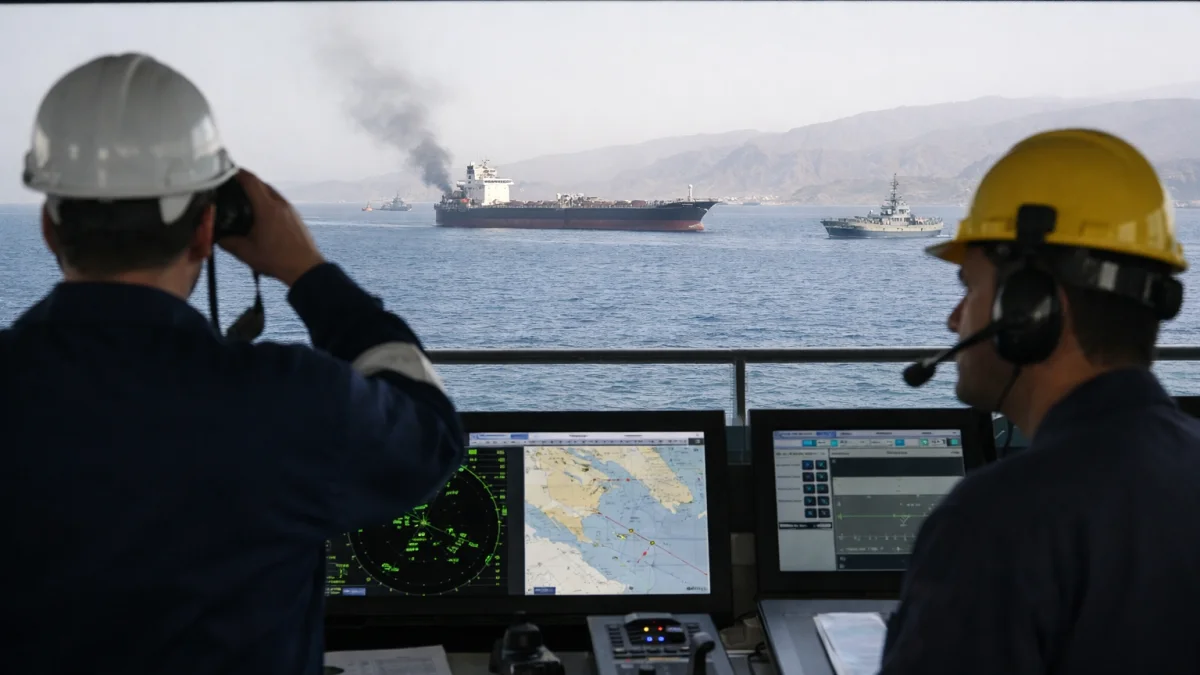
LONDON — Energy companies and commodity traders intensified contingency planning on Saturday as renewed security risks around the Strait of Hormuz threatened to disrupt one of the world's most important oil and liquefied natural gas shipping routes, despite continued commercial vessel movements through the waterway.
The latest military escalation involving the United States and Iran has heightened concerns over energy supplies after Iran again declared the strategic strait closed, while U.S. officials said commercial shipping continued under military protection and maritime monitoring indicated some traffic remained active. Conflicting official claims have left shipping operators, insurers and energy producers assessing operational risks on a day-by-day basis.
The Strait of Hormuz carries roughly one-fifth of global crude oil and a similar share of liquefied natural gas exports, making any sustained disruption a significant concern for energy markets, according to industry analysts and international organizations.
Shipping data compiled by S&P Global Commodities at Sea earlier this week showed overall tanker traffic continuing, although an increasing number of vessels were switching off tracking signals or using alternative routes close to Oman's coastline after recent attacks on commercial shipping. The International Maritime Organization has urged companies to suspend Hormuz transits where safe passage cannot be assured.
Energy producers, refiners and trading houses have been reviewing inventories, alternative supply routes and contractual obligations in response to the uncertainty, according to industry assessments. Analysts said strategic petroleum reserves held by several major consuming countries could help cushion short-term disruptions, but warned that a prolonged interruption would tighten global crude and LNG supplies, particularly across Asia, which relies heavily on Gulf exports.
Market participants also continued to monitor insurance costs and freight rates, both of which have risen as shipowners reassess the risks of operating in the Gulf. UN Trade and Development has previously warned that disruptions in the strait could increase transportation costs, raise energy prices and create broader supply-chain pressures affecting fertilizers and other commodities.
Despite the heightened geopolitical tensions, some analysts noted that oil markets have remained relatively restrained because commercial shipping has not completely halted and governments retain emergency stockpiles that could offset temporary supply interruptions. However, they cautioned that further attacks on merchant vessels or an extended loss of transit capacity could significantly increase pressure on global energy markets.
Energy companies and maritime operators said they would continue monitoring official security guidance and shipping conditions as governments pursued diplomatic efforts aimed at preventing further escalation in the Gulf.