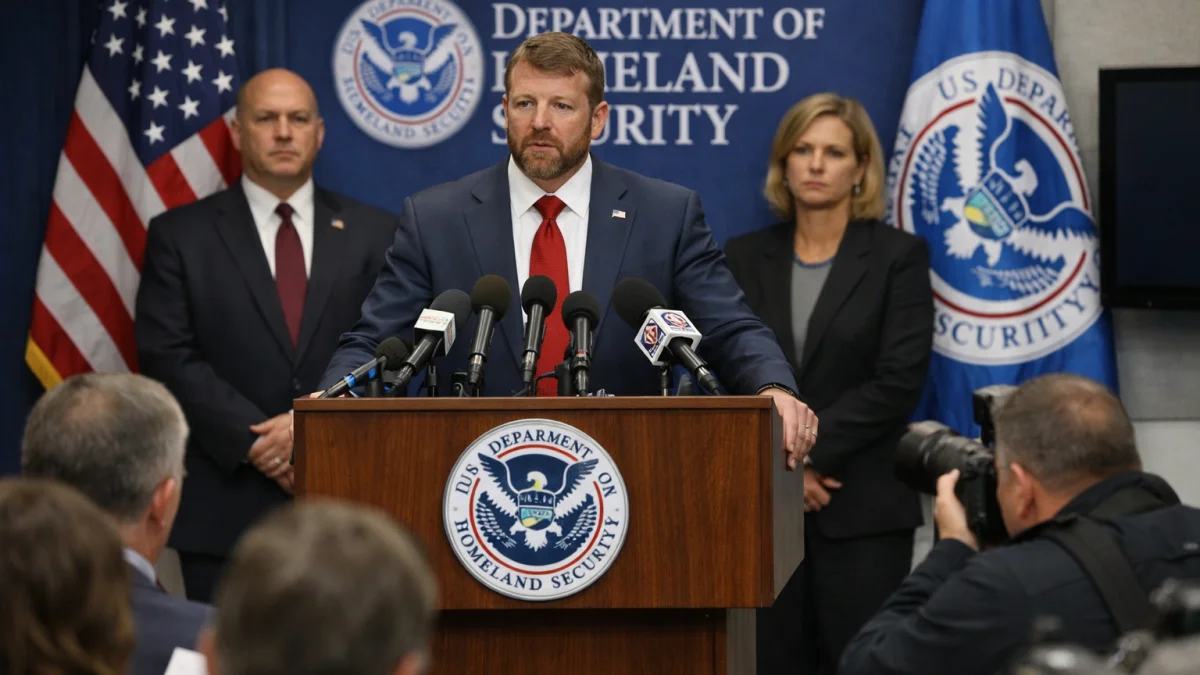
WASHINGTON — U.S. Homeland Security Secretary Markwayne Mullin said on Friday the department would aggressively pursue alleged voter fraud cases and warned that state election officials who refuse to cooperate with federal election security initiatives could face penalties, escalating the Trump administration's campaign on election integrity ahead of the 2026 midterm elections.
Speaking at a news conference, Mullin said the Department of Homeland Security had identified more than 250,000 potential non-citizens on voter registration rolls in California, New Jersey, Nevada and Pennsylvania through what he described as preliminary reviews. He said the department had asked election officials in those states to examine the findings and work with federal authorities to verify voter eligibility.
The department has not publicly released evidence supporting the figures it cited. Election officials in several of the states disputed the claims, saying existing safeguards already require verification of voter eligibility and that DHS had not provided sufficient documentation to substantiate its allegations.
Mullin said individuals who illegally cast ballots would be investigated and prosecuted, adding that states declining to use DHS election security tools or share requested voter data could become priorities for federal enforcement. He also warned that financial penalties or other consequences could apply to officials who refuse to comply with federal requests.
The administration's actions follow President Donald Trump's nationally televised address on Thursday in which he renewed claims of election vulnerabilities and urged Congress to approve stricter voter identification requirements. Trump's assertions regarding widespread election fraud and foreign interference have been repeatedly rejected by courts, election audits and previous reviews that found no evidence of fraud sufficient to alter the outcome of the 2020 presidential election.
Democratic officials and voting rights advocates criticized the administration's approach, arguing that the federal government was exceeding its authority over elections, which are primarily administered by states. Some experts also questioned the reliability of the databases used to identify potential non-citizen registrations, warning that outdated or incomplete records could incorrectly flag eligible voters.
DHS said letters had been sent to the four states requesting responses within two weeks regarding their plans to cooperate with the department's review. State officials indicated they were evaluating the requests while maintaining that existing election security procedures remain in place.