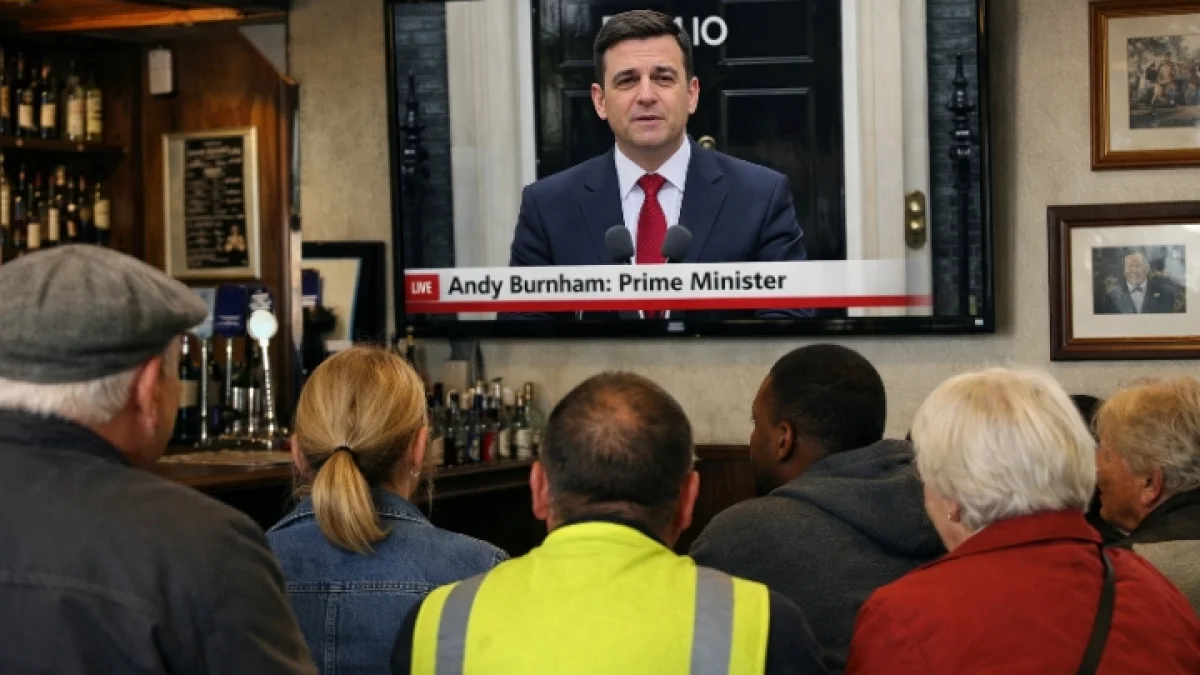
Outside 10 Downing Street, the ritual of British democracy unfolded with familiar precision as Andy Burnham delivered his first speech as prime minister after being invited by King Charles to form a government. Tourists paused behind security barriers, television crews packed the pavement and government staff moved through the famous black door as the country prepared for its seventh prime minister in a decade, another peaceful transfer of power in a period marked by unusual political turnover.
For many people across Britain, the transition represented more than a change of leadership. It offered another test of whether politics could respond to years of economic pressure, stretched public services and declining confidence in Westminster. Burnham, the former mayor of Greater Manchester who won overwhelming backing from Labour lawmakers to succeed Keir Starmer as party leader, entered office promising a 10-year plan to stabilize politics, spread power beyond London and tackle the cost-of-living crisis.
In his first remarks as prime minister, Burnham acknowledged public frustration with politics and said leaders of his generation needed to "raise our game." He pledged early action on living costs while promising longer-term reforms aimed at decentralizing government, rebuilding industry and ending rough sleeping. Those commitments echoed themes that defined much of his tenure leading Greater Manchester, where he frequently argued for greater regional autonomy and investment outside the capital.
The change came swiftly. Earlier in the day, Keir Starmer formally resigned after just over two years as prime minister, telling the country he left office believing Britain was "stronger and fairer" than when his government took office. Burnham then traveled to Buckingham Palace, where King Charles asked him to form a government in keeping with constitutional convention.
Communities across the country watched the handover through different lenses. In Greater Manchester, where Burnham spent nearly a decade as mayor, local leaders and residents have long associated him with campaigns for regional transport, affordable housing and greater local decision-making. His move from city-region leadership to Downing Street has prompted hopes among supporters that priorities developed outside Westminster will receive greater national attention.
Elsewhere, reactions reflected a mixture of expectation and caution. Britain has experienced an extraordinary succession of national leaders since the Brexit years, and Burnham becomes the fourth prime minister to serve under King Charles. The rapid turnover has contributed to public debate about political stability, making his promise of a decade-long national plan as much a statement about continuity as policy.
Political analysts say Burnham inherits a demanding agenda. The government faces sluggish economic growth, persistent pressure on household budgets, strained public services and an international environment shaped by continuing conflicts abroad. Those realities leave little time for a political honeymoon, even as supporters argue his experience governing England's largest metropolitan region offers practical administrative credentials.
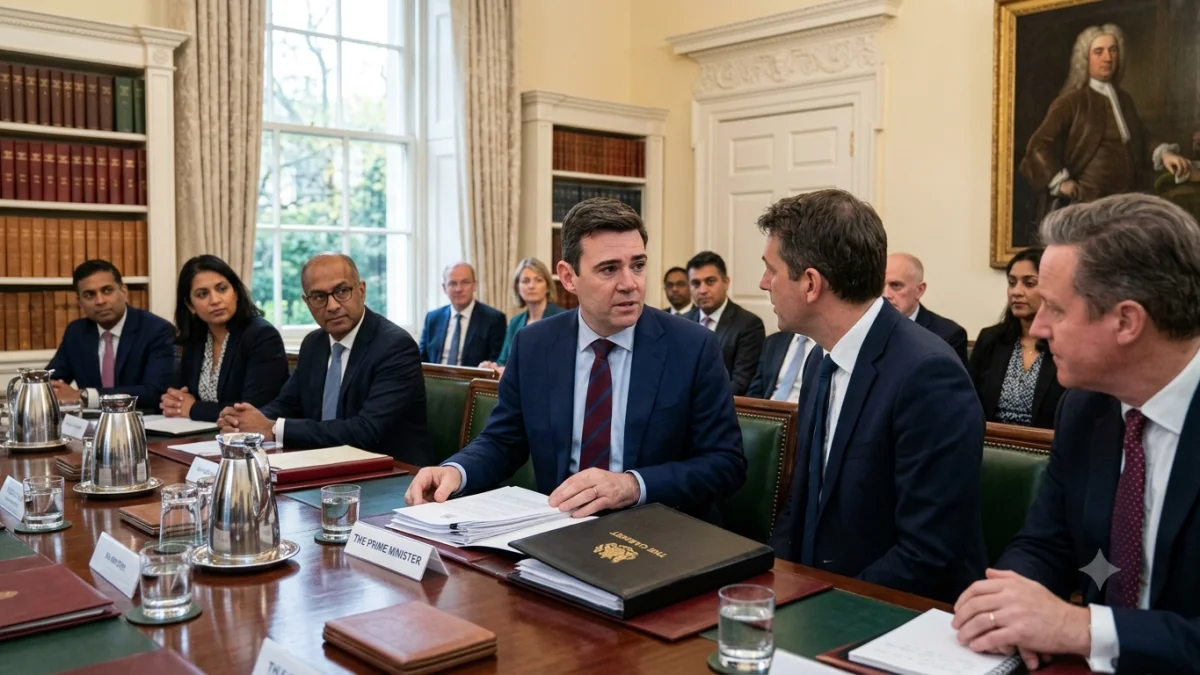
The first signs of change emerged quickly inside government. Several senior ministers departed as Burnham began assembling a new cabinet, underscoring that the leadership transition would bring personnel as well as policy changes. Financial markets reacted cautiously during the opening hours of the new administration as investors assessed the implications of the government's economic priorities.
Burnham has repeatedly argued that Britain's regions deserve greater influence over national decision-making. During his campaign for the Labour leadership, he said he wanted to offer hope to what he described as "forgotten places everywhere" by shifting power away from Westminster. That message resonated with supporters who have long argued that economic opportunity remains unevenly distributed across the country, while critics have questioned whether structural change can be achieved within existing fiscal constraints.
For residents beyond the political centers of London, the symbolism of Burnham's background has also attracted attention. Having built his recent political career in northern England rather than Westminster, his rise has been viewed by some as reflecting broader debates over regional identity and representation. Yet expectations remain measured. Many voters say they are less interested in political biography than in whether the government can reduce living costs, improve public services and deliver sustained economic growth.
As evening settled over Westminster, the familiar routines of government continued. Officials prepared for a new cabinet, civil servants briefed incoming ministers and the machinery of state shifted to a new administration with little public ceremony beyond the constitutional traditions that accompanied the day's events.
The peaceful handover highlighted one of Britain's enduring democratic customs even as it underscored the volatility of its recent politics. Burnham arrived at Downing Street promising a different approach and a longer horizon for governing. Whether communities that have experienced years of political change will ultimately judge that promise by renewed confidence or tangible improvements in daily life is a question that now moves from campaign speeches into government.