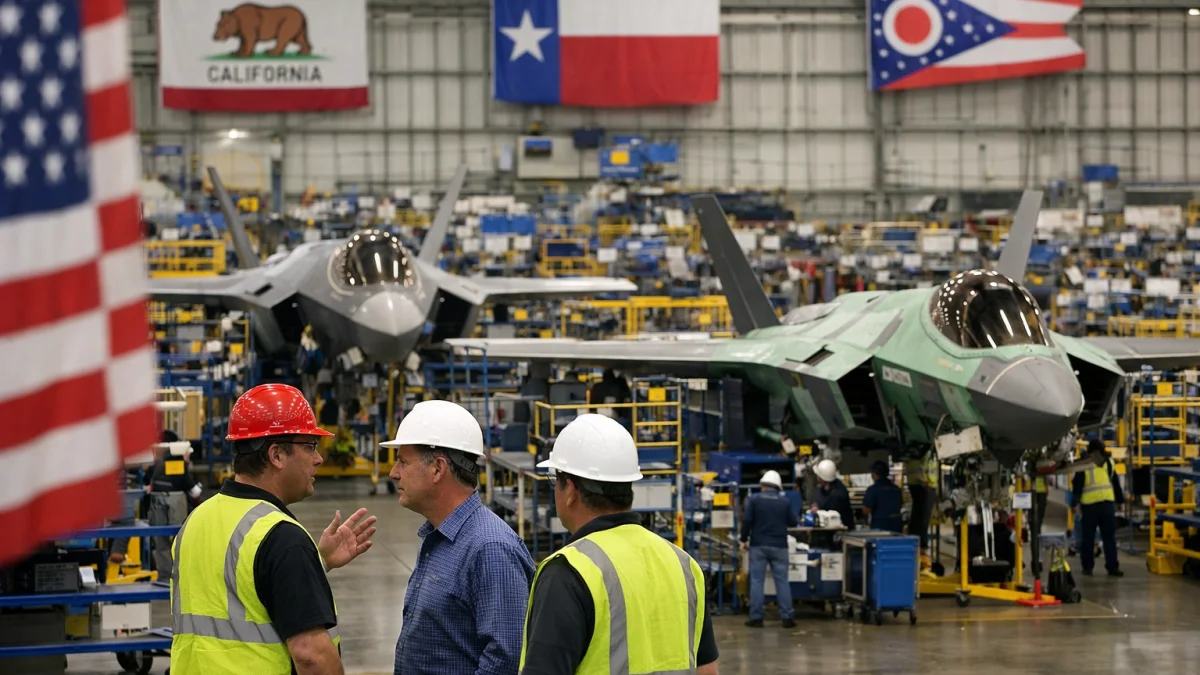
WASHINGTON — States across the United States are competing to attract defense contractors and manufacturing projects as increased military spending drives demand for new production capacity, supply-chain investment and skilled workers, according to industry officials, government data and economic development agencies.
The push comes as the Department of Defense moves to expand weapons production, replenish stockpiles and strengthen the defense industrial base. The Pentagon’s fiscal year 2026 budget request included more than $1 trillion in total defense-related funding, with officials citing investments in areas including shipbuilding, missile defense and munitions production.
State governments are seeking to position themselves as locations for defense-related facilities by offering workforce programs, infrastructure support and economic incentives. Officials in several states have highlighted the potential for new manufacturing jobs tied to aerospace, electronics, shipbuilding and advanced technology projects.
The competition has intensified as major contractors expand production. Lockheed Martin has announced plans to increase weapons manufacturing capacity, including investments connected to missile production, while other major defense companies have faced pressure to accelerate output.
Defense industry executives have said expanding production requires more than government funding, pointing to shortages in skilled labor, supplier capacity and manufacturing infrastructure as potential constraints. A senior U.S. military official has said some major weapons producers need additional time to increase output because of supply-chain limitations and the complexity of expanding facilities.
Economic development officials argue that defense contracts can create long-term employment opportunities beyond large prime contractors by supporting smaller suppliers that provide components, materials and services. Federal contracting data shows defense spending is distributed among a broad network of companies, though a relatively small group of major contractors receives a significant share of large awards.
The expansion has also prompted debate over the economic effects of increased defense spending. Supporters say additional investment strengthens domestic manufacturing capacity and national security readiness, while critics have raised concerns about costs, oversight and the effectiveness of large defense expenditures. Congressional budget analysts have noted that major defense authorizations depend on the legislative and appropriations process.
The Pentagon and lawmakers continue to work through fiscal year 2026 funding decisions, while defense companies and states seek to secure contracts and related investment tied to expanding military production.