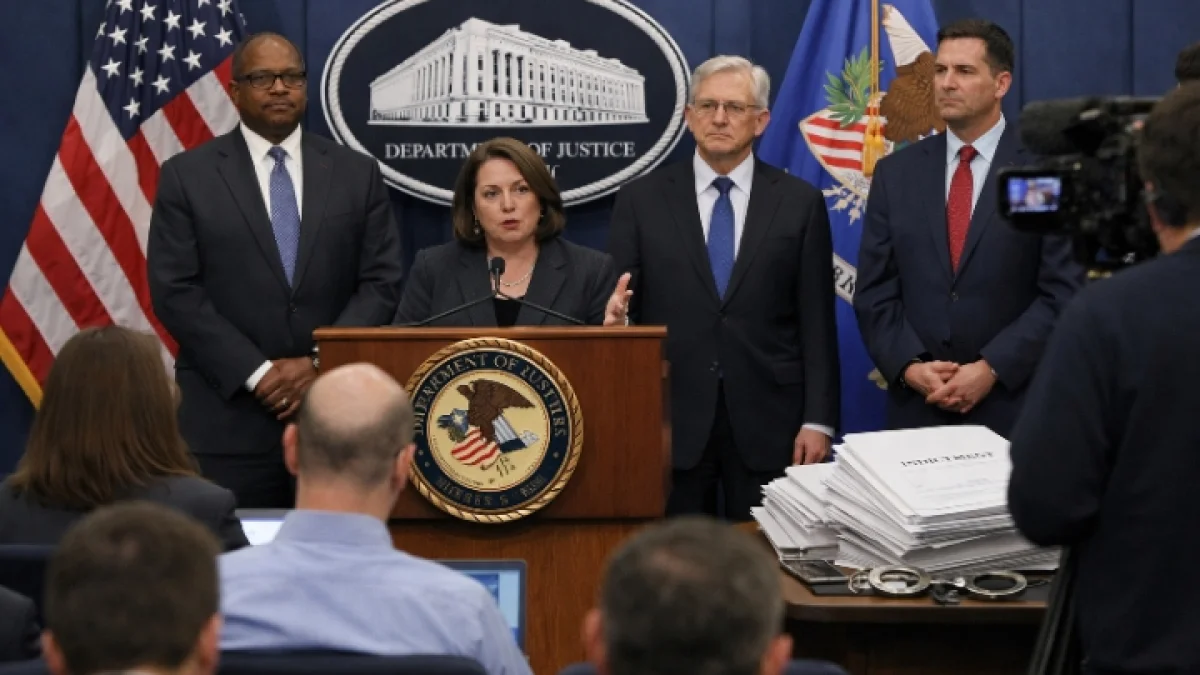
Corporate criminal prosecutions in the United States have declined as the Justice Department under President Donald Trump's administration reshapes its enforcement priorities, signaling a significant shift in how federal authorities pursue corporate misconduct. Senior department officials have increasingly favored non-prosecution agreements, deferred prosecution agreements and voluntary self-disclosure incentives over criminal charges against companies, while emphasizing that individuals responsible for wrongdoing should bear primary legal responsibility.
The policy shift is significant because corporate criminal enforcement has long served not only to punish misconduct but also to encourage companies to strengthen internal compliance systems and deter future violations. Changes in prosecution strategy can therefore influence corporate governance, investor confidence and regulatory expectations across multiple industries. The current approach reflects a broader debate over whether criminal sanctions against companies produce meaningful deterrence or instead impose disproportionate costs on employees, shareholders and customers who were not directly involved in misconduct.
The Justice Department has defended the new framework as an effort to create greater consistency and transparency across federal criminal enforcement. In March, it introduced its first department-wide Corporate Enforcement Policy, establishing uniform standards for criminal cases outside antitrust matters. Under the policy, companies that voluntarily disclose misconduct, fully cooperate with investigators and implement appropriate remediation measures will generally receive a declination of prosecution unless aggravating circumstances exist. Deputy Attorney General Todd Blanche said the policy is intended to reward responsible corporate behavior while allowing prosecutors to focus on holding individual wrongdoers accountable.
That emphasis has been reinforced by U.S. Attorney Jay Clayton, who announced that his office in Manhattan would generally avoid prosecuting companies that meaningfully cooperate with criminal investigations. Clayton argued that companies require clear incentives to report misconduct and assist prosecutors, describing cooperation agreements as a means to accelerate compensation for victims while protecting shareholder interests.
The practical effect has been fewer corporate guilty pleas and a greater willingness to resolve investigations without criminal convictions, according to recent reporting. Critics argue that the trend risks weakening deterrence, particularly if companies perceive a lower likelihood of criminal prosecution. Former prosecutors and legal experts cited in published reports contend that corporate charges have historically encouraged executives and boards to invest heavily in compliance and internal controls because of the reputational and financial consequences associated with criminal convictions.
Administration officials reject suggestions that the department is retreating from white-collar enforcement altogether. Instead, they argue that enforcement resources are being redirected toward areas viewed as presenting greater national economic and security risks. Recent initiatives include the establishment of a dedicated global trade enforcement section within the National Fraud Division to pursue customs fraud, tariff evasion, illegal imports and violations involving forced labor and product safety laws. Justice Department officials have said trade fraud should no longer be treated as merely a regulatory compliance issue but as a serious criminal offense.
The shift also reflects broader policy priorities across the department. Since early 2026, Justice Department leaders have increasingly emphasized immigration, cartel activity, trade fraud and crimes involving foreign actors. Within that framework, prosecutors are expected to concentrate resources on cases considered to have broader national security or economic implications while encouraging voluntary corporate compliance in traditional white-collar investigations.
Supporters of the revised approach argue that prosecuting individuals rather than corporations more directly targets those responsible for misconduct while reducing unintended consequences for innocent employees, pension funds and investors. They also contend that stronger incentives for voluntary disclosure may uncover misconduct earlier than adversarial investigations alone.
Opponents, however, question whether voluntary disclosure incentives can adequately replace the deterrent effect of criminal prosecutions. Some legal analysts argue that the possibility of corporate indictment has historically provided companies with powerful incentives to maintain rigorous compliance programs and cooperate promptly with investigators. They caution that a sustained decline in prosecutions could alter corporate risk calculations, particularly in sectors where regulatory oversight already relies heavily on self-reporting.
The policy evolution also illustrates the degree to which corporate enforcement priorities can change between administrations. Previous Justice Department leaderships similarly promoted voluntary disclosure and cooperation, but generally combined those incentives with more frequent corporate criminal resolutions in high-profile fraud, corruption and financial crime cases. The current framework places greater emphasis on predictability, negotiated resolutions and individual accountability, while reserving criminal prosecution of companies for cases involving more serious aggravating circumstances.
The current picture remains one of transition rather than a settled long-term enforcement model. Federal prosecutors continue to pursue selected corporate crime investigations, particularly in areas such as trade fraud, while offering broader incentives for cooperation in many other cases. Legal practitioners, compliance officers, investors and business leaders are closely monitoring how frequently prosecutors ultimately invoke the new corporate enforcement policy, whether individual prosecutions increase as intended, and whether future court outcomes demonstrate that the revised strategy achieves its stated objective of balancing accountability with incentives for corporate compliance.