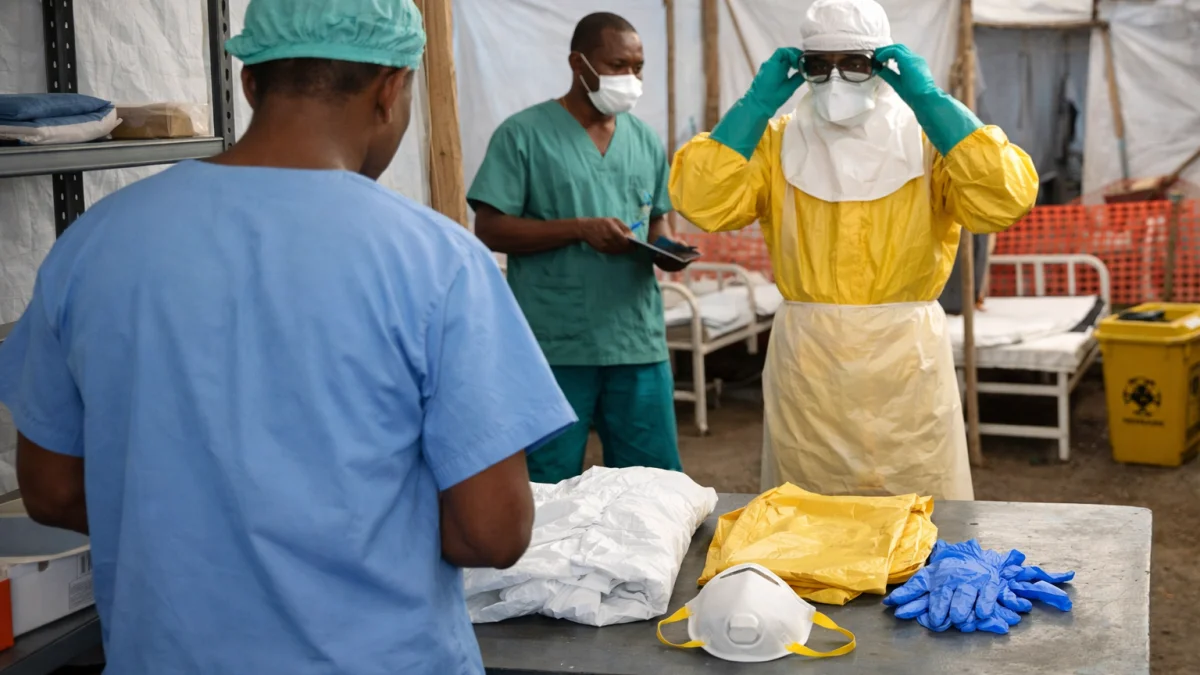
KINSHASA — Health workers responding to the Ebola outbreak in eastern Democratic Republic of Congo are facing shortages of personal protective equipment, complicating efforts to contain the spread of the virus, officials and aid groups said.
Medics in affected areas, particularly Ituri Province, have reported insufficient supplies of gloves, masks, gowns and other gear needed to safely treat patients and conduct contact tracing. The outbreak, declared in May 2026 and involving the Bundibugyo strain of Ebola, has strained an already under-resourced health system amid ongoing conflict in the region.
As of early June, health authorities reported more than 500 confirmed cases and about 100 deaths in the DRC, with additional cases in Uganda, according to the World Health Organization and Congolese officials. Several health workers have been infected, highlighting the risks posed by limited protective equipment.
Aid organizations including Doctors Without Borders and the WHO have delivered tons of supplies, including PPE, to the region in recent weeks. However, frontline workers said distributions have not kept pace with the rapid increase in cases and the needs of treatment centers in Bunia and surrounding areas.
“No boots, masks running out,” one report described the situation, with medics improvising makeshift solutions in some cases, increasing their exposure. Supply chain disruptions and border issues have contributed to higher costs and delays, local health officials noted.
The International Council of Nurses and other groups have raised alarms about the safety of healthcare staff. “With proper funding, we would have had prepositioned stock... but instead, we started with nothing,” a responder was quoted as saying in a recent assessment.
The outbreak has overwhelmed hospitals, prompting the establishment of field treatment centers. Conflict in eastern DRC has hindered access, with attacks on health teams reported in some areas. International partners, including the U.S. and European Union, have pledged funding and supplies, but delivery and distribution challenges persist.
Congolese authorities and the WHO continue to scale up surveillance, isolation efforts and community engagement. Additional shipments of equipment arrived in recent days, but officials acknowledged gaps remain in remote zones.
As of Tuesday, the response effort was ongoing with calls for more support to protect medical personnel and contain transmission. Details on the exact scale of shortages varied by location, with some facilities reporting more acute needs than others. No immediate resolution to the supply issues was announced.