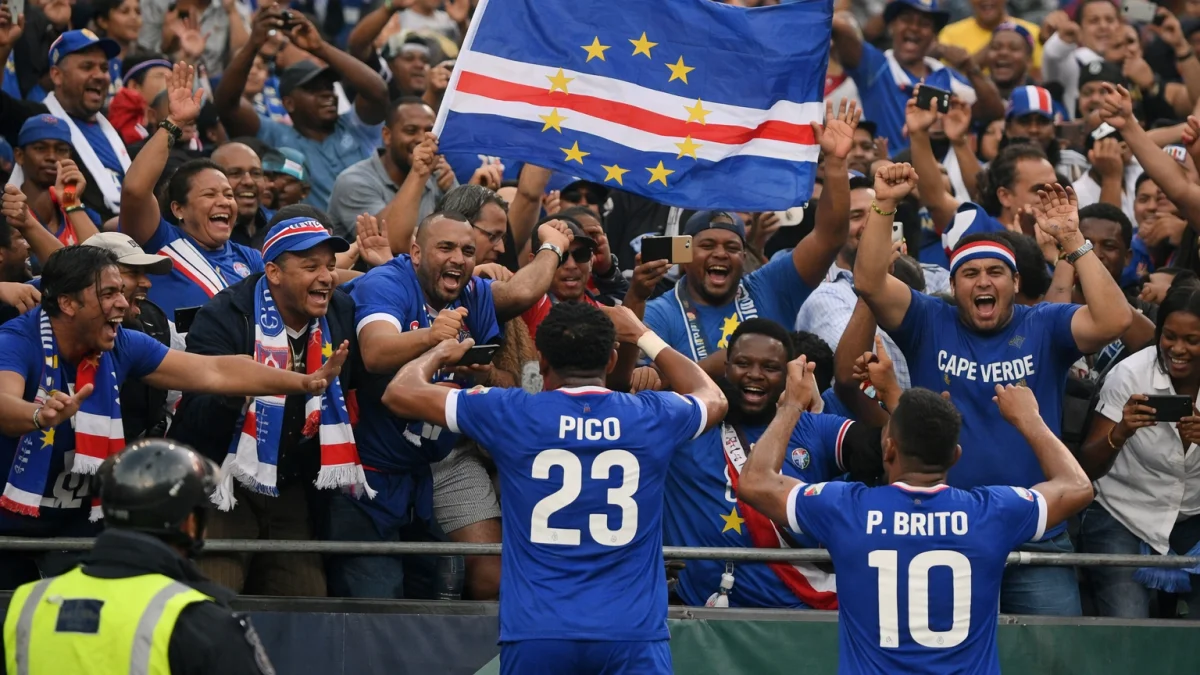
The final whistle in Miami ended Cape Verde's first FIFA World Cup with defeat, but it did not quiet the applause.
Players wearing the blue shirts of the Atlantic island nation stood before their supporters after an extraordinary 3-2 extra-time loss to defending champions Argentina, acknowledging a crowd that had watched one of the tournament's smallest participants come within minutes of forcing a penalty shootout. When the squad returned home to Praia days later, thousands gathered to welcome them, celebrating a campaign that had transformed the Blue Sharks from unfamiliar newcomers into one of football's most widely embraced stories.
For a country of roughly half a million people making its World Cup debut, the tournament became more than a sporting milestone. It introduced Cape Verde to millions of viewers who had never before followed its national team, while strengthening ties among Cape Verdean communities spread across Africa, Europe and North America.
The team's run was built not on spectacular victories but on resilience. Ranked well below many of its opponents before the tournament, Cape Verde opened with a goalless draw against Spain before earning another point against Uruguay. A third draw, against Saudi Arabia, proved enough to send the debutants into the knockout stage, where they faced one of football's greatest tests.
Against Argentina, Cape Verde twice recovered after falling behind. Midfielder Deroy Duarte equalized during regulation before Sidny Lopes Cabral struck again in extra time, only for Argentina to advance after a late own goal. The result ended the campaign, but it also confirmed what the previous three weeks had suggested: Cape Verde belonged on the sport's biggest stage.
The performances drew praise from opponents as well as supporters. Argentina captain Lionel Messi exchanged shirts with goalkeeper Vozinha after the match and praised the veteran's display. Argentina coach Lionel Scaloni also acknowledged the challenge posed by a disciplined team that consistently frustrated more established football powers.
Few players came to symbolize the campaign more than the 40-year-old Vozinha.
Already a respected figure within Cape Verdean football, the goalkeeper became one of the tournament's breakout personalities after producing a series of outstanding saves, beginning with the draw against Spain. His performances quickly spread across social media, while images of him encouraging devastated teammates after the Argentina defeat resonated with supporters around the world.
Defender Pico Lopes represented another side of Cape Verde's story. The experienced player spoke after the Argentina match about the pride the squad felt in competing fearlessly against the world's elite, reflecting a confidence that had grown throughout the tournament.
Much of that confidence stemmed from years of planning.
Coach Bubista assembled a squad that blended players raised in Cape Verde with others developed across the country's extensive diaspora. Many members of the national team were born or trained abroad before choosing to represent their family heritage internationally, illustrating the global character of a nation whose population overseas rivals that at home. Reuters reported that this combination of local identity and international experience became one of the foundations of the team's success.
The campaign also highlighted football's importance within Cape Verdean communities far beyond the islands.
In Miami, supporters described feeling that the World Cup had given their country unprecedented visibility. Others spoke of strangers congratulating them after matches or asking about Cape Verde's culture, food and history. Fans said the attention extended beyond football, encouraging curiosity about a nation often overlooked in global sporting conversations.
Similar scenes unfolded elsewhere.
In Rotterdam, home to one of Europe's largest Cape Verdean communities, supporters gathered in large numbers to follow the knockout match against Argentina. The celebrations that accompanied qualification for the last 32 reflected how deeply the team's achievements resonated among families whose connections to the islands stretch across generations.
International observers also pointed to what Cape Verde's success suggested about the evolving World Cup.
The tournament's expanded format gave more nations an opportunity to compete on football's biggest stage. Cape Verde seized that chance by demonstrating tactical discipline, collective organization and belief against opponents with vastly greater resources and historical pedigree. Reuters noted that the team's performances illustrated how smaller football nations could reshape perceptions through preparation and resilience rather than reputation.
Even after elimination, the sense that something lasting had changed remained evident.
According to the Associated Press, players returning to their hotel after the Argentina match found supporters waiting to cheer them despite the defeat, an indication that admiration had outgrown the result itself. Around the football world, Cape Verde had become synonymous with courage, organization and possibility rather than simply being one of the competition's smallest entrants.
The celebrations that greeted the team's arrival in Praia reinforced that legacy.
Thousands lined the route home, welcoming players whose World Cup had ended without a victory but also without a defeat in regular time. The reception reflected more than appreciation for a memorable tournament. It marked recognition that a nation long known internationally for its islands and diaspora had also earned a place in football's global conversation.
The Blue Sharks did not lift the trophy. They left with something different: lasting recognition, a broader audience and the conviction that Cape Verde's first appearance on football's biggest stage is unlikely to be its last.