WASHINGTON — A federal appeals court permitted the Trump administration on Tuesday to expand the use of speedy deportations of undocumented migrants nationwide, overturning a lower court’s block on the policy, officials and court records said.
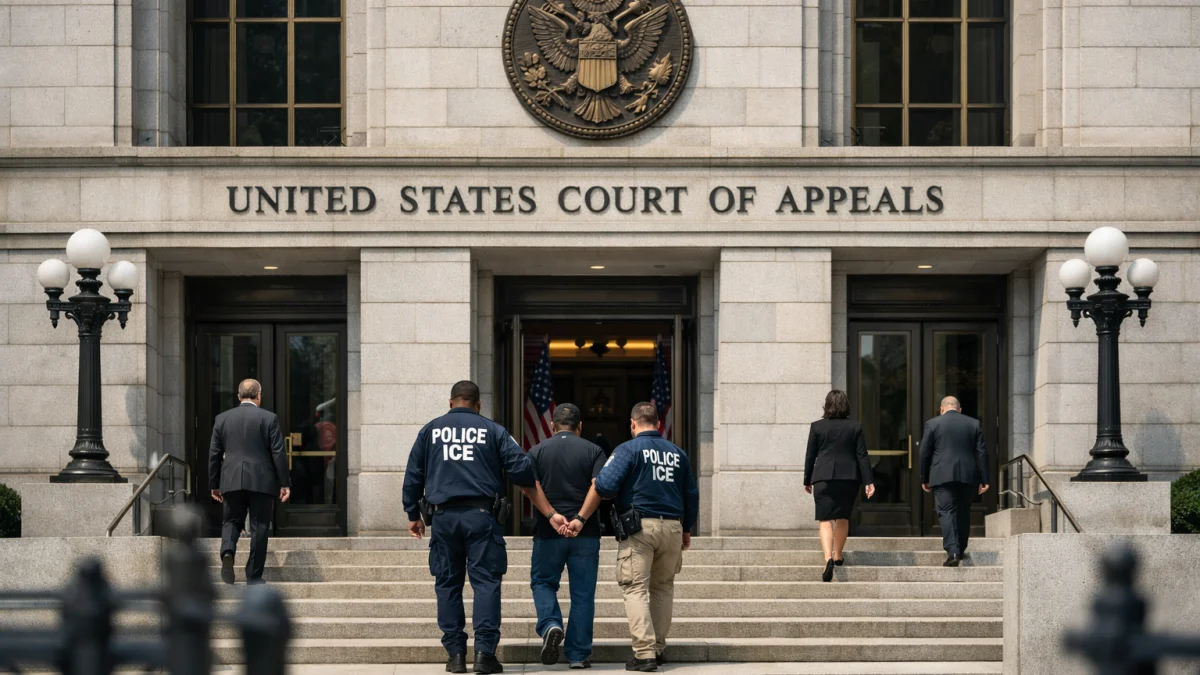
A divided three-judge panel of the U.S. Court of Appeals for the District of Columbia Circuit ruled 2-1 to vacate a temporary hold issued by a district judge in August 2025. The decision allows the Department of Homeland Security to apply expedited removal beyond areas near the border to migrants unable to prove they have been in the United States continuously for more than two years.
Expedited removal permits immigration authorities to deport individuals without a hearing before an immigration judge. The Trump administration has described the expanded process as a key tool in its mass deportation efforts.
The ruling came in a case brought by immigrant advocacy groups challenging the policy. U.S. Circuit Judge Justin Walker, writing for the majority and joined by Judge Neomi Rao, both Trump appointees, stated that the administration could expand expedited removal “to the maximum extent allowed by Congress.” Judge Robert L. Wilkins, an Obama appointee, dissented.
The lower court had blocked the expansion, citing concerns over due process and the adequacy of procedures to prevent erroneous deportations. The appeals court disagreed, finding the policy consistent with statutory authority and due process requirements.
The Department of Homeland Security had sought to revive and broaden a similar approach from earlier in the Trump administration. Under the policy, individuals must affirmatively demonstrate their length of presence in the country to avoid the fast-track process.
Immigrant rights organizations criticized the decision. Details of immediate implementation plans remained unclear as of Wednesday.
"This ruling clears the way for broader and faster removals without adequate safeguards," an attorney for the plaintiffs was quoted in reports following the decision.
The administration welcomed the outcome as advancing its immigration enforcement priorities. Government officials have not released specific projections on the number of additional deportations expected under the expanded authority.
The case is part of ongoing legal challenges to the Trump administration’s immigration policies. As of Wednesday, the Department of Homeland Security continued preparations to implement the ruling while advocacy groups considered further appeals. No immediate nationwide operational updates were detailed in official statements.