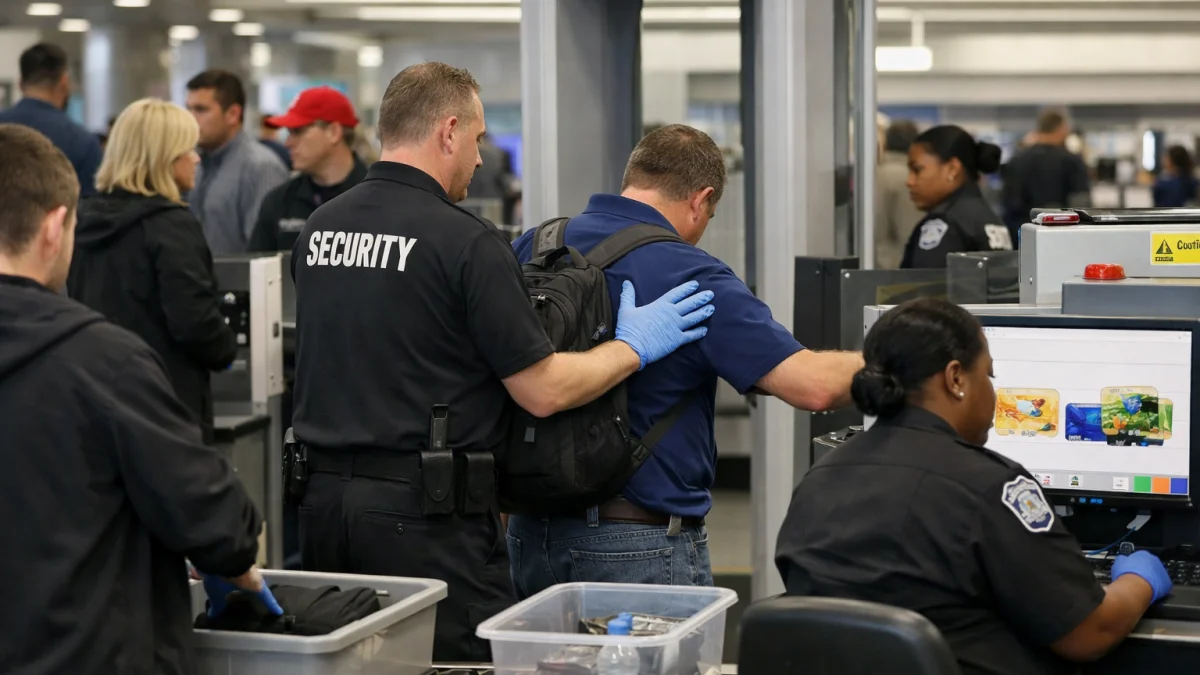
WASHINGTON — U.S. airports that rely on private security contractors instead of federal Transportation Security Administration screeners are facing renewed scrutiny as the agency pushes to expand such arrangements amid ongoing concerns about efficiency, costs and accountability.
The TSA's Screening Partnership Program (SPP), established in 2004, currently operates at about 20 commercial airports, where private companies handle passenger screening under strict federal oversight and must follow the same procedures as TSA employees. Larger participants include San Francisco International Airport and Kansas City International Airport, along with smaller facilities such as those in Montana and Atlantic City, New Jersey.
Recent government shutdowns highlighted operational differences. Private screeners at SPP airports continued working and receiving pay, avoiding the disruptions and long lines experienced at many federal-staffed checkpoints. In response, the TSA has advanced initiatives like the Gold+ program, which would allow private contractors greater roles, including managing screening equipment in addition to personnel, and proposed budget measures to facilitate more airports opting into private models.
TSA officials and supporters argue the approach can improve efficiency and insulate operations from funding lapses. Airports in the SPP have reported shorter wait times in some cases, with one contractor highlighting lines under three minutes.
Critics, including the American Federation of Government Employees, which represents TSA officers, contend that expanding privatization could prioritize profits over safety, potentially leading to reduced training, staffing or benefits. Union president Everett Kelley has warned that reverting to a contractor-driven model echoes pre-Sept. 11, 2001, vulnerabilities that prompted federalization of screening.
Aviation security experts and some lawmakers have noted mixed performance data from past reviews by the Government Accountability Office, which found no consistent cost or effectiveness advantage between federal and private models across all sites.
The TSA maintains full authority over security standards, background checks and procedures at SPP airports. As of early 2026, roughly 4.5% of the more than 440 commercial airports subject to TSA screening use private contractors.
The renewed debate comes as the agency faces proposals to cut federal screener positions and redirect resources. Airport operators have the option to apply for the SPP, with TSA selecting contractors through a federal process.
No immediate changes to the number of participating airports were confirmed as of Tuesday, though applications and budget discussions continue. TSA said it would continue oversight to ensure compliance with all federal security requirements.