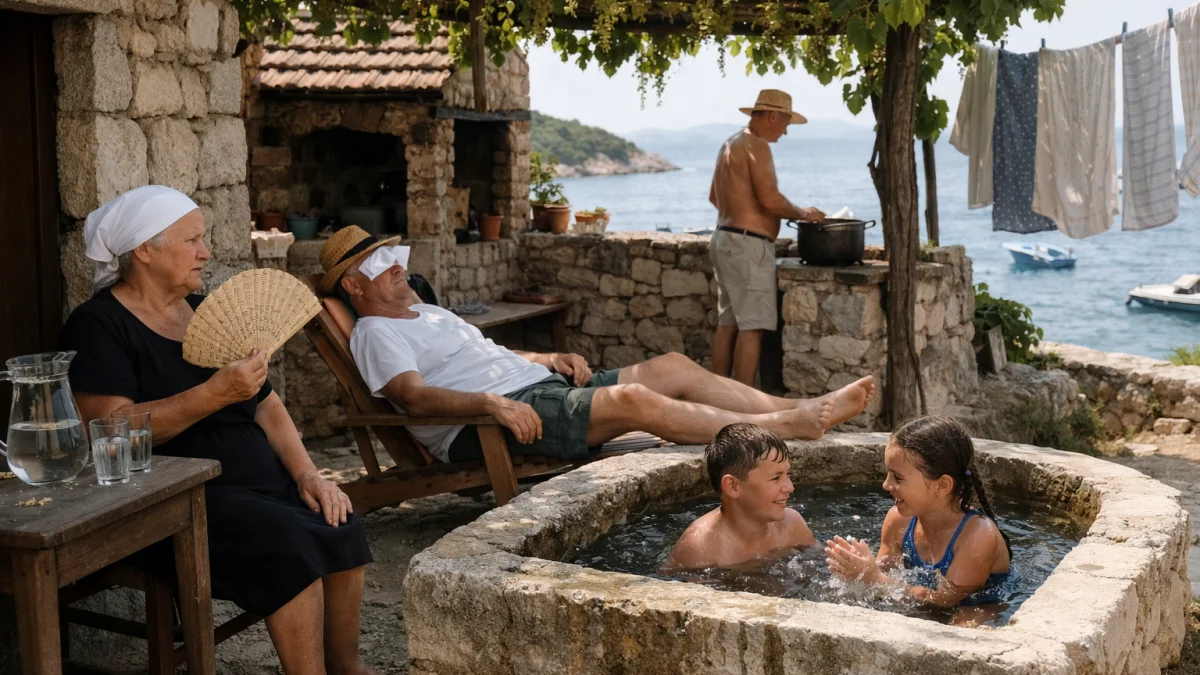
RAB, Croatia — Residents on Croatia's Adriatic island of Rab are relying on centuries-old architectural designs and daily routines to cope with intense summer temperatures, highlighting traditional approaches to staying cool as Europe experiences increasingly frequent heatwaves.
In Rab's medieval old town, narrow stone streets, thick-walled houses and shaded public spaces continue to provide natural protection from the summer sun, reducing the need for air conditioning during the hottest hours of the day. Local residents say these features, developed over generations, remain effective despite rising temperatures across southern Europe.
People on the island typically organize outdoor activities during the early morning or late evening, avoiding prolonged exposure to the midday sun. Afternoons are often spent indoors or in shaded areas, following a long-established routine that residents say has been passed down through generations.
Travel guide Kristina Maskarin said modern habits such as extended sunbathing differ from traditional practices on the island, where people historically sought shelter during the hottest part of the day. She said local customs were shaped by experience in adapting to the Mediterranean climate rather than by mechanical cooling systems.
Many homes in Rab's historic center are designed to stay cool naturally. Residents close external shutters during daylight hours to block direct sunlight and reopen windows after sunset to allow cooler evening air to circulate through the buildings. The town's closely spaced stone buildings and narrow alleyways also create shade throughout much of the day, helping lower temperatures in pedestrian areas.
The traditional building techniques reflect architectural practices found across parts of the Adriatic coast, where settlements were designed to maximize airflow while limiting heat gain during the summer months. Conservation of these historic structures has allowed many of those passive cooling features to remain in everyday use.
Scientists have warned that climate change is increasing the frequency and intensity of extreme heat events across Europe, prompting renewed interest in traditional methods of adapting to hot weather alongside modern cooling technologies. Passive cooling strategies, including shaded streets, natural ventilation and heat-resistant building materials, are increasingly cited by researchers and urban planners as complementary measures for improving resilience to rising temperatures.
As Croatia's tourism season reaches its peak, residents on Rab say their long-established routines continue to offer practical ways of coping with summer heat while preserving the island's historic character.